Radovljica: The Beekeeping Museum and Chocolate Town Near Bled
What is Radovljica and why visit it near Bled?
Radovljica is a small town about 7 km from Bled with an intact medieval old town, unusual for the Bled area, plus the Radovljica Beekeeping Museum and a reputation as Slovenia's chocolate town. Most visitors combine it with Bled as a half-day add-on rather than a separate base.
The Town Seven Kilometers from Bled That Most Visitors Skip
Almost everyone who visits Bled sees the same three things: the lake, the island, and the castle on the cliff above the water. Very few of them drive the seven kilometers east to Radovljica, and that is exactly why Radovljica is worth the short detour. It has none of Bled’s lake and none of Bled’s crowds, but it has something the Bled area is otherwise short on: a genuinely intact medieval old town, plus a small museum dedicated to a very Slovenian tradition, painted beehive panels, and a growing reputation as the country’s chocolate town.
This page assumes you have already read up on Bled itself, or already have a Bled day planned through Bled day trip from Ljubljana. Radovljica is not a substitute for Bled and this guide will not try to convince you it is. It is a complementary stop, best treated as an extension of a Bled visit rather than a reason to build a separate day around it, and it deserves more than the five minutes most itineraries give it in passing.
A Medieval Old Town That Escaped the Postcard Treatment
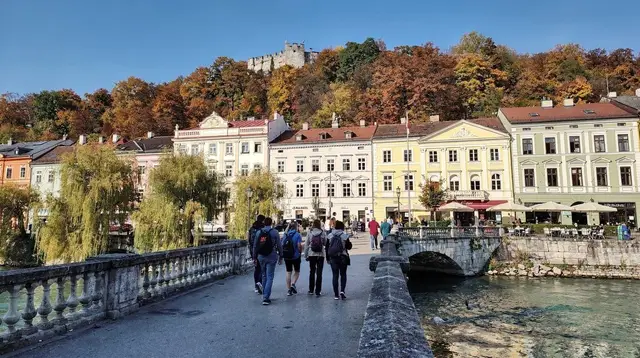
The single biggest misconception about Radovljica is that it is a minor curiosity, a museum-plus-parking-lot stop bolted onto a Bled day. It is not. The historic core, Linhartov trg, is a compact, car-free square of Gothic and Baroque townhouses that has survived largely unaltered since the medieval period, something that cannot be said of most small towns in the Bled area, many of which were rebuilt or expanded around twentieth-century tourism. Radovljica’s old town was simply left alone, perched on a terrace above the Sava River, and that neglect is now its main asset.
Walking Linhartov trg takes fifteen to twenty minutes at an unhurried pace: painted facades, a parish church, and views down toward the river valley and, on a clear day, the Julian Alps in the distance. There is no ticket for this part of the visit. It is simply a square to walk, sit in, and have a coffee on, which is precisely the kind of unstructured stop that a heavily scheduled Bled day usually lacks. If your Bled day so far has been queue for the pletna boat, queue for the castle, queue for the funicular, Radovljica’s old town is the deliberate absence of a queue.
This is also a useful comparison point if you are still deciding how to structure your Bled area time; see Bled versus Bohinj for how the two lakes differ, and avoiding crowds at Bled for timing advice that pairs naturally with an afternoon detour to somewhere quieter like Radovljica.
Inside the Radovljica Beekeeping Museum
The Radovljica Beekeeping Museum, Cebelarski muzej, is the town’s best-known sight and the reason many visitors first hear the name Radovljica at all. Slovenia has an outsized beekeeping tradition relative to its size: the Carniolan honey bee, a subspecies prized worldwide for its gentle temperament and hardiness, originates in this region, and Slovenian beekeepers still follow customs that go back centuries.
The museum’s centerpiece is its collection of painted beehive front panels, called panjske koncnice. These are small painted wooden boards that formed the front of traditional Carniolan beehives, and from roughly the eighteenth century onward, Slovenian beekeepers commissioned folk painters to decorate them with religious scenes, folk tales, moral lessons, and even satirical commentary on local life. It is a folk-art tradition found almost nowhere else in Europe in this form, and the museum’s collection is the best place in the country to see a large number of these panels together, alongside traditional hives, beekeeping tools, and explanations of how Slovenian apiculture developed.
Opening hours and admission for the museum change by season, and rather than quote a figure that may already be out of date by the time you read this, the reliable approach is to check the current hours on the Radovljica municipality’s museums page before you go, especially outside the summer months when hours tend to shorten. Budget thirty to forty-five minutes inside for a normal pace, more if you read the panel descriptions closely.
If beekeeping and folk art sound like a narrow interest, it is worth noting that this museum rewards exactly the kind of visitor who has already done the big-ticket Bled sights and is looking for something with genuine local specificity rather than another view of the same lake. It sits alongside Slovenia’s other small specialist museums; for a sense of what else the country offers in this vein, see Ljubljana museums guide if you are also building out a Ljubljana museum day.
Why Radovljica Calls Itself Slovenia’s Chocolate Town
Radovljica’s second identity, somewhat unexpected for a town this size, is chocolate. The town hosts Slovenia’s best-known chocolate festival each spring, and that event has left a permanent legacy of small chocolatiers, tasting rooms, and workshops built around the old town square. It is not an accidental branding exercise: the festival draws visitors from across the country and beyond, and the businesses that grew up around it now operate year-round, not just during the festival week.
For visitors passing through on a day trip, the practical version of this is a short guided tasting rather than a festival visit. A number of small operators in the old town run walk-in or bookable chocolate tastings that take thirty to sixty minutes and pair naturally with the museum visit and a walk around Linhartov trg. One widely booked option is a Radovljica guided chocolate tasting that walks you through several small-batch chocolates in the old town, a good way to turn what might otherwise be a twenty-minute drive-through stop into an hour with something to actually do and taste.
Radovljica is also within the same short radius as Slovenia’s wine country to the east, and a handful of operators combine a Radovljica stop with a wine tasting session in Radovljica itself, useful if you would rather not drive further out to the Vipava Valley or Goriska Brda on the same day. If food and drink are a priority for your Slovenia trip generally, cross-reference what to eat in Ljubljana and Idrija zlikrofi and lace guide for two other towns where a single local specialty defines the visit the way chocolate now defines Radovljica.
Getting from Bled to Radovljica
The short distance between Bled and Radovljica, about 7 km, means the getting-there question is usually simple, but the options differ meaningfully depending on whether you have a car.
| Method | Approximate time | Notes |
|---|---|---|
| Car | 10-15 minutes | Easiest option; parking near the old town is limited but available |
| Local bus | 15-25 minutes | Runs less frequently than Bled’s tourist shuttles; check timetables in advance |
| Organized day trip | Included in itinerary | Several tours combine Bled and Radovljica in one outing |
| Taxi or private transfer | 10-15 minutes | Convenient but not pre-bookable in the same way as a tour |
If you are relying on public transport for your whole Slovenia trip, see how to get to Bled without a car and Slovenia without a car for the wider picture; Radovljica’s bus connections are workable but not built around tourists the way Bled’s are, so building in a buffer is sensible. If you are driving yourself, renting a car in Slovenia covers what you need to know before picking up a vehicle, including the electronic vignette requirement that applies the moment you leave Ljubljana on the motorway network.
For travelers who would rather not deal with either bus timetables or driving logistics, a straightforward option is a day trip that packages Bled and Radovljica together from the start. One version worth knowing about is a full-day Bled and Radovljica trip that handles transport between both towns and typically includes free time at the lake before or after the Radovljica stop, removing the need to coordinate a rental car or bus timetable around a single afternoon detour.
How Much Time to Give Radovljica
This is the question that trips most people up. Radovljica is not a full-day destination and treating it as one usually means padding out a schedule with little added value. Equally, treating it as a five-minute photo stop misses the point of the old town and the museum entirely. A workable range:
| Time available | What you can realistically cover |
|---|---|
| 30-45 minutes | Old town square walk only, no museum |
| 1.5 hours | Old town walk plus beekeeping museum |
| 2-2.5 hours | Old town, museum, and a chocolate or coffee stop |
| Half day | All of the above at a relaxed pace, with lunch |
Most itineraries that already include a full Bled day, as in Bled day trip from Ljubljana or the one-day version at Bled in one day, have room for the 1.5 to 2 hour version of Radovljica in the late afternoon, once the lake itself has been covered and crowds there are thinning out anyway. Trying to fit Radovljica into a morning before Bled tends to work less well, since the beekeeping museum and most chocolate tasting spots open later than the lake’s early photo-friendly hours.
Combining Radovljica with the Rest of the Bled Area
Radovljica’s location makes it a natural link point rather than an endpoint. Several multi-stop itineraries route through Radovljica on the way between Bled, the Bohinj valley, and the Pokljuka plateau, since the town sits roughly on the way rather than requiring a dedicated backtrack. If your plans extend beyond Bled itself into that wider area, a tour worth knowing about is the Bled, Bohinj, Radovljica and Pokljuka day tour which strings together several of these stops in a single day for visitors who want more than the lake alone but do not want to self-drive between each location.
For visitors basing themselves specifically around private transport and flexible timing rather than a fixed-stop group tour, a private version of the same general route also exists, useful if you have a smaller group or want to set your own pace between the old town, the museum, and any chocolate or wine stop you add along the way.
If your trip is centered more on the Julian Alps and the Soca Valley than on the Bled lowlands, Radovljica is less of a natural fit geographically and you may prefer to prioritize Vintgar gorge or push on toward Kranjska Gora instead; Radovljica’s appeal is specifically as a Bled-area add-on, not a stop on the way to the mountains proper.
Practical Tips: Opening Hours, Tickets, and Timing
A few practical notes worth knowing before you go, most of which come down to Radovljica’s smaller scale compared with Bled:
- Parking is limited near the old town. There is a public lot a short walk from Linhartov trg, but it fills up during the chocolate festival period and on summer weekends. Arriving outside midday helps.
- The beekeeping museum keeps seasonal hours. It typically closes on Mondays and reduces hours outside the summer season; confirm the current schedule on the municipal museums website before building it into a tight itinerary.
- Most restaurants and chocolate shops cluster on or just off the main square. There is no need to search far; the old town is small enough that everything worth stopping for is within a few minutes’ walk.
- The chocolate festival is a spring event, not a year-round one, but the chocolatiers and tasting venues that grew out of it operate throughout the year, so a chocolate-focused stop works in any season.
- Radovljica has no lake and no castle of its own, which is worth setting expectations around if you are traveling with anyone expecting a second version of Bled. It is a different kind of stop, built around a town square and two small but genuine specialties rather than a landscape view.
Radovljica Questions Answered
tours.museums-art
Verified deep-linked GetYourGuide tours. Book through these links and we earn a small commission at no cost to you.
GetYourGuide does not provide a product photo for this activity — the image shows the meeting point, photographed by us.