Mount Triglav Via Ferrata: The Final Climb to the Summit
What is the Triglav via ferrata and do I need a permit?
It's the cabled, rung-equipped final stretch leading to Mount Triglav's 2,864m summit, exposed but not technical climbing. No permit or special authorization is required to use it, though most hikers climb this section with a certified mountain guide rather than alone.
The last hour of Triglav is a different mountain
Most of the climb up Mount Triglav is simply hard hiking: long approach trails through Triglav National Park, thinning air, and a night at a mountain hut. Then, above Triglavski Dom na Kredarici at around 2,515m, the character of the route changes completely. Steel cables appear, bolted into the rock. Iron rungs and pegs replace the last of the dirt path. For roughly the final 350 vertical meters to the 2,864m summit, you are on a via ferrata — an “iron road” — not a hiking trail.
This page is about that stretch specifically: what the cables look like, how exposed they really are, what gear the situation demands, and the single myth that stops some capable hikers from even considering it. If you are still deciding whether to attempt Triglav at all, start with the broader overview at Hiking Mount Triglav, which covers routes, huts, and the approach. This page assumes you already know you want to stand on that summit and need to understand the technical crux before you commit.
Where the via ferrata actually begins
Triglav has several approach routes — from Pokljuka, from the Vrata valley, from Bohinj via the Komna plateau — and they all converge on Triglavski Dom na Kredarici, the large hut just below the final pyramid. Below Kredarica, whichever route you took, you have been on a demanding but unequipped alpine trail: scree, ladders in places, long exposure to weather, but no cables.
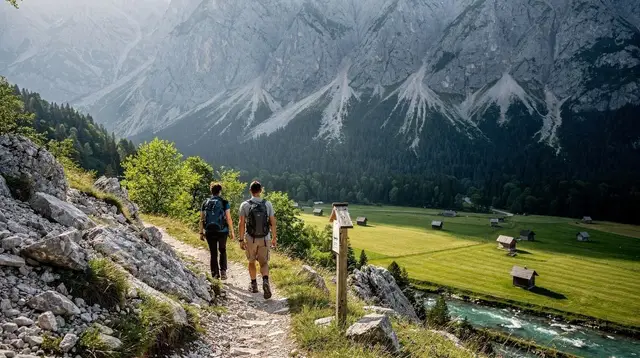
Above Kredarica, that changes at a point most climbers recognize immediately: the trail narrows, turns to bare rock, and the first cable appears bolted along the route. From here to the summit and back to Kredarica is the section this page covers. It typically runs 1.5 to 2.5 hours each way, depending on fitness, weather, and how many other parties are sharing the cables — and on a clear August weekend, that can mean real queuing at the narrowest pinch points.
If your itinerary also includes lower-altitude alternatives on quieter terrain, the Pokljuka plateau and the trails detailed in Pokljuka Plateau Hiking sit on the approach side of this same massif, at a fraction of the exposure.
What the cables and rungs are actually like
The Triglav via ferrata is not a climbing wall bolted with modern comfort in mind. Much of the ironwork dates back decades, reinforced and replaced over time by Slovenian mountaineering clubs and Triglav National Park. Expect:
- Steel cables running alongside the rock, meant to be clipped into with a via ferrata lanyard, not to be hauled on hand-over-hand as your only support.
- Iron rungs and pegs drilled into steeper faces, spaced for an adult stride but often wet, polished, or iced even in summer shade.
- Narrow ledges with genuine exposure on one or both sides — this is the part that surprises hikers who expected something closer to a scramble.
- Double-cable sections near the summit ridge, allowing climbers to stay clipped in while passing others coming the opposite way, which matters enormously on busy days.
- Short unequipped scrambling moves between cabled sections, where route-finding still matters even though your eyes are drawn to the ironwork.
None of this requires technical rock-climbing skill — you are not pulling hard moves on small holds. What it requires is comfort with sustained exposure, steady footing on wet or polished metal, and the discipline to stay clipped in rather than treat the cable as decorative.
The gear this section actually demands
Treat the via ferrata section as non-negotiable on equipment, even if the rest of your Triglav climb has been straightforward hiking:
| Item | Why it matters here |
|---|---|
| Via ferrata harness | Standard climbing or via ferrata-specific harness, fitted before you leave the hut |
| Via ferrata lanyard (2 carabiners) | Lets you stay clipped to the cable through anchor points without ever being fully unclipped |
| Climbing helmet | Loose rock and other climbers above you are a real rockfall risk on busy days |
| Sturdy mountain boots with stiff soles | Smearing on polished rock in soft trail shoes is where slips happen |
| Gloves | The cables shred bare hands over a full ascent and get painfully cold at altitude |
| Headlamp | Many parties start pre-dawn from Kredarica to beat both crowds and afternoon storms |
Huts and guiding outfits along the route generally will not let unequipped hikers pass onto the cabled section, and rightly so — this is not a spot to improvise.
Guided or self-guided: what actually differs
Nothing about the via ferrata legally requires a guide. Slovenian mountain huts, the national park administration, and mountaineering clubs maintain the cables for public use, and plenty of experienced hikers climb it independently every season. What a certified IFMGA guide adds is judgment under pressure: reading an incoming afternoon storm early enough to turn back, pacing a group so nobody is still on exposed rock at dusk, and knowing which of the several summit approaches is in the best condition that week.
For a first attempt, especially without prior via ferrata mileage, going guided removes most of the real risk factors:
a two-day guided ascent of Mount Triglav in a small group, led by an IFMGA mountain guide builds in an overnight at altitude and a realistic pace across the cabled section rather than a rushed single push.
For hikers who already have via ferrata or alpine scrambling experience and want the route briefed rather than led, a self-guided Triglav climb with gear kit and an IFMGA safety briefing covers the equipment question and gives you a professional read on current conditions before you set off on your own.
Outside the June–September window, the mountain becomes a different, more serious proposition, covered separately by a guided winter ascent of Mount Triglav — snow and ice climbing skills replace via ferrata technique almost entirely, and this is not a season for a first Triglav attempt.
The permit myth — and why it persists
It is worth addressing directly, because it stops some otherwise well-prepared hikers from even researching this climb: there is no permit, no permission, and no booking requirement to climb the Triglav via ferrata. Triglav National Park — the only national park in Slovenia — asks hikers to stay on marked trails, pack out their waste, and respect hut booking systems, but none of that amounts to a climbing permit for the summit route or its cabled section.
The confusion likely comes from two real things that do exist: hut beds at Kredarica and other huts near the summit genuinely do need advance booking in high season, and some other alpine regions in Europe do require formal permits or quotas for popular routes. Neither applies here. What via ferrata guides do insist on, universally, is that you carry the gear listed above and that you turn back if lightning is forecast — Triglav’s exposed summit ridge is an exceptionally bad place to be caught in a storm.
Season and weather on the cabled section
The practical climbing window for the via ferrata is late June through late September. Outside those months, snow and verglas coat the rungs and cables, turning a via ferrata outing into genuine winter mountaineering — a different skill set and a different level of commitment, covered by the winter-climb option above rather than this page.
Even within the summer window, conditions on the cables can vary hour to hour:
- Morning starts matter. Afternoon thunderstorms build reliably over the Julian Alps in summer, and there is no shelter on the exposed summit ridge. Most successful ascents leave Kredarica well before dawn.
- Wet rock changes everything. A dry cable section that feels straightforward can turn genuinely slick after overnight rain or morning dew, particularly on the polished sections near the top.
- Crowding is a real hazard, not just an inconvenience. On a clear August Saturday, expect queues at the narrowest passing points; rushing past other climbers to keep moving is where a slip is most likely.
- Wind at 2,864m is a different order of magnitude than wind at the trailhead. Layers that felt unnecessary during the approach hike become essential on the exposed final ridge.
For a broader read on how Slovenian mountain weather behaves across the year, see Slovenia in Summer and, if you are curious how different the same peak looks in the off season, Slovenia in Winter.
Who should — and shouldn’t — attempt this section
The Triglav via ferrata rewards hikers who already know what sustained exposure feels like in their body, not just in theory. A reasonable self-check before committing:
- You have completed at least one via ferrata or comparable exposed scramble before, and know you don’t freeze up on narrow ledges with a drop below.
- You are comfortable at altitude — the approach alone typically involves 1,500m or more of elevation gain before you even reach the cables.
- You can commit to an early start and a realistic turnaround time, and are willing to abandon the summit attempt if weather or crowding make that the safer call.
- You have, or are willing to rent, the harness, lanyard, and helmet — not optional accessories here.
If any of that gives you pause, it doesn’t mean Triglav is off the table — it means the guided option above, or a season spent building via ferrata experience elsewhere first, is the more sensible order of operations. Slovenia has gentler introductions to exposed terrain nearby, including the ridgelines above Lake Bohinj detailed in Hiking Around Lake Bohinj, and the switchbacks of the Vrsic Pass covered in Vrsic Pass Hiking, both without cables or the same consequence for a misstep.
Planning the rest of the climb around this section
The via ferrata is the technical heart of a Triglav ascent, but it is bookended by a long approach and, usually, a hut night. A workable structure for most parties:
- Hike from a trailhead (Pokljuka, Vrata, or via Bohinj and Komna) to Triglavski Dom na Kredarici, arriving with enough daylight to rest before an early departure.
- Overnight at Kredarica or a nearby hut — book ahead in July and August, when beds sell out.
- Leave before dawn, climb the cabled section to the summit, sign the summit book, and descend the same cables before the afternoon storm window opens.
- Retrace the approach route back down, or exit via an alternative valley if your itinerary and guide have arranged transport.
If you’d rather have someone else manage that logistics chain entirely — huts, timing, gear, and weather calls — pairing a guided climb with local support is usually the more relaxed way to do this once, especially on a first visit to the range; see Private Guides and Custom Tours for how that typically works in Slovenia. And for the general safety picture across Slovenian outdoor activities beyond just this one peak, Safety in Slovenia is worth reading before any high-altitude plans.
Hikers building a longer mountain-focused trip around this climb often combine it with several of the routes in Slovenia Hiking Itinerary, using Triglav as the capstone rather than the only stop.
Frequently asked questions about the Triglav via ferrata
Do I need a permit to climb the Triglav via ferrata?
No. There is no permit, permission slip, or booking requirement to use the cabled section of Mount Triglav, in summer or winter. This is a persistent myth worth dropping before you plan the climb — what you do need is fitness, the right gear, and ideally a guide.
Is the Triglav via ferrata dangerous?
It is exposed rather than technically hard: fixed cables and iron rungs across steep rock, with real drops on either side in places, especially on the summit ridge above Kredarica. Fatalities happen most years, almost always from unclipped hikers, bad weather, or descending too late. Treated with respect and good conditions, it is manageable for a fit, experienced hiker.
Do I need a via ferrata kit and harness on Triglav?
Yes. A harness, a via ferrata lanyard with two carabiners, and a helmet are the standard minimum, and most huts and guiding outfits will not take you up without them. Some sections have double cables allowing you to stay clipped in continuously while passing other hikers.
Can a beginner attempt the Triglav via ferrata?
Not as a first via ferrata. It sits at altitude, often in wind and cold, after several hours of approach hiking, and the exposure is unforgiving of hesitation. Slovenian guiding services generally recommend prior via ferrata or scrambling experience, or a guided ascent for a genuine first attempt.
When is the via ferrata section on Triglav open?
The cables stay in place year-round, but the realistic climbing window is roughly late June to late September, once the winter snowpack and ice have cleared. Outside that window the rock and rungs are frequently iced over and the route becomes a winter mountaineering objective, not a via ferrata hike.
Is a guide required for the Triglav via ferrata?
No, it is not required by any authority, and self-guided ascents are legal and common. A certified IFMGA mountain guide is strongly recommended for anyone climbing it for the first time, since route-finding, pacing, and turning back in bad weather are exactly where solo hikers get into trouble.
Where does the via ferrata section actually start?
The cabled climbing begins above Triglavski Dom na Kredarici, the main mountain hut at around 2,515m, on the final push to the 2,864m summit. Everything below Kredarica is strenuous alpine hiking on maintained trails, not via ferrata.
How long does the final via ferrata stretch take?
Figure on roughly 1.5 to 2.5 hours each way between Kredarica and the summit, depending on route, fitness, and how much traffic is on the cables. That is on top of the approach hike to Kredarica, which typically takes most of a day from the standard trailheads.
tours.hiking-mountains
Verified deep-linked GetYourGuide tours. Book through these links and we earn a small commission at no cost to you.
GetYourGuide does not provide a product photo for this activity — the image shows the meeting point, photographed by us.