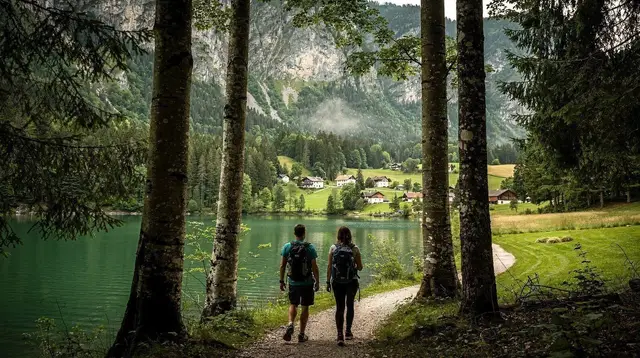
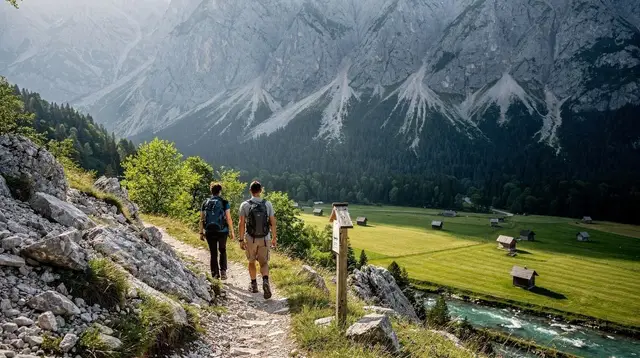
The road that joins two very different valleys
The Vrsic Pass is not a destination in the way Kranjska Gora or the Soca valley are. It is the mountain road between them - the only paved link across the Julian Alps that lets a driver leave the ski-resort town on the northern side in the morning and be looking at the Soca’s improbable turquoise water on the southern side by lunchtime. This page treats it exactly as that: a connector, not a stop with its own hotels and restaurants. If you’re planning what to actually do in either valley, those two destination pages cover it. This one is about the road itself - what it’s like to drive, when it’s open, and what to expect on the way.
At its highest point the pass climbs to roughly 1,600 meters, which for a country the size of Slovenia is a serious piece of engineering: around 50 numbered hairpin bends stacked up the northern face alone, switching back on themselves so tightly that buses and larger motorhomes struggle with some of the curves. It is, by a wide margin, the most dramatic paved road in the country, and also the slowest way to cover a fairly short distance on the map.
It closes for winter - plan around that, not around it
The single fact that matters most before you plan a Julian Alps loop around the Vrsic Pass: it is not a year-round road. Once snow starts making the hairpins unsafe, the pass closes to traffic, and it stays closed through the winter months until crews clear it again in late spring.
There is no fixed calendar date for either the closure or the reopening - it depends entirely on that year’s snowfall and thaw, which is exactly why guides that print a specific “open from X to Y” date get it wrong. If you’re trying to time a visit precisely, our guide to why the pass closes and reopens with the seasons walks through how to check current conditions rather than trust a printed date months in advance.
Practically, this means:
- If you’re visiting in winter (Slovenia in winter), do not plan a Kranjska Gora–to–Soca valley loop over the pass. The road is not there. The way around is the long valley route through Tolmin and Most na Soci, which adds real driving time.
- If you’re visiting in late autumn or early spring, check conditions before you build an itinerary around the pass - it can already be closed, or not yet reopened, well outside the calendar months people assume are “safe”.
- The reliable window is summer into early autumn - see Slovenia’s weather by month for what each side of the Alps looks like in practice, since Kranjska Gora at altitude and the lower Soca valley don’t warm up or cool down at the same pace.
We say this plainly because it’s the mistake this page exists to prevent: presenting the Vrsic Pass as a road you can drive whenever a Ljubljana-based itinerary happens to have a free day. It isn’t. Build the pass into a summer or early-autumn plan, and have the valley-road fallback in mind for anything else.
Driving it yourself
Assuming the pass is open, driving it is straightforward in the sense that the road is paved and signed the whole way - it’s demanding in the sense that the hairpins are numbered, tight, and slow. Most drivers cover the roughly 50 bends on the Kranjska Gora side and the gentler southern descent toward Trenta and the upper Soca in well under an hour of actual driving, but budget more than that once you factor in pull-offs for photos, oncoming traffic on the narrower sections, and the occasional cyclist grinding up the gradient in the outside lane.
A few practical points that matter more than scenery advice:
- Vignette first. Slovenia’s motorway toll is the electronic e-vinjeta, not a sticker, and you need the correct category before you’re on any tolled road on the way to the pass - our Slovenia vignette guide covers the categories and prices. It’s the first thing to sort out with any rental car, before the mountains are even in view.
- Rent locally if you’re not driving in from Italy or Austria already. See renting a car in Slovenia for what to expect from local agencies, and Slovenia without a car if you’d rather not drive the hairpins yourself at all.
- Fuel up on the Kranjska Gora side. Options thin out once you’re over the pass and heading down into the upper Soca valley villages.
- Large motorhomes and trailers should think twice. The tightest hairpins are genuinely tight; this is not the road for a wide rig, and it’s part of why the car versus organized tour comparison is worth reading before you commit to self-driving this specific route.
- Go early if you want empty hairpins for photos. Mid-morning through afternoon in July and August brings a steady stream of cars, camper vans and cyclists sharing the same narrow tarmac.
If self-driving a mountain pass isn’t how you want to spend a vacation day, a guided day trip covers the same ground without anyone in your group white-knuckling a hairpin bend. The full-day Best of Julian Alps tour from Ljubljana takes in the pass as part of a loop through the region, which is the simplest way to see it without renting anything.
Cycling the pass
The Vrsic is also one of the best-known road-cycling climbs in this part of Europe, and in summer you’ll share the hairpins with a steady trickle of cyclists working their way up from either side. It’s a serious climb by any measure - sustained gradient, thin shoulders on some bends, and no shade for long stretches - so if you’re driving, give cyclists real room on the inside of the bends where sightlines are shortest. If cycling the pass yourself is the plan rather than driving it, that’s a fitness and logistics question well beyond what this page covers; it belongs with hiking and outdoor planning rather than a driving guide.
What’s at either end
This page deliberately doesn’t try to tell you what to do in Kranjska Gora or the Soca valley - both have their own pages that do that properly. But it’s worth being clear about what the pass connects, so you can plan which side to sleep on and which to treat as a day’s detour.
| Side of the pass | What’s there | Covered in |
|---|---|---|
| North (Kranjska Gora side) | Alpine resort town, skiing in winter, hiking and cycling base in summer | Kranjska Gora, skiing in Kranjska Gora |
| South (Soca valley side) | Emerald river, rafting and canyoning hubs of Bovec and Kobarid, WWI Isonzo Front history | Soca valley, Bovec, Kobarid |
| Further south | Tolmin and the lower valley, gateway back toward Ljubljana | Tolmin |
A common way to use the pass is as the spine of a loop: sleep in Kranjska Gora, cross the pass in the morning, spend the afternoon on the Soca (rafting, a gorge walk, or just the view from a bridge over that improbable color of water), and either loop back the same way or continue south toward Ljubljana via the valley road. Our Julian Alps adventure itinerary and Slovenia hiking itinerary both build around exactly this kind of two-sided day.
Once you’re down on the Soca side, the river itself is the main draw, and it’s worth booking ahead in summer. The Soca River Experience is a good low-commitment way to get onto the water without a full rafting expedition, while the Bovec-Kobarid rafting tour is the more classic whitewater version of the same river, run from the Bovec side where most Soca valley operators are based.
What to see on the way, without a detour
You don’t need to add stops to feel like the drive was worth it - the road itself, climbing through pine forest into bare rock and switching back on itself dozens of times with the valley dropping away below, is the reason people drive it. A few things worth knowing about without treating them as must-see attractions:
- A small wooden chapel near the summit, built during the First World War, is one of the few reminders along the route itself that this stretch of the Julian Alps sat on the edge of the Isonzo Front - the same front that shaped the towns on the Soca side of the pass. It’s a brief, quiet stop, not a museum.
- Viewpoints on the switchbacks give you a sense of scale for how many bends are still ahead - the numbered markers on each hairpin are also a useful way to gauge progress on a road with very few landmarks otherwise.
- The descent toward Trenta is noticeably gentler than the Kranjska Gora climb, and it’s where the character of the drive shifts from “Alpine pass” to “heading into the Soca valley” - tree cover changes, and the first glimpses of that turquoise water start to appear well before you’re at river level.
None of this needs a dedicated stop-by-stop plan. Treat the crossing as a scenic transit between two valleys that each deserve their own day, not as a checklist of sights along the tarmac.
Vrsic Pass FAQ: driving between Kranjska Gora and the Soca valley
Is the Vrsic Pass open all year?
No. The pass closes to traffic once winter snow makes the hairpin bends unsafe, and it doesn’t reopen until it has been cleared again in late spring - there’s no fixed date either way, since it depends on that year’s snowfall. Never plan a winter crossing; use the valley road through Tolmin instead.
How long does it take to drive the Vrsic Pass?
The drive itself, without stops, generally takes under an hour from the Kranjska Gora side down to the upper Soca valley. In practice, plan for closer to half a day once you include pull-offs for photos, slower traffic in summer, and the drive to and from either end.
Do you need a vignette to drive the Vrsic Pass?
You need Slovenia’s electronic e-vinjeta for any tolled road you use getting to or from the pass, though the pass road itself is a mountain route rather than a motorway. Sort out the correct vignette category for your rental car before setting off - see our vignette guide.
Can you cycle the Vrsic Pass?
Yes, and it’s a well-known climb among road cyclists in summer. It’s a genuine effort with a sustained gradient and narrow shoulders on some hairpins, so drivers should give cyclists wide room, especially on the tightest bends where sightlines are shortest.
Is the Vrsic Pass safe for a rental car?
A standard rental car handles the pass without any special equipment when the road is open and dry - it’s a paved, signed public road. The main challenges are the tightness of the hairpins for larger vehicles and the concentration required on a road with dozens of consecutive switchbacks, not the surface itself.
What’s better - driving the Vrsic Pass myself or joining a tour?
Both work. Self-driving gives you control over how long you linger at each viewpoint, but it means one person in the car doesn’t get to enjoy the view while focused on the bends. A guided day trip such as the Best of Julian Alps tour removes the driving question entirely and usually pairs the pass with stops on both sides. Our car versus organized tour guide compares the trade-offs in more detail.
Can I combine the Vrsic Pass with rafting on the same day?
Yes, and it’s one of the most common ways to use the road - cross in the morning and raft or paddle in the afternoon once you’re down in the Soca valley. Just note that rafting and canyoning operators run on their own seasonal calendar, generally narrower than the pass’s own open season; check our rafting season guide before booking around a specific date.
Is Kranjska Gora or the Soca valley the better base if I only have one night?
That depends on what the rest of your trip looks like, and it’s a big enough question that it has its own comparison page - see Kranjska Gora vs Bovec for a direct look at which side suits which kind of traveler.
In practice, plan for closer to half a day once you include pull-offs for photos, slower traffic in summer, and the drive to and from either end.”
- question: “Do you need a vignette to drive the Vrsic Pass?” answer: “You need Slovenia’s electronic e-vinjeta for any tolled road you use getting to or from the pass, though the pass road itself is a mountain route rather than a motorway.
Sort out the correct vignette category for your rental car before setting off.”
- question: “Can you cycle the Vrsic Pass?” answer: “Yes, and it’s a well-known climb among road cyclists in summer. It’s a genuine effort with a sustained gradient and narrow shoulders on some hairpins, so drivers should give cyclists wide room, especially on the tightest bends where sightlines are shortest.”
- question: “Is the Vrsic Pass safe for a rental car?” answer: “A standard rental car handles the pass without any special equipment when the road is open and dry - it’s a paved, signed public road.
The main challenges are the tightness of the hairpins for larger vehicles and the concentration required on a road with dozens of consecutive switchbacks, not the surface itself.”
- question: “What’s better - driving the Vrsic Pass myself or joining a tour?” answer: “Both work. Self-driving gives you control over how long you linger at each viewpoint, but it means one person in the car doesn’t get to enjoy the view while focused on the bends.
A guided day trip removes the driving question entirely and usually pairs the pass with stops on both sides.”
- question: “Can I combine the Vrsic Pass with rafting on the same day?” answer: “Yes, and it’s one of the most common ways to use the road - cross in the morning and raft or paddle in the afternoon once you’re down in the Soca valley.
Just note that rafting and canyoning operators run on their own seasonal calendar, generally narrower than the pass’s own open season.”
- question: “Is Kranjska Gora or the Soca valley the better base if I only have one night?” answer: “That depends on what the rest of your trip looks like. Kranjska Gora suits skiing, hiking and an Alpine-resort base; the Soca valley suits rafting, canyoning and the emerald-river scenery - see our direct comparison for which side fits your plans.”