Slovenia in Winter: What's Open and What's Closed
Is Slovenia worth visiting in winter?
Yes, but with real limits: Ljubljana, the Karst caves, Bled's castle and the coast all stay open through December-February, while Vintgar Gorge closes for the season and the Vršič Pass shuts to snow. Ski resorts at Kranjska Gora, Vogel and Krvavec take over as the season's main draw, so a winter trip works best built around them rather than around alpine hiking.
A Season With Its Own Rulebook
December through February in Slovenia is not the country’s off-season so much as a different country. The crowds that pack Bled’s lakeside path in July thin out almost completely, the Karst caves keep their year-round temperature no matter what’s happening outside, and Kranjska Gora — a sleepy Julian Alps town for most of the year — becomes the reason a lot of visitors come at all. But winter also switches several things off.
A traveller who builds a January itinerary around a summer guide, without checking what changes, ends up standing at a locked gate at Vintgar Gorge or turning back at the base of a snowbound Vršič Pass. This guide is about the trade, not about talking anyone out of coming: what genuinely stays open, what genuinely doesn’t, and how to plan around both without wasting a short winter trip on a closed door.
For orientation on how long to allow, How Many Days in Slovenia still applies in winter, though the mix of days shifts toward indoor and lower-altitude time. For the day-by-day cold-weather logistics of the capital, the dedicated Slovenia in Winter weather-by-month breakdown and the separate Ljubljana Christmas Market guide cover ground this page deliberately leaves aside.
Ljubljana in December, January and February
Ljubljana’s old town does not need summer to work. The historic centre between the Triple Bridge and Prešeren Square is closed to car traffic year-round, so the cold doesn’t change how you move through it — you still walk, and the distances are short enough that a coat is the only real adjustment.
Ljubljana Castle keeps its usual ticketing through winter: a funicular-only return ticket runs 6.00 EUR, and the combined castle-plus-funiculaire ticket is 19.00 EUR, with a free walking path up the hill for anyone who’d rather skip both. The free electric Kavalir shuttle, which seats up to five and has no fixed stops, keeps running from 6am to 10pm, and two of its four vehicles are enclosed and heated for exactly this season.
What genuinely defines Ljubljana in winter is the calendar, not the temperature. The city’s Christmas market and lights transform the riverside from late November into January — covered in full in the separate Ljubljana Christmas Market guide — and this is also the season when the Ljubljana Card earns its keep fastest, since more than twenty of the museums and galleries it covers are entirely indoors.
Days are short and often near freezing, so a winter visit tends to lean toward museums, riverside walks timed around whatever daylight there is, and evenings that start earlier than they would in June. If you’d rather have someone else handle the orientation on arrival, a guided half-day such as the Ljubljana capital tour from Trieste covers the same old-town landmarks with a local guide filling in what a solo winter walk might rush past.
For where to base yourself, Where to Stay in Ljubljana holds regardless of season; winter simply raises the value of staying within walking distance of the centre, since fewer daylight hours make a longer commute from the outskirts feel longer still.
Lake Bled and the Julian Alps: What Actually Changes
Bled does not shut down for winter, but it changes character. Bled Castle keeps its 19 EUR adult ticket and its clifftop views regardless of season, and the lake itself is arguably at its most photogenic under a dusting of snow, with far fewer people on the lakeside path than in summer. Pletna boat trips to the island continue when the boatmen are operating and conditions allow, at the same order-of-magnitude cost as the rest of the year, though winter demand and weather can affect availability more than in July. What Bled does not reliably offer is a frozen lake to skate or walk on — it isn’t something to plan a day around, however often the postcard image suggests otherwise.
The one closure that catches people out here is Vintgar Gorge. The gorge operates only from April to November, with the precise dates shifting year to year depending on the weather, and it is simply not accessible as a walking route in December, January or February. If a Bled-area itinerary was built from a summer source, this is the single line most likely to be wrong for a winter trip — swap it for castle time, a walk around the lake itself, or a cave day instead.
Further into the mountains, Kranjska Gora trades its quiet-village character for its main event: skiing, which this guide deliberately doesn’t detail — see Skiing in Kranjska Gora and Skiing at Vogel and Krvavec for the resorts themselves.
What matters for planning around them is the road network: the Vršič Pass, with its 50 hairpins linking Kranjska Gora to the Soča Valley, closes to snow for the winter, so a Julian Alps loop that depends on crossing it needs to wait for another season. The Julian Alps Adventure itinerary is written with the open months in mind rather than winter, and it’s worth checking against before assuming a summer route transfers directly.
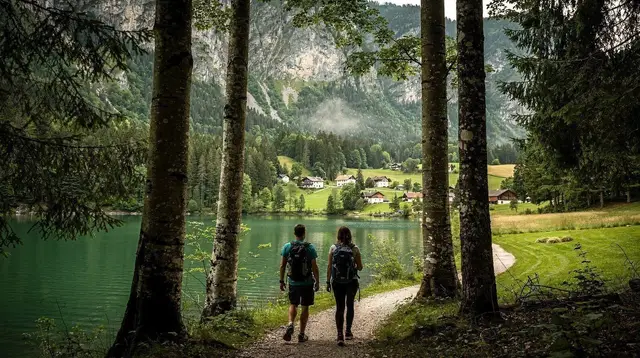
Lake Bohinj and the Triglav National Park stay accessible for lower-altitude walking, and this is also where winter has its own dedicated excursion: a guided winter tour of Triglav National Park from Bled covers the snow-season version of the park with a guide who knows which trails and viewpoints are actually walkable that week, which matters more in winter than in any other season.
The Karst Caves: An Underground Escape From the Cold
If one region of Slovenia is built for winter travel, it’s the Karst. Postojna Cave and Škocjan Caves hold a constant 8 to 12 degrees Celsius inside no matter what the surface is doing, which means winter reverses the usual packing logic: in August the caves feel like a cold surprise, but in January they can feel almost mild next to the air outside.
The catch is the same one that applies year-round — bring a real layer regardless of the season, because 8 to 12 degrees is never actually warm. The Karst Cave Temperature guide covers this in more detail, and Postojna Cave Tickets and Tips walks through the booking process, which requires choosing a fixed date and time slot in practice year-round, winter included.
Predjama Castle, built into the mouth of a 123-metre cliff, is if anything more dramatic under grey winter light or a light snow than in peak summer glare, and the combined Postojna-plus-Predjama ticket (49.90 EUR versus 58.90 EUR bought separately) applies regardless of the month. Lipica and its stud farm, home of the Lipizzaner horse since 1580, also runs its usual programme through winter, just with fewer visitors sharing it. This corner of the country arguably suffers the least from a winter trip and gains the most from the lighter crowds — worth weighing against summer for anyone with a flexible travel date.
The Coast: Slovenia’s Winter Escape Hatch
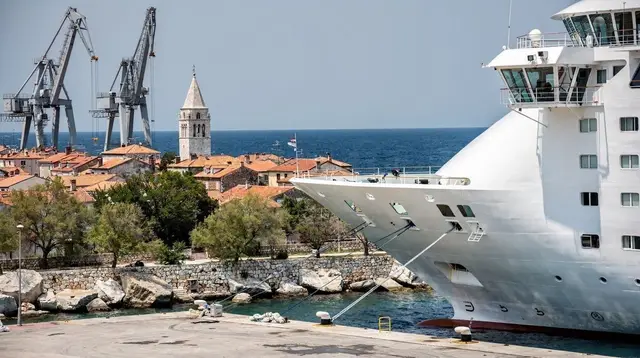
Forty-six kilometres of Adriatic coastline gives Slovenia something most alpine countries don’t have on hand for the cold months: a genuinely milder pocket a couple of hours from the capital. Piran, with its Venetian old town and Tartini Square, and neighbouring Portorož run noticeably warmer than Ljubljana or the Julian Alps in the same week, without the same summer crush of visitors.
A guided day such as the panoramic Slovenian coast tour to Piran listed under coastal excursions, or simply a self-planned day trip using Piran Day Trip From Ljubljana, works as a reset between colder mountain or Karst days. For a slower, indoor kind of warmth, the country’s thermal spas and wellness guide covers an option that has nothing to do with weather at all.
Skiing Without Losing the Rest of the Trip
Skiing is the other reason winter travellers come to Slovenia in the first place, and it deserves its own dedicated reading rather than a summary here — see Skiing in Kranjska Gora and Skiing at Vogel and Krvavec for resort details, lift setups and season timing. What’s worth flagging on a planning page like this one is how easily a ski trip and a sightseeing trip combine here: Bled and Ljubljana both sit within day-trip range of Kranjska Gora and Vogel, so a week that mixes two or three snow days with two or three city and cave days is a realistic shape for a Slovenian winter itinerary, rather than a compromise between two separate trips.
Practicalities: Driving, Timing and What Not to Assume
A car isn’t required for the winter highlights in this guide — Ljubljana, Bled and the Karst caves are all well served without one, and Slovenia Without a Car covers the logistics in more depth.
Anyone driving in, whether from Italy, Austria or Croatia, still needs the electronic e-vinjeta: 16 EUR a week or 32 EUR a month for a standard car (category 2A), more for taller vehicles, bought online or at a petrol station before getting on the motorway — see the Slovenia Vignette Guide for the full breakdown. Mountain roads demand more caution in winter than in summer, and as covered above, some — the Vršič Pass chief among them — simply close for the season rather than just becoming slower.
One border detail is easy to miss and worth repeating here: Slovenia is inside Schengen, but temporary checks have been reinstated at its borders with Croatia and Hungary, introduced in October 2023 and extended repeatedly, currently through 21 December 2026. A traveller arriving from Zagreb in winter — perhaps on something like the full-day best-of-Slovenia tour from Zagreb — should still expect the possibility of a border check, season notwithstanding. Getting to Ljubljana From Zagreb has the fuller picture.
Currency and payment don’t change with the season — Slovenia has used the euro since 2007 — but two winter-specific habits are worth building in: shorter daylight means front-loading outdoor time earlier in the day, and colder, wetter weather makes an indoor fallback (a museum, a cave, a cooking class such as the Belokranjska pogača cooking class) worth keeping in reserve for the days when the mountains or the lake don’t cooperate.
A Simple Way to Sequence a Winter Trip
There’s no single correct winter route, but a workable logic looks like this: Ljubljana first, since it’s the least weather-dependent stop and the easiest to enjoy on a short, grey day; the Karst caves next, since they’re immune to the season entirely; Bled and the mountains after that, timed for whichever days forecast the clearest weather, since alpine views are the most weather-sensitive part of the trip; and the coast held in reserve as a warmer buffer day if the mountains turn uncooperative.
Slovenia in One Week and the shorter Slovenia Winter Getaway itinerary both follow a version of this logic and are worth cross-checking against whatever dates you’re actually travelling on.
Frequently Asked Questions About Winter Travel in Slovenia
Is Ljubljana worth visiting in winter?
Yes. The old town is compact enough to enjoy on foot regardless of weather, the castle and its funicular run year-round, and most of what fills the museum and gallery side of the Ljubljana Card is entirely indoors, which suits short winter days well.
Is Lake Bled frozen in winter?
Not reliably. Lake Bled does not consistently freeze solid enough to plan an activity around, so treat a winter visit as a scenic, cold-weather stop rather than an ice-skating trip. Bled Castle stays open on its usual ticketing, and pletna boat trips to the island continue when conditions and demand allow.
Can I visit Vintgar Gorge in winter?
No. Vintgar Gorge operates only from April to November and is closed through the winter months, with exact opening and closing dates depending on the weather each year. Plan a different Bled-area outing if you are travelling between December and February.
Is the Vršič Pass open in winter?
No. The Vršič Pass, with its 50 hairpin bends linking Kranjska Gora to the Soča Valley, closes to snow for the season. If a Julian Alps loop over the pass is part of your plan, it needs to happen outside winter.
Do I need a car to see Slovenia in winter, or is public transport enough?
A car opens up more of the country, but it isn’t required for the winter highlights: Ljubljana, Bled and the Karst caves are all reachable and well documented for travellers without one. If you do drive, budget for an electronic vignette and expect mountain roads to demand extra caution.
Are the Karst caves open in winter?
Yes, year-round. Postojna Cave and Škocjan Caves hold a steady 8 to 12 degrees Celsius inside no matter the season, which in winter can feel milder than the air outside — bring a jacket regardless, since the difference works in the opposite direction from summer.
Is it worth combining skiing with sightseeing in a winter trip?
It usually is, since Kranjska Gora, Vogel and Krvavec sit within day-trip range of Ljubljana and Bled. Building a few ski or snow days around the sightseeing, rather than choosing one or the other, is how most winter itineraries in Slovenia are actually put together.
What should I pack for a Slovenian winter trip?
Layers for a cold, often near-freezing Ljubljana; a warmer jacket for the mountains around Kranjska Gora and Bohinj; and, less obviously, a jacket for the caves too, since 8 to 12 degrees underground is comfortable but not warm. A coastal day around Piran or Portorož calls for lighter layers than anywhere else in the country at the same time of year.
Seasonal experiences on GetYourGuide
Verified deep-linked GetYourGuide tours. Book through these links and we earn a small commission at no cost to you.
GetYourGuide does not provide a product photo for this activity — the image shows the meeting point, photographed by us.