Slovenia in Summer: What to Expect in July and August
What is Slovenia like in summer (June to August)?
Summer in Slovenia means hot weather in Ljubljana, often above 30°C, and peak season crowds at Lake Bled and along the Adriatic coast. The Karst caves stay at 8-12°C year-round, so pack a light jacket even for an August visit, and book popular sights like Vintgar Gorge and Postojna Cave ahead of time.
The Two Faces of a Slovenian Summer
June through August is Slovenia’s warmest and busiest stretch, and also its most physically active one. Ljubljana sits in a river basin that traps heat, so a July afternoon in the old town regularly pushes past 30°C, with the stone streets around the Triple Bridge holding warmth well into the evening. At the same time, this is the season when the country’s outdoor attractions are at their best: the Soca River is warm enough to swim in stretches, the Adriatic coast is in full holiday mode, and long daylight hours (sunset well after 8 p.m. in June) leave room for a full day trip and a lazy dinner afterward.
Summer is genuinely a good season to visit Slovenia. It is not, however, a season you can pack for based on the surface temperature alone — the country’s geography moves faster than its calendar. Ljubljana’s heat has almost nothing to do with what you will feel forty minutes away, underground in the Karst, or on the shaded upper trails of the Julian Alps. This guide covers what a July or August trip actually looks like, region by region, and the one packing mistake that catches even prepared travelers.
Ljubljana in the Heat
Expect Ljubljana in summer to feel more Mediterranean than Central European. Daytime highs regularly clear 30°C, humidity builds by early afternoon, and there is little shade over the pedestrianized center around Presernov trg and the riverside quays. The upside is that Ljubljana handles heat well: outdoor cafe terraces along the Ljubljanica stay busy and shaded by plane trees, the funicular gives a quick, air-conditioned way up to Ljubljana Castle without the climb, and the free Kavalir electric shuttles are a genuinely useful way to move around the pedestrian zone without walking in direct sun.
A practical rhythm for a summer day in the capital: mornings for the old town and the castle, an indoor stretch through the middle of the day (a museum, a long lunch, the National and University Library), then the riverside and Tivoli Park again once the heat breaks in the early evening. For a month-by-month sense of how July and August compare with the shoulder seasons, see our guide to Slovenia’s weather by month.
The Cave Trap: Why You Still Need a Jacket in August
This is the single most common packing mistake for a Slovenian summer trip, and it is worth stating plainly: the Karst caves are cold all year, including in the middle of a heatwave. Postojna Cave and the Skocjan Caves both sit at a steady 8-12°C year-round, a temperature set by the rock and the underground rivers, not by the season above ground. Arrive in shorts and a t-shirt on a 32°C August afternoon, walk into Postojna’s underground train tunnel, and the drop is immediate and uncomfortable — plenty of visitors end up buying an overpriced fleece at the gift shop because of exactly this miscalculation.
The fix costs nothing: fold a light jacket or fleece into your day bag any day that includes a cave visit, alongside closed shoes with grip, since the paths can be damp. For more detail on what the temperature actually does to your body underground and how to dress in layers that work both outside and in, see our guide to Karst cave temperatures and what to wear. If caves are on your list, plan the visit to Postojna and the nearby Predjama Castle, and to the Skocjan Caves, as a full changeover in wardrobe logic for that stretch of the day — not as an afterthought.
Lake Bled and Bohinj at Peak Season
Summer is Bled’s busiest season by a wide margin. Expect full parking around the lake by mid-morning, a queue for the traditional pletna rowing boats out to the island, and a lakeside path that is genuinely crowded at midday in July and August. None of this makes Bled not worth visiting — the setting, with the island church and the castle on its cliff, still earns its reputation — but it rewards an early start.
Arriving for sunrise or staying through the evening after day-trip buses have left gives a noticeably calmer version of the same lake. The crowd question deserves its own deeper answer, which we cover fully in our guide to avoiding crowds at Bled, and in the practical logistics of parking in Bled and getting to Bled without a car.
Vintgar Gorge, a short drive from Bled, is open through the summer months and requires a timed entry slot booked in advance in season — walk-up visits are not guaranteed a spot on a busy August day. Lake Bohinj, inside Triglav National Park, is the quieter alternative in the same area: no island, no castle, but far fewer people and a lake genuinely swimmable in summer heat, with the Vogel cable car running to give views over the whole valley.
The Coast: Slovenia’s Most Reliable Beach Weather
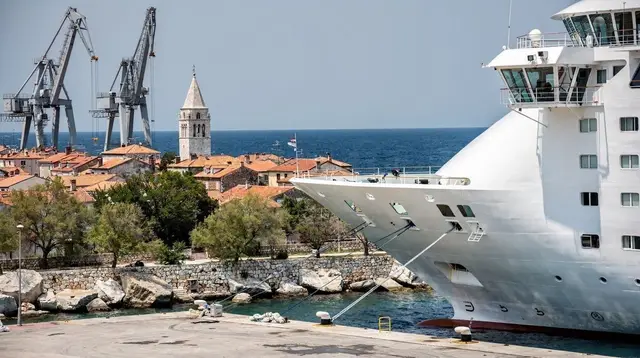
The Adriatic coast around Piran, Portoroz, Izola and Koper is where a Slovenian summer looks most like a Mediterranean one: hot, sunny, and busy with both domestic and international holidaymakers. Piran’s Tartini Square and its Venetian old town are worth the visit regardless of season, but summer adds swimming, boat trips and the full resort infrastructure of Portoroz next door. Evenings on the coast are notably more comfortable than inland Ljubljana, with a sea breeze taking the edge off the day’s heat.
a full-day panoramic tour along the Slovenian coast is a straightforward way to see Piran, Portoroz and Izola in one outing without driving and parking yourself through three separate old towns.
What Summer Is Actually For: Water and the Julian Alps
If there is one season built for Slovenia’s adventure side, it is this one. The Soca River, in its emerald stretch through Bovec, Kobarid and Tolmin, is at its most approachable for beginners in summer, once the colder, higher snowmelt flows of spring have settled. Whitewater rafting, canyoning and kayaking all run their fullest schedules from June to August — for the specifics of when the river is at its best for each activity, see our guide to the rafting season on the Soca and to the best time for the Soca Valley generally.
a whitewater rafting run on the Soca River is the classic way to experience this stretch of water, and for a broader loop that pairs the river with more of the Julian Alps and Lake Bohinj in a single day, a combined Bovec and Bohinj adventure day trip from Bled covers both without requiring your own car.
Higher up, the Julian Alps around Kranjska Gora and the Vrsic Pass are only fully open in summer — the pass itself is closed to snow for much of the rest of the year — making June to September the real window for driving its 50 hairpin bends or hiking the trails that branch off it.
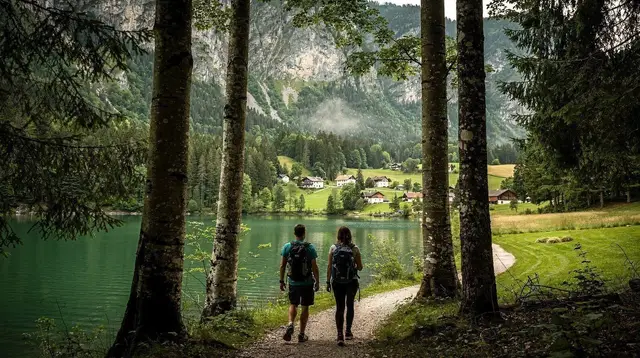
A full loop through this region is laid out in our Julian Alps adventure itinerary. Lower valley trails and the Pokljuka plateau are comfortable to walk even on a warm day if you start early; the exposed high routes toward Triglav itself are better tackled in the cool of morning, since Slovenian summer afternoons can bring sudden thunderstorms in the mountains.
For travelers who want the season’s landscapes captured rather than just walked through, a guided creative photography adventure around Slovenia’s landscapes is built around exactly this kind of long summer light.
Booking Ahead: What Fills Up in Summer
Summer is Slovenia’s tightest season for advance booking, and it catches travelers who assume a small country means small crowds. Postojna Cave’s own ticketing system requires choosing a specific date and hour, which in July and August routinely sells out the popular midday slots days ahead. Vintgar Gorge works the same way in season.
Parking at Bled fills early, and popular Soca Valley rafting departures can be booked out by lunchtime on a sunny August day. Our full rundown of what needs to be booked ahead of arrival, and what can safely wait until you land, is in our guide to what to book in advance in Slovenia — treat it as a checklist for the two or three weeks before a summer trip specifically, since the same list is far more relaxed in April or October.
Packing and Practical Notes for a Slovenian Summer
- Layer for two climates in one day. A t-shirt and light layers for Ljubljana, Bled or the coast; a jacket or fleece for any cave visit, kept in your bag rather than the hotel room.
- Start early. Both the heat and the crowds build through the morning; an 8 a.m. start at Bled or in Ljubljana’s old town buys real breathing room by 10.
- Hydrate and use the shade. Slovenia’s tap water is excellent everywhere, including straight from a restaurant tap in Ljubljana, so refill rather than buy bottled water.
- Sun protection matters more on the coast and at altitude than the temperature alone suggests — reflection off the Adriatic and thinner air in the Julian Alps both increase UV exposure.
- Afternoon thunderstorms are a mountain-summer pattern, particularly around the Julian Alps and Triglav National Park; plan high-altitude hiking for the morning and keep an eye on the sky after lunch.
- Footwear for two purposes: comfortable walking shoes for cities and gorges, and grippy closed shoes for anything underground, where paths can be wet regardless of the weather outside.
None of this requires overpacking. A single light jacket, a reusable water bottle and shoes that work both for a city walking tour and a damp cave path cover the vast majority of what a Slovenian summer itinerary throws at you — the trick is simply remembering that the country’s compact size puts sharply different microclimates less than an hour apart.
Frequently Asked Questions About Slovenia in Summer
Is Slovenia too hot to visit in summer?
Ljubljana regularly climbs past 30°C in July and August, and the city center offers limited shade around midday. It is not too hot to visit, but plan indoor or shaded activities for the early afternoon and save walking tours for morning or early evening.
Do I need a jacket in Slovenia in summer?
Yes, if any cave is on your itinerary. Postojna Cave and the Skocjan Caves sit at a constant 8-12°C all year, including in August, and the contrast with a 30°C surface day is sharp. A light jacket or fleece in your day bag solves this in seconds.
Is Lake Bled crowded in July and August?
Bled is at its busiest in summer, with full parking, queued pletna boats and a packed lakeside path in the middle of the day. Arriving early morning or late afternoon reduces the crush considerably; a dedicated look at the crowd question is in our guide to avoiding crowds at Bled.
What activities are best for a Slovenian summer?
Summer is the strongest season for anything on or in water: whitewater rafting and kayaking on the Soca River, swimming at Bled and Bohinj, and time on the Adriatic coast around Piran and Portoroz. It is also a comfortable season for lower-altitude hiking, started early to avoid the midday heat.
Do I need to book tickets in advance in summer?
For the popular sights, yes. Vintgar Gorge requires a timed entry slot in season, and Postojna Cave’s official booking system already forces you to pick a date and an hour, which in practice means booking ahead. See our summary of what to book in advance in Slovenia.
Is the Slovenian coast very hot in summer?
Piran, Portoroz, Izola and Koper have a Mediterranean summer: hot, sunny and considerably more humid than inland Ljubljana, with sea breezes taking the edge off in the evening. It is the most reliably beach-weather part of the country from June to August.
Seasonal experiences on GetYourGuide
Verified deep-linked GetYourGuide tours. Book through these links and we earn a small commission at no cost to you.
GetYourGuide does not provide a product photo for this activity — the image shows the meeting point, photographed by us.