Rafting the Soča River: What to Expect in Bovec and Kobarid
What is rafting on the Soča River like?
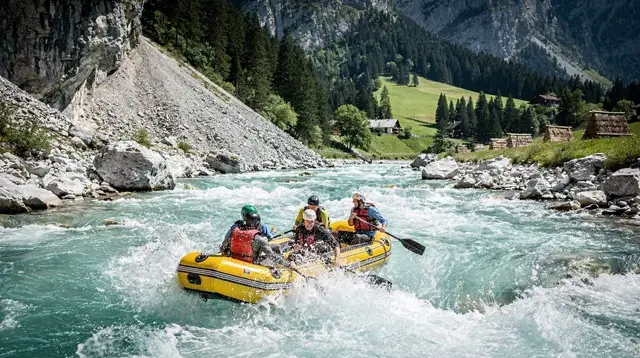
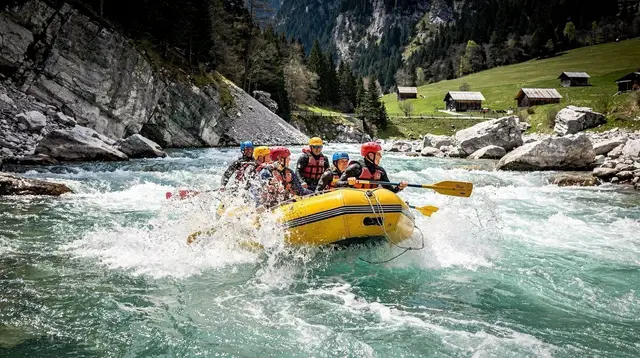
Guided rafting on the Soča runs Class II-III rapids on a glacier-and-snowmelt-fed, turquoise river near Bovec and Kobarid in the Julian Alps. A typical outing lasts two to three hours including the safety briefing and gear-up, and a wetsuit, helmet, and life vest are provided and required. The water is cold year-round, but it is highest, fastest, and coldest in spring, which changes both the experience on the water and what you need to wear.
Where Soča rafting actually happens
The river that gives this whole corner of the Julian Alps its color is the Soča, and rafting on it is less a single activity than a small industry built around the town of Bovec. The river drops out of the mountains near the Italian border, runs an almost unreal turquoise-green through the Soča Valley, and widens into the calmer, wider stretches that rafting operators use between Bovec and Kobarid. A smaller number of trips continue further downstream toward Tolmin, where the water slows and the valley opens up.
This page is about rafting specifically — sitting in an inflatable boat with five to seven other people, following a certified guide’s calls, and paddling in unison through a run of rapids. It does not cover the best months to do it, which has enough moving parts (snowmelt, rainfall, operator schedules) to deserve its own page — see when to raft the Soča for that. It also doesn’t get into canyoning or kayaking on the same water, both of which are close cousins but different activities with their own gear, group size, and skill requirements — those live at canyoning in Slovenia and kayaking the Soča River.
What this page does cover is what actually happens on a rafting trip, how technical it is, what to wear, and the one thing that trips up a lot of first-timers: assuming the river feels the same in July as it does in April.
What a guided rafting trip includes
Every commercial rafting outfit in Bovec and Kobarid works the same basic way. You show up at a shop or meeting point, sign a waiver, and get fitted with a wetsuit, a splash jacket, a helmet, and a life vest — these are provided by the operator and are not optional extras, they’re part of the safety setup required to be on the water at all. A guide who holds a river-guiding license takes the stern of the raft and calls the strokes; everyone else paddles as a crew.
The put-in and take-out points vary a little by operator and by water level that week, but a standard trip covers somewhere around 8 to 10 kilometers of river, mixing flat, scenic stretches with several named rapids in between. Photos are often taken by a second guide stationed at one of the bigger rapids and sold or included afterward — worth checking when you book if that matters to you, since some tours build it into the price and others treat it as an add-on.
A few of the tours below are built specifically around this experience:
a guided Soča rafting run with photos included is the straightforward version of the trip described on this page — briefing, gear, rapids, photos, done in an afternoon. a longer Soča River Experience packages rafting with more time on and around the water for people who want to make a full half-day of it. the Gecko rafting tour departing from Bovec is a Bovec-based operator running the same core format with its own scheduling and pickup points.
How technical is it: rapid grades explained
Whitewater is graded on an international scale from Class I (barely moving water) to Class VI (unraftable). The standard commercial trip on the Soča runs Class II to III rapids — enough to bounce the raft around, soak everyone, and require real paddling on command, but built for people with zero prior rafting experience. You don’t need to be able to swim well in the sense of doing laps, but you do need to be a confident swimmer, comfortable in moving water, because every operator requires it and will turn away guests who can’t confirm it.
A smaller number of operators offer sections with sharper drops and more technical lines for groups who specifically ask for it, sometimes marketed as a “sport” or “adrenaline” version of the trip. If that’s what you’re after, say so when booking rather than assuming the standard family-friendly run will deliver it — the two are genuinely different products even though both are called “rafting.”
| Trip type | Typical grade | Who it suits |
|---|---|---|
| Standard guided rafting | Class II–III | First-timers, families with older kids, groups |
| Sport / adrenaline rafting | Higher, more technical lines | Guests who ask for it specifically, prior experience helpful |
| Family-friendly kayak or SUP alternative | Flat to gentle current | Younger children, non-swimmers wanting to stay on calmer water |
If you’re traveling with a mixed group and someone isn’t comfortable with Class III water, a guided stand-up paddleboard tour on the Soča or a guided kayak tour on the same river covers gentler stretches at a pace that’s easier to opt out of individually.
What to wear, and why spring changes everything
This is the detail that catches people out more than any other: the Soča is not a lake that warms up by August. It’s fed by snowmelt and alpine springs, which means the water stays cold in every season a raft can run on it — but “cold” in July and “cold” in April are not the same thing, and treating them as interchangeable is the single most common mistake first-time bookers make.
In spring, snowmelt from the high peaks around the Vršič Pass and the wider Julian Alps swells the Soča into a faster, higher, noticeably colder river. Trips still run, but the current is stronger, the water temperature drops further, and the standard gear — full wetsuit, splash top, neoprene socks or booties, sometimes gloves — stops being a nice-to-have and becomes the difference between an enjoyable afternoon and a miserable one. Some operators adjust routes, minimum ages, or group sizes during the highest spring flow, purely on safety grounds, so don’t be surprised if a route or age limit looks different than it would in July.
By mid-to-late summer, the river has dropped and warmed a little from its spring peak, the current is gentler, and the standard trip is closer to what most people picture when they imagine rafting: brisk, refreshing, splashy, but manageable. It is still genuinely cold water — nobody rafts the Soča in a swimsuit alone — but the gap between “cold” and “aggressively cold” is real, and it’s entirely about the season, not the air temperature on the day. A hot, sunny day in Bovec tells you nothing about what the river itself feels like.
Practically, that means:
- Spring bookings: dress for cold water first, sun second — full wetsuit, splash top, secured footwear, and don’t skip the neoprene booties if offered.
- Summer bookings: the standard kit is still required, but the experience is closer to “bracing” than “shocking.”
- Either season: bring a full dry change of clothes, a towel, and a plastic bag for wet gear, since changing rooms at rafting bases are functional, not spacious.
For the fuller picture of which months suit which activities on this river — rafting, canyoning, kayaking, or simply photographing it from a bridge — the seasonal breakdown lives at best time for the Soča Valley.
Choosing an operator and what to check before you book
Rafting on the Soča is a licensed, regulated activity — commercial operators need permits to run trips, and guides need a river-guiding qualification, which is part of why the gear and safety briefing feel so standardized across companies. That said, operators still differ in a few ways worth checking before you commit:
- Group size: some rafts run six people, others up to eight or nine; smaller groups usually mean more individual attention from the guide.
- Photos: included, sold separately, or not offered at all — ask if this matters to you.
- Pickup: some tours include transfer from Bovec or Kobarid accommodation, others expect you to reach the base yourself.
- Route and grade: confirm whether you’re booking the standard family run or a more technical option.
- Minimum age and weight: these shift with water level, so treat any number you read online as a starting point and confirm at booking, especially in spring.
Because this is an outdoor activity dependent on river conditions, it’s one of the items worth locking in ahead of arrival rather than hoping to walk up and book same-day in peak season — see what to book in advance in Slovenia for the short list of things, rafting included, that fill up fastest. General river and outdoor-activity safety norms for Slovenia are covered at safety in Slovenia.
Getting to Bovec and Kobarid for a rafting day
Bovec and Kobarid sit in the upper Soča Valley, tucked against the Italian border on the far side of the Julian Alps from Ljubljana — this is not a quick hop, and it shapes how most visitors build the day. Coming from Ljubljana or Bled by car, the classic scenic route climbs over the Vršič Pass via Kranjska Gora, a spectacular but slow mountain road that is closed by snow in winter and not something to attempt in poor weather or after dark. An alternative route runs further south and avoids the pass, at the cost of the views.
Given the drive time in either direction, most visitors either stay a night or two in Bovec or Kobarid to combine rafting with the valley’s other outdoor activities, or build a full day around it as part of a wider Julian Alps loop. If you’re planning the wider trip rather than just the rafting, the Julian Alps adventure itinerary lays out a multi-day sequence that includes this valley alongside Kranjska Gora and the pass itself, and the Vršič Pass piece explains why that road isn’t a year-round option.
For the practicalities of the drive itself — vignette requirements, road conditions, what to expect from Slovenian mountain roads — general driving guidance is covered in the site’s broader Slovenia driving material rather than repeated here.
Rafting versus canyoning and kayaking: picking the right activity
Because all three activities use the same river and the same handful of towns as a base, it’s worth being clear about what actually separates them before you book, rather than discovering the difference on the day.
| Activity | Group setup | Physical demand | Best for |
|---|---|---|---|
| Rafting | 6–9 people, one guide steering | Low to moderate — follow commands, paddle together | First-timers, families, groups who want a shared experience |
| Canyoning | Small group, one or two guides | Higher — climbing, jumping, sliding, swimming through a gorge | Guests wanting a more physical, adrenaline-focused day |
| Kayaking | Solo or small group, individual boats | Skill-dependent — real personal control of the boat | Guests wanting more independence and a steeper learning curve |
If the whitewater itself is the draw but you want more individual challenge than a shared raft offers, the guided kayak tour on the Soča is the natural next step up, with an instructor rather than a steering guide. Full detail on canyoning — grades, what a route actually involves, safety norms — sits at canyoning in Slovenia and canyoning safety and what to expect. If you’d rather stay above the water than in it, the paragliding guide for the Soča Valley covers the third major adrenaline activity based out of the same towns.
For travelers looking for a calmer, family-oriented alternative to whitewater specifically, similar guided river activities exist near Bled on the Sava rather than the Soča: rafting the Sava River and a family kayaking tour on the Sava run gentler water closer to Bled, useful if the long drive out to Bovec doesn’t fit your itinerary.
Practical checklist before you go
A short list to run through before a Soča rafting booking, regardless of season:
- Confirm you and everyone in your group can swim and are comfortable saying so at check-in.
- Book ahead in July and August; same-day slots get tight.
- Check the specific route’s minimum age and weight, especially for a spring trip.
- Pack a full dry change of clothes, a towel, and closed-toe water shoes if you have them.
- Treat spring bookings as a colder, faster version of the same activity — dress and plan accordingly.
- Ask about photos when booking if that’s part of what you want from the day.
- Leave a buffer day if rafting is the centerpiece of your visit to Bovec — river levels occasionally push a cancellation.
For everything else worth doing in and around Bovec beyond the river itself, the wider things to do: rafting category covers other operators and formats across the region.
Soča River Rafting FAQ
How difficult is rafting on the Soča River?
Standard guided trips run Class II to III rapids, graded as moderate whitewater suitable for first-timers with no prior experience. Some operators run higher sections with sharper drops for guests who specifically ask for a more technical route, but the default booking on the Soča is built for beginners in a raft with a certified guide steering from the back.
Do I need to know how to swim to go rafting?
Yes. Every operator on the Soča requires basic swimming ability, since you wear a life vest but are expected to be comfortable in moving water if the raft flips or you’re asked to float a short section. Non-swimmers are generally turned away at check-in, so don’t leave this detail out when you book.
What should I wear rafting on the Soča River?
Wear a swimsuit or quick-dry base layer underneath the wetsuit the operator provides, plus old sneakers or sandals with a back strap — flip-flops are not accepted, and some outfitters rent neoprene booties. Bring a full change of dry clothes and a towel for afterward, and skip cotton, which stays cold and wet for hours.
Is the Soča River cold to raft on?
Always, even in August, because it is fed by snowmelt and alpine springs rather than warming in the sun like a lake. It is at its coldest and most forceful in spring, when snowmelt swells the river, so a full wetsuit, splash top, and neoprene footwear matter far more in April and May than they do by late summer.
How long does a Soča rafting trip take?
Budget two to three hours door to door for a standard trip: a short briefing and gear fitting, roughly 8 to 10 kilometers on the water taking around an hour to ninety minutes depending on water level, and time to return kit and change. Multi-activity days that pair rafting with a via ferrata or canyoning session run longer.
What is the minimum age for rafting on the Soča?
Most licensed operators set a minimum age somewhere around 8 to 10 years old for the standard family-friendly stretch, though this varies by company and by water level that week — high spring flow can push the minimum age or weight higher for safety. Check the specific tour’s listing before booking if you’re traveling with children.
Do I need to book Soča rafting in advance?
In July and August, yes — Bovec’s guided rafting slots fill up, especially in the late morning and early afternoon window most day-trippers from Ljubljana or Bled aim for. Outside peak summer, same-day or next-day bookings are usually possible, but river levels can cancel a slot on short notice, so build in a spare day if rafting is the main reason for your trip.
What’s the difference between rafting, canyoning, and kayaking on the Soča?
Rafting puts a group of six to eight people in one inflatable boat under a guide’s direction, so no personal skill or fitness is really required beyond following instructions. Canyoning is a smaller-group, more physical descent through a side gorge on foot, by rope, and by jumping or sliding into pools. Kayaking puts you alone or in a small boat with far more individual control and a steeper learning curve.
tours.rafting
Verified deep-linked GetYourGuide tours. Book through these links and we earn a small commission at no cost to you.
GetYourGuide does not provide a product photo for this activity — the image shows the meeting point, photographed by us.