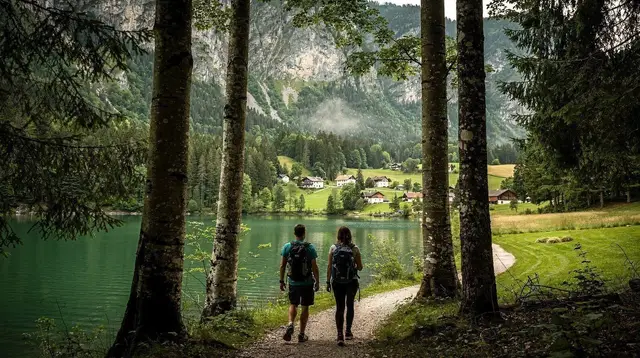
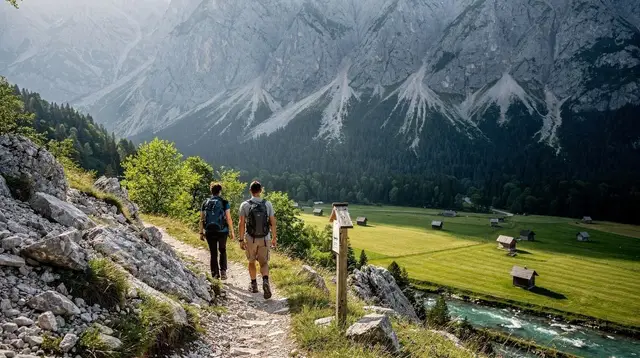
Julian Alps Adventure: Soča Valley, Bovec and the Vršič Pass
A Road Trip Built Around One Mountain Road
Most visitors to Slovenia never leave the Ljubljana–Bled–Postojna triangle, which means most visitors never see the part of the country that looks the most like a postcard of the Alps. This itinerary is different: it is built around a single road, the Vršič Pass, and what lies on either side of it. Cross it westbound and you drop into the Soča Valley, an improbably turquoise river carving through limestone canyons, with Bovec as its adventure-sports capital. Stay east of the pass and you are in Kranjska Gora, Slovenia’s best-known ski town, quieter and greener the rest of the year.
Four days is enough to drive the pass, spend real time on and around the water in Bovec, and loop back through Kobarid and Tolmin, two towns that carry the memory of the First World War’s Isonzo Front alongside their own river scenery. This is not a lake-and-castle trip. It is for travelers who want to raft, canyon, or simply drive a genuinely spectacular mountain road with their own hands on the wheel.
One firm caveat before anything else: this itinerary does not work in winter. The Vršič Pass closes to cars once the snow sets in, generally from November into May, and the whole route depends on it being open. If you are traveling between November and April, this is not your trip — check our seasonal guide to the pass closures and look instead at what the region offers in winter. This route also does not cover the ascent of Triglav itself; that summit push has its own gear, guiding and timing requirements, and is treated separately in our Slovenia hiking itinerary.
Before You Go: Car, Vignette, and Timing
You will need your own car for this route — public transport barely touches the Vršič Pass and runs thin around Bovec. If you are renting in Ljubljana, our car rental guide covers what to check before you drive off. Every Slovenian motorway and expressway requires an electronic vignette, the e-vinjeta, bought online or at a petrol station before you drive; our vignette guide explains the categories and prices, and it is worth buying it the moment you land, before you forget.
Timing matters more here than on almost any other route in this guide. The pass is realistically open from late May through October, with the exact dates depending on snowfall that year. July and August bring the warmest water and the busiest rafting agencies in Bovec; June and September thin the crowds while keeping the road reliably open. Whichever month you go, pack a layer for the pass itself — at over 1,600 meters, mornings are cool even when Bovec below is warm.
Day 1: Ljubljana to Kranjska Gora
Leave Ljubljana in the morning and drive northwest, skirting the edge of the Julian Alps as the valley narrows and the peaks close in. The drive to Kranjska Gora takes under two hours on a clear run, but budget extra time for photo stops — the approach through the upper Sava valley is scenic well before you reach the town itself.
Kranjska Gora is Slovenia’s most famous ski resort, but outside winter it settles into a relaxed alpine base: a walkable old core, chalet-style guesthouses, and immediate access to hiking trails that climb into the surrounding peaks. Spend the afternoon here rather than rushing straight over the pass — it is your last easy day before two more demanding ones, and it lets you get used to mountain driving on quieter roads before tackling the Vršič’s hairpins tomorrow. A short walk from town brings you to viewpoints over the valley, and the town’s restaurants are a good introduction to hearty Slovenian mountain cooking. Overnight in Kranjska Gora.
Day 2: Over the Vršič Pass to Bovec
This is the signature day of the whole trip. Leaving Kranjska Gora, the road climbs almost immediately, and within a few kilometers you are into the switchbacks that make the Vršič Pass famous — around 50 numbered hairpin bends, the upper ones on the northern side still paved with the original cobblestones. Go slowly. Buses and cyclists share the same narrow lanes, and the views over the valley you just left are reason enough to stop often.
At the top, just under 1,611 meters, you cross from the Sava watershed into the Soča’s, and the character of the landscape changes almost at once — sharper, greyer peaks, and a first glimpse of the valley’s namesake color far below. The descent on the western side drops through Trenta and into the upper Soča Valley, tracing the river as it gathers itself into the turquoise ribbon the whole valley is known for.
Arrive in Bovec by afternoon and use the remaining daylight to get your first look at the water up close. A gentler introduction than full rafting is a guided river walk, wetsuit included, wading and swimming sections of the Soča at your own pace — the Soča Valley riverwalking tour from Bovec is built exactly for this half-day slot. Overnight in Bovec.
Day 3: Bovec — Rafting, Canyons, and the Turquoise Soča
Give this whole day to the river and its side canyons. Bovec is Slovenia’s adventure-sports hub for a reason: the Soča’s gradient and clarity make it one of Europe’s better whitewater rivers, and the surrounding limestone has been carved into narrow, swimmable canyons.
For classic whitewater, book a half-day descent — something like the Soča River rafting experience covers a solid stretch of grade II–III rapids with all safety gear supplied, wetsuit included since the water stays cold even in the height of summer. If you would rather combine the river with a bit more adrenaline and a guided, more playful pace, the Soča River Gecko tour runs a livelier version of the same stretch.
Use the afternoon for canyoning if you have not had enough of the water — jumping, sliding and abseiling down one of the valley’s narrow gorges is a different experience from rafting the open river, and outfitters in Bovec run both from the same base; our canyoning guide explains what a typical outing involves and what to expect from the cold. If you would rather stay dry, the trails above town climb quickly into panoramic views over the valley — see our Soča Valley rafting guide and rafting season guide for how conditions shift through the year. Overnight again in Bovec.
Day 4: Kobarid, Tolmin, and the Road Back
Head south from Bovec along the river toward Kobarid, a small town whose quiet streets sit atop a heavy history — this was the epicenter of the Isonzo Front’s twelfth battle in 1917, and Kobarid’s museum on the subject is regarded as one of the best World War One museums anywhere in Europe. Even a short visit adds a layer to the valley that the scenery alone does not give you.
Continue to Tolmin, where the Tolminka and Zadlaščica rivers meet in a gorge at the valley’s southern edge — a good final stop for a swim or a short walk before the drive home. If you want one more day on the water before you leave the region, the rafting tour covering the Bovec–Kobarid stretch runs a longer, more scenic section of the river with photos included, and can be booked as a morning add-on before you head south.
From Tolmin, the drive back to Ljubljana runs south and east, away from the mountains, and takes a little under two hours depending on your route. If this was your only shot at the Julian Alps and you are short on days next time, a guided version of the same terrain — the Best of Julian Alps day tour from Ljubljana — covers the highlights in a single long day without the need to drive yourself.
Practical Notes for Driving the Pass
A few things are worth knowing before you commit to this route rather than an organized tour.
| Consideration | What to know |
|---|---|
| Season | Pass typically open late May–October; closes with first significant snow |
| Road surface | Paved throughout; upper northern hairpins retain historic cobblestones |
| Hairpins | Around 50 numbered bends, most under 2nd gear on the steepest sections |
| Traffic | Buses and cyclists share the road; pull-outs exist but are narrow |
| Fuel | Fill up in Kranjska Gora or Bovec; no fuel stations on the pass itself |
| Vignette | Required on Slovenian motorways before and after the pass, not on the pass road itself |
Bring cash for smaller guesthouses and river-side kiosks in Bovec, keep a jacket in the car even in August, and check a weather forecast for the pass specifically the morning you plan to cross — alpine weather changes faster than valley forecasts suggest. For the wider context on what else the region’s activity providers run beyond rafting and canyons, our things to do in Bovec page and the Soča Valley activities hub are worth a look before you book.
FAQ: Driving the Vršič Pass and the Soča Valley
Is the Vršič Pass open all year?
No. The Vršič Pass closes with the first heavy snow, usually sometime in November, and reopens once the road is cleared and safe, typically in late May. Outside that window it is impassable by car, so this itinerary only works from late spring to autumn.
Do I need a 4x4 to drive the Vršič Pass?
No. A regular car handles the pass fine in dry summer or early autumn conditions. What you need is a driver comfortable with roughly 50 tight hairpin bends, some of them cobbled on the northern side, and a willingness to go slowly and pull over for oncoming traffic.
Can I do this trip without renting a car?
Not really as written. Kranjska Gora, the Vršič Pass and Bovec have limited public transport connections, and the whole point of this route is the drive itself. If you do not want to self-drive, look at organized day tours from Ljubljana instead, or see our car-free Slovenia guide.
Does this itinerary include hiking to the summit of Triglav?
No. Reaching the summit of Triglav is a separate, more demanding undertaking with its own logistics, via ferrata sections and timing needs. This route stays in the valleys and on the pass road; see our dedicated hiking itinerary if the summit is your goal.
Do I need to book rafting and canyoning in advance?
In July and August, yes, ideally a few days ahead, since Bovec’s agencies fill their morning departures fast. In shoulder-season months you can often book a day or two out, but water levels and weather can also cancel a slot at short notice.
How cold is the Soča River, and does that matter for rafting?
The Soča is glacier- and snowmelt-fed and stays cold even in August, which is exactly why every rafting and canyoning outfitter includes a wetsuit in the price. Expect the water to feel bracing regardless of the air temperature.
tours.hiking-mountains
Verified deep-linked GetYourGuide tours. Book through these links and we earn a small commission at no cost to you.
GetYourGuide does not provide a product photo for this activity — the image shows the meeting point, photographed by us.