Wildlife and Nature Watching in Slovenia
Where can I actually watch wildlife and nature in Slovenia?
Forest cover over half the country, so the best bets are the boreal woods of the Pokljuka plateau, the meadows and forest edges around Bohinj, the alpine pastures of Velika Planina, and the wetlands around Lake Cerknica when it is full. None of these guarantee a specific animal, and Cerknica's basin is dry in summer, so timing matters more than the destination.
Most visitors come to Slovenia for a lake with an island, a cave with a train, or a coastline that looks like Venice on a smaller budget. All of that is fine, but it means the country’s actual dominant landscape — forest, and lots of it — gets treated as scenery you drive through rather than something to look at closely. This page is for the traveler who wants to flip that: who has already decided the towns and castles are a bonus, and wants to know where to stand still, what is realistically visible, and when the calendar actually cooperates.
Slovenia Is Mostly Forest, and That Changes What You’re Looking For
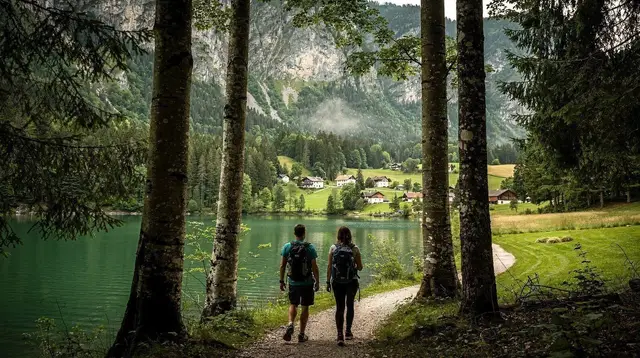
More than half of Slovenia is covered in forest, one of the highest shares in Europe, and it is not a thin decorative fringe around farmland — it runs continuously from the hills south of Ljubljana up into the Alpine foothills and across much of the Karst plateau. That single fact should reset expectations before anything else: this is not African-savanna wildlife watching, where animals stand in the open at a waterhole. It is temperate forest watching, where the honest goal is habitat, sign, and sound — a woodpecker’s drumming, deer tracks in mud, an owl calling at dusk — with the rare direct sighting as a bonus, not a promise.
The good news is that this kind of watching pairs naturally with the rest of a Slovenia itinerary, because the same small size that makes castles and lakes into easy day trips also makes forest edges, wetlands, and alpine pastures easy to reach without committing an entire trip to it.
Pokljuka: The Plateau Built for Forest Birds
If one place on this site deserves the label “go here for forest wildlife,” it is the Pokljuka plateau, the high wooded shelf between Lake Bled and Lake Bohinj. Its mix of dense spruce, open bog, and quiet forest roads supports species that need exactly that combination, including a resident population of capercaillie, one of the more sought-after boreal birds in Europe. Spring is when activity peaks, coinciding with the breeding season and its stricter quiet-zone rules; summer brings hikers and mountain bikers who share the same paths with less regard for silence; winter turns Pokljuka into a cross-country skiing and biathlon venue, which pushes most wildlife deeper into the trees.
Pokljuka rewards patience and early starts far more than it rewards distance covered. A slow walk along a forest road at dawn, stopping often and staying quiet, beats a fast loop every time. For those who want to combine the plateau with a proper hike rather than a slow wildlife walk, the dedicated guide to hiking on Pokljuka covers routes and difficulty in more detail than belongs here.
Wetlands That Come and Go: Cerknica and the Ljubljana Marshes
Slovenia’s most distinctive wetland habitat is also its most seasonal, and getting the timing wrong is the single most common mistake nature-minded visitors make here. Lake Cerknica is an intermittent karst lake: full and enormous — at times the largest body of water in the country — from autumn through spring, and then largely gone by summer, drained through underground channels into a landscape of hay meadows and grazing cattle.
Waterfowl and waders use the flooded basin while it holds water; by July, the birds that made it worth visiting have moved on with the lake. A trip planned around Cerknica’s wildlife in August will find cows in a field, not ducks on a lake — the full story, including why the disappearance happens at all, is in this piece on the lake that vanishes every year.
Closer to the capital, the Ljubljana Marshes occupy the flat, once-swampy ground on the city’s southern edge — reclaimed farmland threaded with drainage canals and pockets of protected reed bed and wet meadow that support species needing open, grassy wetland rather than forest. It is an easy half-day from Ljubljana itself, useful for anyone based in the city who wants a wetland fix without a long drive.
Alpine Pastures: Velika Planina and the High Meadows
Above the tree line, the character of “nature watching” shifts again, from forest cover to open alpine meadow. Velika Planina, reached by cable car from the Kamnik valley, is best known for its cluster of steep-roofed herders’ huts, but the plateau around them is also a genuine alpine grazing landscape — wildflowers through the summer, grazing cattle, and the kind of open sightlines that forest habitats simply don’t offer. The same applies, on a smaller scale, to the pastures at the head of the Logar Valley, where forested slopes give way abruptly to a flat glacial valley floor ringed by peaks.
These high pastures are a summer proposition almost by definition — snow covers them the rest of the year — so June through September is the realistic window, with July and August bringing the fullest bloom and the most livestock back up from the valleys.
The Soča Valley and Bohinj: River Corridors and Forest Edges
Rivers cut their own habitat through forest, and Slovenia’s most photogenic example is the Soča Valley, whose green-to-turquoise water threads through forested gorges from Kranjska Gora down past Bovec, Kobarid, and Tolmin. The river corridor itself supports species tied to fast, clean water — dippers along the banks, for instance — while the forested valley walls above hold the same general woodland community as Pokljuka, just at lower elevation and with more human traffic from rafting and kayaking outfits in high season.
a guided escape into the Soča’s alpine forest, combining the river with the woods above it is one practical way to see this landscape with someone who knows exactly where to slow down, rather than driving the valley road at speed.
Bohinj, Slovenia’s largest permanent lake and the quieter, wilder counterpart to Bled, sits entirely inside Triglav National Park and is ringed by mixed forest that climbs straight from the shoreline. It draws far fewer visitors than Bled, which in practice means quieter forest edges and a better chance of the small, everyday wildlife signs — a heron working the shallows, songbirds along the lakeside path — that crowds elsewhere tend to push out. Those who want to turn a lakeside walk into a proper forest hike should see the dedicated guide to hiking around Lake Bohinj, which goes well beyond what fits on a nature-watching overview.
a full-day nature-focused tour into Triglav National Park from Ljubljana is a straightforward way to cover Bled’s surroundings and the park’s forest habitat in one outing without renting a car, and a day trip built specifically around Bohinj’s lake and forest scenery narrows the same idea down to the quieter lake alone.
For a genuinely different way to take in this terrain, a first-person-view drone flight above Bohinj’s forests and shoreline gives a bird’s-eye pass over exactly the kind of tree canopy and lake edge that is otherwise only visible from a hide or a very long lens.
None of this is a substitute for the park in its own right; anyone planning a trip around Triglav National Park as a destination in itself, rather than as backdrop for wildlife watching, should start with that dedicated page rather than this one.
Bears, Wolves, and Lynx: What’s True and What Isn’t
Slovenia has one of the highest densities of brown bears in Europe, alongside a small, closely monitored population of wolves that recolonized from Croatia in the 1990s and an even smaller, reinforced population of Eurasian lynx. All three are real, well-documented, and almost entirely absent from this site’s coverage area, because they live in the extensively forested hill country south and southeast of Ljubljana — bigger, wilder, less-visited terrain than the Bled-Bohinj-Karst triangle most itineraries cover.
The honest advice: don’t expect to see a bear from a rental car window on the way to Postojna. Bears are shy, largely nocturnal, and go out of their way to avoid roads and trails. Genuine bear-watching happens from fixed hides, at dusk or after dark, run by specialized local guides who know feeding areas and read wind direction — a different kind of outing entirely from a lake walk or a cave tour, and one worth booking separately and well in advance if it’s the priority for a trip.
Foraging: What’s Actually Allowed
Slovenes forage seriously — mushrooms, wild berries, and chestnuts in autumn are a real part of the culture, not a tourist activity dressed up as one — and visitors are generally free to join in in most public forest, within limits. As a rule of thumb, personal, non-commercial picking is tolerated up to a modest daily amount per person, while picking is banned outright inside strict nature reserves and the core zone of Triglav National Park, where signage marks the boundary.
Because the specifics can vary by municipality and protected area, the safe approach is to ask locally — a tourist information office or a guesthouse host will know the current rules for wherever you are — and to never pick anything for the table unless you or a guide can identify it with total confidence. Mushroom poisoning is a real seasonal news story in Slovenia, not a scare tactic.
Autumn, roughly September through November, is when this is most rewarding: cooler, damper conditions bring mushrooms up across the same forests covered above, from the hills around Pokljuka to the lower slopes around Bohinj.
When to Go, By What You Want to See
| Target | Best window | Where | Note |
|---|---|---|---|
| Forest birds (capercaillie and boreal species) | April – June | Pokljuka plateau | Quiet zones strictest during breeding season |
| Wetland birds, waterfowl | October – April | Lake Cerknica, when full | Basin dries out by summer |
| Alpine wildflowers and grazing animals | June – September | Velika Planina, Logar Valley | Snow-covered outside this window |
| Forest mushrooms and foraging | September – November | Most lowland and mid-altitude forest | Daily limits and reserve bans apply |
| River-corridor species (dippers, herons) | April – October | Soča Valley, Lake Bohinj shoreline | Quietest outside peak rafting season |
| General forest walking and animal sign | Year-round, best at dawn/dusk | Pokljuka, Bohinj forest edges | No single best month; consistency beats timing |
The pattern across every row: pick the target first, then the season, then the place. Trying to do all of it on one visit at one time of year is the fastest way to see none of it well.
Getting There Without Losing the Point
Almost everything on this page sits outside easy public-transport reach, which is not true of the castles and lakes elsewhere on this site. Pokljuka and Velika Planina in particular are awkward or impossible without a car; the guide to getting around without a car is honest about where that plan breaks down, which is largely here. For anyone renting, the flexibility to leave before sunrise or linger past sunset — the two windows when forest wildlife is most active — is worth more than any amount of research into exact locations.
For a broader menu of guided options built around nature rather than towns, the wildlife and nature activities hub collects tours across all of these regions in one place, and the coastal counterpart to this inland picture — salt-pan birdlife around Piran, where shallow evaporation ponds draw waders that never make it inland — is worth a look for anyone extending a nature-focused trip out to the Adriatic.
Nature-Watching in Slovenia: Common Questions
Will I actually see bears or wolves in Slovenia?
It is unlikely on a general sightseeing trip. Slovenia holds one of the densest brown bear populations in Europe, plus a small resident wolf and lynx population, but almost all of it lives in the forested hill country south of Ljubljana, well outside the areas covered on this site, and the animals are shy, mostly nocturnal, and avoid trails. Seeing one takes a dedicated hide-based tour with a specialized operator, booked in advance, not a walk through Pokljuka or Bohinj.
Is Lake Cerknica good for birdwatching?
Yes, but only when it holds water, roughly from autumn through spring, when waterfowl and waders use the flooded basin. In summer the lake dries out almost completely and becomes hay meadow and pasture, so a July or August visit for birds will be a disappointment. Check current conditions before planning a trip around birds specifically.
Can I forage for mushrooms or berries in Slovenia?
Recreational picking for personal use is generally tolerated across most forests, but Slovenian law caps how much any one person can take per day and bans picking altogether inside strict nature reserves and the core zone of Triglav National Park. Rules and postings vary by area, so check signage or ask at a local tourist office before you fill a basket, and never pick anything you cannot identify with certainty.
What is the best plateau for forest birdwatching?
Pokljuka, above Lake Bled and Bohinj, is the classic choice: dense spruce forest, bogs, and a resident population of capercaillie and other boreal specialists. Spring, during the breeding season, is when activity is highest, but it is also when quiet-zone restrictions are strictest, so stick to marked paths.
Are the wetlands near Ljubljana worth a detour for nature?
Yes. The Ljubljana Marshes on the edge of the capital are a protected wetland with reed beds, drainage canals, and species that need open water and grassland rather than forest. It is an easy half-day add-on for anyone already based in the city and not travelling out to the Karst or the Alps.
What season is best overall for nature watching in Slovenia?
There is no single best month, because targets shift with the season: birds concentrate at wetlands in autumn and spring migration, alpine flora and grazing animals are best from June to September at altitude, and forest foraging peaks in autumn. Decide what you want to see first, then pick the season for that, not the other way around.
Do I need a permit to watch wildlife inside Triglav National Park?
No permit is required to enter the park, walk its trails, or watch wildlife along the way — that is a persistent myth, addressed in more detail in the guide to hiking Mount Triglav. What is required is staying on marked paths, keeping noise down, and respecting seasonal closures near sensitive breeding sites.
Do I need a car for nature-focused trips outside Ljubljana?
Mostly, yes. Bohinj and the Julian Alps foothills have some bus service, but plateaus like Pokljuka and Velika Planina, and most wetland access points, are awkward or impossible on public transport alone. A car buys the flexibility to be in the right place at the right hour, which matters more for wildlife than for castles. For the honest tradeoffs, see the guide on travelling Slovenia without a car alongside the seasonal overview for Slovenia in autumn, the strongest single window for combining forest, wetland, and foraging in one trip.
tours.wildlife-nature
Verified deep-linked GetYourGuide tours. Book through these links and we earn a small commission at no cost to you.
GetYourGuide does not provide a product photo for this activity — the image shows the meeting point, photographed by us.