Slovenia’s Adriatic in a Single Venetian Town
Slovenia’s coastline is short — just 46 km, wedged between Italy and Croatia at the head of the Adriatic — and Piran is the reason most visitors bother driving out to see it. Where Portorož, its neighbor four kilometers along the coast, is a purpose-built beach resort of hotels, spas and a casino, Piran is something else entirely: a medieval Venetian port town, its old center wedged onto a narrow peninsula, closed to cars, and barely changed in outline since it belonged to the Republic of Venice for over five centuries.
The two towns get lumped together constantly in trip planning, and that is the single easiest mistake to make here. Piran is not a beach destination. It is a walking destination, a photography destination, and — for anyone building a Slovenia trip around Ljubljana and the Alps — the one stop that adds the sea and a different architectural language to the itinerary.
This page treats Piran on its own terms: the square it was built around, the walls that still ring the peninsula, and the views out toward Italy and Croatia that make the climb worthwhile. For the resort side of the coast and the practicalities of swimming, staying over, or arriving by cruise ship, this guide points you onward to Portorož and Koper rather than repeating what belongs on their own pages.
How Far Piran Really Is From Ljubljana
Piran sits about 120 km from Ljubljana, which in Slovenia’s compact geography sounds close but plays out as a genuine excursion: figure on roughly two hours of driving each way, more in summer traffic near the coast. That is longer than the hop to Bled or to the Postojna–Predjama pairing, and it is the main reason Piran suits either a full, dedicated day or a one-night stay rather than a quick add-on.
Drivers should buy Slovenia’s electronic vignette before joining the motorway network — it is checked automatically by cameras, and driving without one is a real fine, not a formality. Details and current prices are in the Slovenia vignette guide. There is no train station in Piran itself; rail service reaches Koper, and the last stretch to Piran is covered by local bus.
Direct coach services also run from Ljubljana’s main bus station on a limited timetable. For a first attempt at the logistics, or if you’d rather hand the driving to someone else, the Piran day trip from Ljubljana guide lays out the realistic options, and a guided tour removes the transfer question entirely — this one runs the whole coast in a single loop:
a full-day coastal tour that links Ljubljana to Piran and the rest of the Slovenian coastIf your coastal day starts from the other direction — a cruise ship docked in Koper rather than a hotel in Ljubljana — the transfer is far shorter, and Piran is the destination most shore excursions from that port are built around; see the Koper cruise port guide and the Koper cruise shore excursion itinerary for that version of the day.
Tartini Square: The Stage Piran Was Built Around
Almost every visit to Piran starts and ends at Tartini Square (Tartinijev trg), the oval, marble-paved plaza that sits where the town’s inner harbor used to be before it was filled in during the 19th century — which is why the square is shaped like a boat basin and ringed by buildings that once faced the water directly. At its center stands a bronze statue of Giuseppe Tartini, the Baroque violinist and composer born in Piran in 1692, for whom the square and the town’s small conservatory are named.
Around the edges, the architecture does the explaining that no plaque needs to: tall, narrow, brightly rendered townhouses with Venetian Gothic windows, a red-and-white striped courthouse, and the visibly Venetian Palazzo Apollonio at one corner. Cafés spill their tables onto the stone in warmer months, and the square functions as Piran’s living room — locals cross it on the way to the market, tour groups gather here before splitting off into the lanes, and in the evening it is simply where you sit with a drink and watch the light change on the facades.
Getting Lost in the Old Town’s Narrow Lanes
Behind Tartini Square, Piran unfolds into a genuine maze: alleys barely wide enough for two people to pass, laundry strung between shuttered windows, sudden pocket squares, and staircases that climb toward the hill without warning. This is the part of Piran that rewards having no fixed plan — the Piran old town walking guide sketches a loose route, but the town is small enough that getting mildly lost costs you ten minutes, not an afternoon.
The lanes climb naturally toward the highest point of the peninsula, where the Cathedral of St. George looks out over the rooftops. Its freestanding bell tower was modeled directly on the campanile of St. Mark’s in Venice — an unmistakable, deliberate echo of the city that ruled Piran for more than 500 years, from the 13th century until Napoleon dissolved the Venetian Republic in 1797. Climbing to the platform beside the tower for a rooftop-level view over the terracotta roofs and the harbor is one of the few things in Piran that genuinely justifies the short, steep walk up from the square.
The Walls: Where You Can See Italy and Croatia
Above the cathedral, a stretch of Piran’s old defensive walls survives, climbing the ridge behind the town in a set of stepped sections that visitors can walk along and, in places, climb onto. This is the view Piran is actually known for: the old town’s clustered roofs falling away toward the sea in the foreground, the curve of the Gulf of Trieste to the north, and — on a clear day — the coastlines of both Italy and Croatia visible in the distance across the water. It is best in the last hour or two before sunset, when the stone and the rooftops turn warm and the crowds on the square below have thinned.
Treat “on a clear day” literally: haze, especially in high summer, can flatten the view to a general sense of coastline rather than a country-spotting exercise. Go up anyway — even on an average day, it is the single best vantage point in town, and it costs nothing beyond the climb.
Piran Is Not Portorož — and That Is the Point
It’s worth stating plainly, because trip-planning shorthand blurs it constantly: Piran and Portorož are neighbors, not synonyms.
| Piran | Portorož | |
|---|---|---|
| Character | Venetian old town, car-free, hilltop and harbor | Modern purpose-built beach resort |
| What you do there | Walk, photograph, eat, watch the sunset from the walls | Swim, use a hotel beach or spa, casino nightlife |
| Where you sleep | A handful of small hotels and guesthouses in or near the old town | The coast’s main concentration of larger hotels |
| Distance apart | — | About 4 km, an easy bus, taxi, or 45-minute coastal walk |
If your priority is a beach afternoon or a resort-style stay, base yourself in Portorož and treat Piran as the half-day walk you do from there. If your priority is architecture, atmosphere and photographs, the reverse works better. Either way, seeing both in the same day is easy — they are close enough that most visitors do exactly that. The full comparison, including where to stay for which priority, is in Piran vs. Portorož, and Portorož’s own beaches, hotels and spa scene are covered on its destination page.
The same logic applies a little further along the coast: Izola is a smaller, less-visited fishing port between Piran and Koper, worth a stop if you have a second coastal afternoon and want fewer tour groups.
Piran, Koper and the Rest of the Coast in One Day
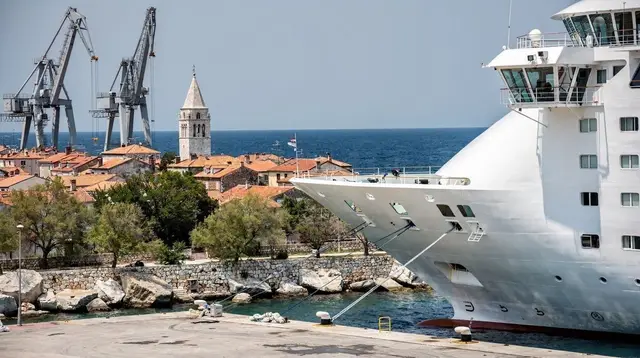
Because Slovenia’s coastline is so short, Piran rarely sits alone on an itinerary. The most common pattern links it with Koper — Slovenia’s main port and its only real city on the Adriatic, about 20 minutes away by car or bus — and often with Izola in between. Koper handles the practical roles Piran’s tiny old town can’t: it is the region’s cruise port, its rail terminus, and the place with the widest range of onward transport. If you’re approaching the coast for a cruise stopover rather than from Ljubljana, start with the Koper cruise port guide and work Piran in as the highlight of the day, not an afterthought.
A single well-organized day can realistically cover Piran’s old town in the morning, lunch either there or in Izola, and an afternoon stop in Koper or a swim near Portorož — which is close to what several guided coastal tours do in one loop:
a smaller-group boutique tour through Piran’s parks and viewpointsFor activity listings specific to each town rather than the coast as a whole, see things to do in Piran, things to do in Koper, and things to do in Izola.
Where Piran Fits Into a Ljubljana-Based Trip
If Ljubljana and the Julian Alps are the spine of your Slovenia trip, Piran is the day you spend proving the country also touches the sea. It doesn’t compete with Bled or the Karst caves for must-see status in the way guidebooks sometimes imply — it’s a different kind of stop, slower and more architectural than scenic-dramatic — but it earns its place for exactly that contrast. Most visitors either dedicate one full day to the coast from a Ljubljana base, choosing between driving themselves and a guided tour, or peel off one night from their Ljubljana stay to sleep near the water and catch Piran at sunset and again at a quiet 8 a.m.
For the accommodation side of the decision — whether to base entirely in Ljubljana and day-trip everywhere, or split nights between the capital and the coast — the where to stay in Ljubljana guide frames the trade-off, and the Piran day trip from Ljubljana guide works through the logistics of the single-day version specifically. If you’re combining the coast with the Karst on the same day rather than treating them separately, this pairing does exactly that:
a private day trip linking Postojna Cave, Predjama Castle and the coastEating and Drinking in a Fishing-Turned-Tourist Town
Piran was a working fishing and salt-trading port long before it was a tourist stop, and its kitchens still lean toward the Adriatic and the neighboring Istrian peninsula rather than the meat-and-dumpling cooking of inland Slovenia: grilled and fried fresh fish, seafood risotto, olive oil pressed nearby, and wines from the Istrian side of Slovenia’s wine country. The town’s own saltworks tradition — the Sečovlje salt pans lie just south along the coast — still shows up on menus in the form of Piran salt, sold and used as a point of local pride rather than a novelty.
A short guided walk is the easiest way into this side of Piran without guessing which restaurant is worth the table:
a walking tour through Piran pairing local wine with regional food tastingsFor a slower, more dedicated version built entirely around eating and drinking rather than sightseeing:
a gourmet food and wine tour focused specifically on Piran
Beyond the table, the calm water along Piran’s edge and around nearby Fiesa also lends itself to being seen from the water rather than the walls — an option worth considering if you’ve already done the old-town walk on a previous visit or simply want the harbor view from the other direction:
a stand-up paddleboarding tour past Piran’s old town and a working marine farm
Practical Notes for a Day or Night in Piran
A few things worth knowing before you arrive rather than discovering on the spot. The old town is genuinely car-free at its core; parking is in garages at the edges (Fornače and the multi-storey near the bus station are the usual options), with a short walk or a small tourist train covering the rest. Distances inside the town are tiny — the whole peninsula can be crossed on foot in well under ten minutes — but the lanes climb steeply toward the church and the walls, so flat, grippy shoes matter more than they do in Ljubljana’s flatter old town.
Summer (July–August) brings the heaviest crowds and the highest heat; late spring and early autumn give you the same light and warmth with noticeably more breathing room, which lines up with the general pattern for Slovenia’s coast and its shoulder seasons. Winter is quiet and often mild by Slovenian standards, though several restaurants and smaller guesthouses reduce their hours outside the main season, so it’s worth checking ahead rather than assuming full service.
General seasonal patterns for the whole country, not just the coast, are covered across the Slovenia weather by month and seasonal guides linked from there, and rough daily costs — accommodation, food, transport — are broken down in the Slovenia daily budget guide if you’re building a multi-stop itinerary and need to plan the coastal day’s spending against the rest of the trip.
One more orientation note, since it trips up first-time visitors more than anything else about Piran: this is Slovenian, not Croatian or Italian, territory, even though both coastlines are visible from the walls and both languages are commonly spoken in town. The border with Croatia lies a short drive south, and travelers continuing that way should expect the temporary border checks Slovenia has reinstated at its Croatian frontier — a detail covered in the Slovenia daily budget guide and worth knowing before you plan a same-day loop that crosses it.
Piran and the Slovenian Coast: Frequently Asked Questions
Is Piran the same as Portorož?
No. Piran is the historic, car-free Venetian old town; Portorož is its modern, purpose-built beach-resort neighbor about 4 km away, with sandy stretches, spa hotels and a casino. Most visitors see Piran on foot and treat Portorož as the place to swim or stay overnight.
How do you get to Piran from Ljubljana without a car?
There is no direct train to Piran. The realistic public-transport route is a train or intercity bus to Koper, then a local bus onward to Piran, or a direct coach service from Ljubljana’s bus station where timetables allow. A guided day tour is the simplest single-ticket option.
Can you drive into Piran’s old town?
Not really. The old town is closed to general traffic; drivers leave their car in one of the parking garages at the edge of town, at Fornače or near the Barka multi-storey, and walk or take the small tourist train in from there.
Can you see Italy and Croatia from Piran?
On a clear day, yes. From the town walls and from the hill by St. George’s church, the coastline curves visibly toward both the Italian and Croatian shores of the Gulf of Trieste and the Istrian peninsula, though what you actually distinguish depends on haze and light.
How much time do you need in Piran?
Three to four hours covers Tartini Square, the old town’s lanes and the walls at an unhurried pace. A full day lets you add lunch, a swim spot near Fiesa, or a short hop to Portorož or Izola; staying one night adds sunset and an early, crowd-free morning.
Is Piran worth it as a day trip from Ljubljana?
Yes, though it is a longer day than Bled or Postojna: figure on roughly four hours of driving there and back for two to three hours of Piran itself, so many visitors pair it with Portorož, Izola or the Škocjan caves, or choose to stay one night on the coast instead.
Is Piran good for cruise passengers docking in Koper?
Yes. Piran is a short transfer from the cruise port at Koper, and it is one of the most popular shore-excursion destinations for ships calling there, alongside Ljubljana and the Karst caves further inland.