The Lake That Isn’t Always There
Most lakes are a fixed feature on a map. Lake Cerknica is not one of those lakes. Depending on the week you show up, it can be the largest body of water in Slovenia — a sheet of pale winter light stretching across the valley floor, ducks and herons working its shallows, boats tied up at jetties that, a few months earlier or later, sat on dry grass. Or it can be nothing at all: a wide, flat, green valley grazed by cattle and cut by hiking paths, with no hint that water was ever there.
Both of these are correct descriptions of the same place. Cerknica is Slovenia’s best-known intermittent karst lake, and understanding that one fact — before you drive out here — is the difference between a memorable stop and a wasted afternoon staring at a meadow. This page is built around that timing problem, because it is the one thing most visitors get wrong.
If you have come to this page hoping for a swim in August, stop and read the next section carefully. If you are planning around the calendar and want to know your actual odds of seeing water, keep going — this is written for you.
How a Field Becomes a Lake
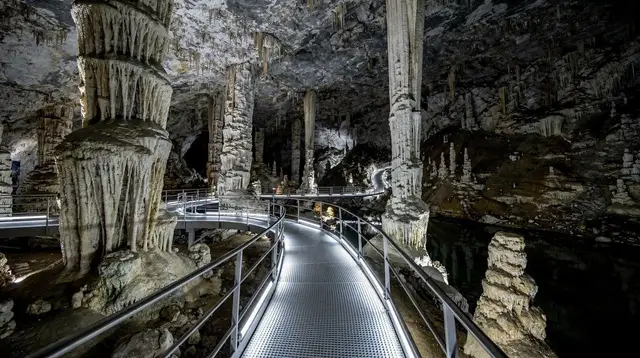
Cerknica sits inside what geologists call a karst polje: a large, flat-floored basin carved into limestone, closed in by hills on most sides and drained not by a river on the surface but by a network of sinkholes, swallow holes and underground channels beneath it. The whole Karst region south-west of Postojna is built on this kind of limestone plumbing — it is also what produces show caves like Postojna Cave and the Skocjan Caves, which this page deliberately does not detail; both have their own dedicated pages linked further down.
At Cerknica, the same underground plumbing that would normally just drain rainfall away can also work in reverse. When groundwater levels rise faster than the channels beneath the polje can carry the water off — typically after a wet autumn, through winter snowmelt, and into a rainy spring — water backs up through the sinkholes and floods the basin from below as much as from above. At its fullest, the flooded area can reach roughly 26 square kilometers, briefly making it the largest lake in Slovenia by surface area, well ahead of Bled or Bohinj.
Then, as the water table falls through late spring and into summer, the same channels drain the basin the way a bathtub drains once the plug comes out — except the plug here is geology, not a person’s decision, and nobody controls exactly when it happens. By high summer the polje is typically dry again: cattle graze it, walkers and cyclists use the exposed paths, and the reed beds and wet meadows that ring the basin take over as the main habitat. It is one of the more unusual hydrological features anywhere in Europe, and it has puzzled and fascinated naturalists for centuries — this is not a recent curiosity invented for tourism.
When to Go — and the Piece Nobody Should Skip
This is the section to actually plan around. There is no fixed calendar date when Cerknica floods or drains; it depends on rainfall and snowmelt in a given year, and it can vary meaningfully from one season to the next. That said, some broad patterns hold well enough to plan a trip:
| Season | Typical state | What to expect |
|---|---|---|
| Winter (Dec–Feb) | Often filling or partly full | Cold, atmospheric, birdlife moving in |
| Spring (Mar–May) | Best odds of a full lake | Highest chance of open water, green surroundings |
| Early summer (Jun) | Starting to recede | Variable — can still hold significant water some years |
| High summer (Jul–Aug) | Usually dry | Meadows, grazing cattle, no lake to see |
| Autumn (Sep–Nov) | Dry to slowly refilling | Dry basin early on, water may begin returning late in the season |
The piece nobody should skip: do not plan a trip to Cerknica in July or August expecting to see a lake. By midsummer the basin is typically dry, and this is not a minor exception — it is the normal state of affairs for that stretch of the calendar. If your trip falls in summer and a lake view genuinely matters to you, either build in flexibility to check conditions close to your travel dates, or treat the destination differently: come for the walking, the birdlife in the surrounding wetlands, and the geology, not for open water.
If a full lake is the priority, late winter into spring — roughly February through May — gives the best realistic odds, though even then there is no guarantee in a dry year. For general seasonal planning across the whole country, the guide to Slovenia’s weather by month is a useful companion, and Slovenia in summer is worth reading before booking a summer Karst day that leans on Cerknica.
Getting There From Ljubljana
Lake Cerknica sits about 45 km south-west of the capital, roughly 45 to 50 minutes by car via the A1 motorway toward Postojna, then local roads into Cerknica town and the polje itself. If you are driving a rental car, remember the electronic vignette required on Slovenian motorways — details are in the Slovenia vignette guide — and check renting a car in Slovenia before you book.
There is no train to Cerknica, and public bus connections from Ljubljana are infrequent and slow enough that they are not a practical option for a half-day visit. If you do not want to drive, the realistic choices are a guided day tour that includes the wider Karst region, or a taxi/private transfer arranged for the day. For general car-free planning, Slovenia without a car covers the trade-offs across the whole country.
Because there is no ticket booth and no fixed schedule, a self-driven visit also gives you the most flexibility to check recent conditions before committing the day — worth doing given everything above about the lake’s unpredictable state.
What to Do When the Lake Is Full
When Cerknica is holding water, it draws a different crowd than Bled or Postojna — quieter, more oriented to nature and photography than to ticking off a landmark. A few things worth doing:
- Walk or cycle the raised paths and roads around the edge of the polje, which stay passable even when the center is flooded, for wide views across the water toward the surrounding hills.
- Watch for birdlife: the flooded polje and its reed-fringed margins attract herons, ducks, geese and other waterbirds, making this one of the better casual birdwatching stops in the Karst — see the guide to wildlife and nature watching for more on nature-focused travel in Slovenia.
- Photograph the reflections and the odd, almost staged sense of a lake appearing where a map or a summer visitor’s memory says there should be a field. Morning light with still water tends to work best.
- Visit the small local museum and information points in Cerknica town, which explain the hydrology in more depth than a roadside sign ever could.
There are no boat rentals or organized water activities on Cerknica in the way there are at Bled — this is a nature and geology stop, not a resort lake, and it is best approached that way even at full flood.
What to Do When the Lake Is Dry
A dry Cerknica is still a legitimate stop, just a different one. The exposed polje floor becomes open grazing and hay meadow, crossed by paths that are excellent for an easy walk or an e-bike ride with almost no elevation change — a contrast if you have just come from steeper trails in Logar Valley or around the Vrsic Pass. Wet meadow habitat around the margins still holds birdlife even when the center is dry, and the geology itself — the sinkholes, the swallow holes, the sense of standing in a basin built to flood — is visible and explicable without a drop of water in sight.
If a dry Cerknica is the more likely outcome for your travel dates, it is worth treating it candidly as a 45-minute-to-an-hour stop on the way to or from somewhere else in the Karst, rather than the anchor of a full day.
Combining Cerknica With Postojna, Predjama and Skocjan
Cerknica sits roughly between Ljubljana and the cluster of Karst attractions further south-west, which makes it a natural add-on rather than a stand-alone destination for most itineraries. It pairs well with:
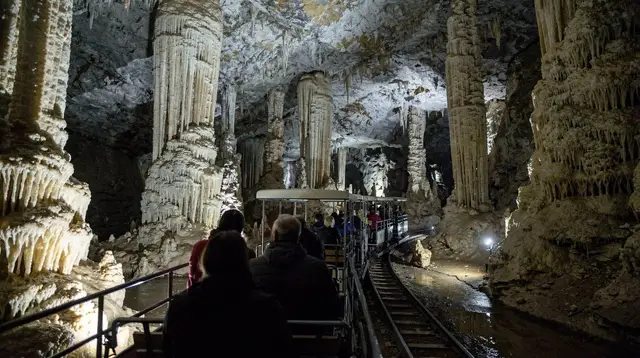
- Postojna Cave, for the underground river system and train ride — see Postojna and, for ticket logistics, Postojna Cave tickets and tips.
- Predjama Castle, the cliff-face fortress a short drive from Postojna — Predjama Castle.
- Skocjan Caves, the UNESCO-listed underground canyon further south — Skocjan Caves, and if you are trying to decide between the two show-cave experiences, Postojna vs Skocjan Caves lays out the real differences.
- Lipica, the stud farm and birthplace of the Lipizzaner horse, a little further toward the Italian border — Lipica.
Because Cerknica itself has no entrance fee and no fixed opening hours, it slots easily into a self-driven Karst day built around one of these paid attractions. Many visitors instead book a guided day that already covers the cave circuit — a Postojna Cave and Lake Bled day tour from Ljubljana is a common way to see the region’s best-known cave and Bled in a single day, even though it does not stop at Cerknica itself.
If you would rather build a Karst-focused day around food and wine instead of caves, a guided visit to a traditional Karst prosciutto house or a Karst and Goriska Brda tour with lunch and tastings covers the region’s other signature experience — dry-cured ham and wine — while you are already in the area.
For a structured single-day plan across the wider Karst, see Karst caves in one day, and for a broader look at what the region’s underground attractions have in common, show caves of Slovenia overview.
Wildlife, Weather and What to Pack
Because so much of Cerknica’s appeal depends on water levels driven by weather, it rewards checking recent conditions rather than assuming a fixed pattern. Bring layers regardless of season: the open polje has little shelter from wind, and mornings can be notably colder than the temperature in Ljubljana would suggest, especially in winter and early spring when the lake is most likely to be full. If you are combining the visit with a cave stop the same day, remember that caves in this region sit at a constant 8–12°C year-round — pack accordingly, as detailed in what to wear for Karst cave temperatures.
Sturdy, weatherproof footwear is worth having even on a dry visit, since the exposed polje floor can be muddy well after the water has receded. Binoculars are worth packing if birdwatching is any part of the appeal — the wetland margins hold more species than the open water itself.
Practical Tips
- No entry fee. Unlike Postojna Cave or Skocjan Caves, Cerknica has no ticket booth, no fixed hours and no booking requirement — you simply arrive.
- Check conditions before a special trip. If seeing the lake full is the specific goal, a quick check on recent conditions closer to your travel date is worth the two minutes it takes, particularly for summer trips.
- Pair it, don’t center a day on it. Given how unpredictable the water level is, Cerknica works best as a stop alongside Postojna, Predjama or Skocjan rather than as the sole reason for a day trip.
- Parking is informal and free at the main access points around Cerknica town — nothing like the paid, zoned parking at Bled described in parking in Bled.
- Facilities are limited. Cerknica town has cafes and a small museum, but there is no visitor center on the scale of Postojna’s — plan food and restrooms around the town rather than the lake itself.
Further Reading
For the longer story behind why this basin floods and drains the way it does, the blog post on the lake that disappears goes deeper into the folklore and science than a destination page like this one can. If autumn timing is part of your planning, Slovenia in autumn covers the season when the polje is typically still dry but starting to turn, and travelers building a full week around the Karst and beyond may find Slovenia in one week useful for fitting a stop like this one into a longer trip without over-anchoring a day on it.
Cerknica FAQ: Timing, Access and What You’ll Actually See
Is Lake Cerknica always full of water?
No. It is an intermittent karst lake that fills in winter and spring and largely drains away by summer through underground channels, leaving meadows and pastures instead of open water.
Can I see Lake Cerknica in August?
Usually not as a lake. By midsummer the basin is typically dry, and visitors expecting a swimmable lake in July or August are almost always disappointed — check current conditions before making the trip.
When is the best time to see the lake at its fullest?
Late winter into spring, roughly February to May, gives the best odds of a full or near-full lake, though the exact timing shifts every year with rainfall and snowmelt.
How do I get to Lake Cerknica from Ljubljana?
It is about 45 km and 45 to 50 minutes by car via the A1 motorway toward Postojna, then local roads to Cerknica town. There is no direct train, and public bus connections are slow and infrequent, so a rental car or organized tour is the practical option.
Is Lake Cerknica worth visiting if it is dry?
It can still be worthwhile for hiking, birdwatching in the surrounding wetlands, and understanding the Karst landscape, but if seeing open water is the goal, a dry visit will not deliver it — pair the stop with Postojna or Skocjan so the day is not riding on the lake alone.
Does Lake Cerknica charge an entry fee?
No. The lake and its surrounding trails are open, free access — there is no ticket booth or entry fee, unlike Postojna Cave or Skocjan Caves nearby.
How does an intermittent lake actually work?
Cerknica sits in a karst polje, a flat limestone basin riddled with sinkholes and underground channels. When groundwater rises above the level of these channels, usually with winter and spring rain and snowmelt, water backs up and floods the basin; when the water table drops, the same channels drain it away.
Can Lake Cerknica be combined with Postojna Cave or Skocjan Caves in one day?
Yes — Cerknica sits roughly between the two, and many visitors treat it as a short detour on a Karst day that centers on one of the show caves rather than as a full-day destination on its own.