Slovenia in Autumn: The Best Season to Visit
When is the best time to visit Slovenia in autumn?
September and the first three weeks of October combine grape harvests in the Vipava Valley and Goriška Brda, golden larch and beech color in the Julian Alps, and far smaller crowds at Lake Bled than in July or August. Mountain weather turns unreliable after mid-to-late October, so early autumn is the real sweet spot.
Why Autumn Wins the Argument
Ask enough people who have actually done both, and a pattern emerges: the travelers who came to Slovenia in September or early October tend to talk about the trip differently from the ones who came in July. Not necessarily better weather on paper, but a better fit between what the country actually offers and what the season lets you do with it. Summer brings heat, midday crowds at Lake Bled, and a Ljubljana Old Town so full by early afternoon that photographs need patience. Autumn strips a lot of that away without taking much in return.
What autumn adds is arguably more interesting than what it removes. September and October are harvest weeks across Slovenia’s wine country, both in the Vipava Valley and Goriška Brda in the west and around Maribor and Ptuj in the east — a season with its own rhythm of pickers in the vineyards, presses running, and cellar doors more willing to pour a taste than at any other point in the year. At the same time, the beech and larch forests that cover so much of the country start turning through amber and gold, nowhere more dramatically than along the roads and trails of the Julian Alps. Combine the two and you get a country that is, briefly, doing both of its best things at once: producing wine and putting on a color show.
The trap is treating autumn as a single-note “leaf season” trip. Plenty of guides frame it purely around foliage in the mountains, which is real and worth planning around, but it is only half the picture. Skip the harvest angle and you miss the season’s other headline event — one with its own calendar, its own towns, and honestly, better food.
The Harvest Weeks: Vipava, Goriška Brda and Beyond
Grape harvest, or trgatev, generally runs through September and can stretch into early October depending on the grape variety and the year’s weather. It is the busiest and most atmospheric stretch of the year in Slovenia’s wine regions, and it happens on both sides of the country at once. In the west, the Vipava Valley and Goriška Brda — a rolling, Tuscan-feeling landscape near the Italian border — are picking and pressing at the same time. In the east, the vineyards around Maribor and Ptuj, home to the world’s oldest producing vine, are doing the same on their own schedule.
This page is deliberately not the place to go deep on any one wine region; the Slovenia wine regions overview and the region-specific guides linked above do that properly. What matters here is the timing: if wine, food, and vineyard scenery are any part of why you are drawn to Slovenia, autumn is the one season when that side of the country is genuinely at its peak, not just pleasant background. A day built around a cellar visit or a tasting, like a guided wine-hopping afternoon through Ptuj’s old vineyards, lands very differently in late September than it would in April.
Harvest season also means regional food follows suit — game, mushrooms, roasted chestnuts, and new wine appearing on menus in a way that summer’s lighter, coast-leaning food doesn’t really do. A hands-on traditional Belokranjska pogača cooking class fits this season particularly well, less as a novelty and more as a continuation of what’s already on the table.
Color in the Julian Alps
The other half of the autumn case plays out at altitude. Through late September and into October, the beech forests that cover the lower slopes of the Julian Alps turn from green to a deep gold and copper, and the larches — one of the few conifers that actually change color and drop their needles — go a striking yellow before winter strips them bare. The effect is most visible around Kranjska Gora, along the road up to the Vršič Pass, and through the length of the Soča Valley, where the turquoise river against autumn color is a genuinely different sight from the same view in summer haze.
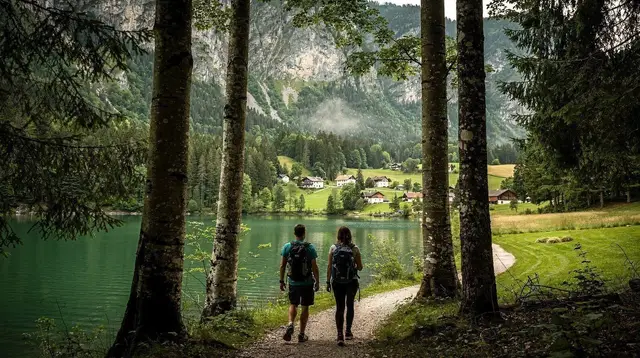
It is also, simply, a better season to be outdoors here. Summer in the high mountains means heat lower down and crowded trailheads at popular viewpoints; autumn brings cooler, clearer air and trails that have emptied out along with the campsites. Hiking around Lake Bohinj, the quieter, less-visited neighbor to Bled, feels particularly suited to this stretch of the year — for a full sense of how the two compare, see Bled vs Bohinj.
There is a real limit to this window, though. High-altitude weather in Slovenia does not politely wait for a calendar date to turn. From around mid-October, early snow becomes a real possibility on passes and summits, and by the time winter properly sets in, some routes close outright. The Slovenia weather by month guide breaks this down more precisely than a single seasonal overview can, but the short version is: the first three to four weeks of autumn are reliably good in the mountains, and after that, you are checking forecasts day by day rather than planning weeks ahead.
For anyone building a trip specifically around the Soča Valley’s color and outdoor activity, best time for the Soča Valley goes further into the specifics of when rafting season winds down and when the light is best for photography — a subject that also happens to suit a guided photography-focused day trip through the Slovenian countryside better in autumn’s low, angled light than in summer’s flat midday sun.
Water-based activity does not stop the moment the calendar turns to September, either. Operators along the Soča continue running trips into autumn as conditions allow, and a whitewater rafting trip on the Soča River booked in early-to-mid autumn often means the same emerald water with none of July’s queue at the put-in point.
Bled Without the Queues
If there is one single place where the case for autumn is easiest to make in a sentence, it is Lake Bled. In peak summer, the lakeside promenade, the pletna boat queue to the island, and the parking situation around the lake all strain visibly under the volume of visitors arriving at the same few hours of the day. None of that disappears completely in September, but it drops enough to change the experience: shorter waits for a boat to the island, easier photographs from the classic viewpoints without a dozen other people in frame, and a general sense of a place operating at a comfortable pace rather than a full one.
October pushes this further. Crowds thin again as the month goes on, though this comes with a trade-off worth being honest about: some seasonal boat and activity operators reduce their schedules or wind down entirely as the weather cools, and a few lakeside businesses shift to shorter hours. For a fuller breakdown of exactly how crowd levels shift through the year and how to plan around them, avoiding crowds at Bled is the dedicated resource.
Gorge access nearby follows a similar seasonal pattern: Vintgar Gorge typically stays open well into autumn, but its exact closing date moves from year to year depending on the weather, and it shuts completely for winter — worth confirming before building a late-October day around it.
Ljubljana itself benefits from the same effect, if less dramatically, since the capital’s Old Town is more evenly used by residents year-round than a single-attraction site like Bled. A guided walk or day tour through the city, such as a day tour of Ljubljana as Slovenia’s capital run from nearby Trieste, moves at an easier pace in September than it would squeezed between summer festival crowds.
Weather Reality Check: What Autumn Actually Feels Like
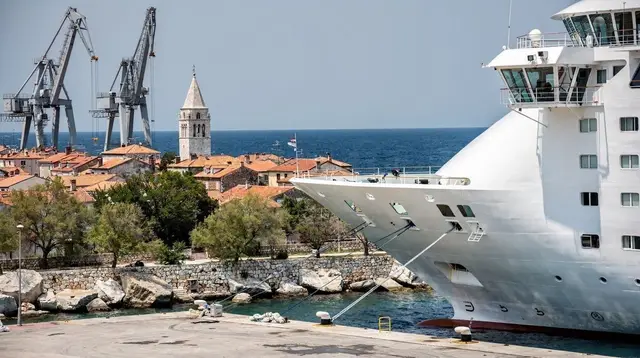
It is worth being specific rather than romantic about this, because “autumn” covers a wide range of actual conditions depending on where in the country and where in the season you are. Early September in Ljubljana can still feel like summer, with warm, sometimes humid days. By late October, the capital is properly into autumn: cooler, greyer, with morning fog over the Ljubljanica river a regular sight. The coast around Piran and Portorož holds its mild, Mediterranean-influenced climate longer than the interior, making it one of the more comfortable places to be later in the season. The mountains, as covered above, are the fastest to turn — what is a pleasant hike in September can be a cold, wet, or even snow-dusted outing by late October.
One detail that has nothing to do with the season outside but trips up a surprising number of autumn visitors: Slovenia’s show caves. Postojna Cave and Škocjan Caves sit at a constant 8 to 12 degrees year-round, regardless of whether it’s a warm September afternoon or a cold November one above ground. A light jacket that felt unnecessary walking to the cave entrance becomes essential the moment you step underground — see cave temperature and what to wear for the full picture, and note that this is exactly the kind of thing that catches out summer visitors too, not just an autumn quirk.
For a month-by-month comparison against the rest of the year, Slovenia in summer, Slovenia in winter, and Slovenia in spring each cover their own season in the same depth as this page covers autumn.
Autumn Month by Month
| Period | Weather | Crowds | What’s happening |
|---|---|---|---|
| Early-to-mid September | Often still warm, generally dry | Noticeably lower than August, still moderate on weekends | Harvest begins in western wine regions; lake and mountain trails still busy on weekends |
| Late September | Mild, cooling in the evenings | Low to moderate | Harvest in full swing across most regions; forest color starting at higher elevations |
| Early-to-mid October | Cooler, more variable, occasional rain | Low | Peak forest color in the Julian Alps; harvest wrapping up in most vineyards |
| Late October | Cold mornings, unpredictable at altitude, early snow possible on passes | Very low | Some mountain and gorge operators reducing hours or closing for the season |
Planning an Autumn Trip: What to Book and What to Skip
Autumn’s biggest planning advantage is how little needs to be locked in weeks ahead. Accommodation in Ljubljana and Bled, restaurant tables, and general sightseeing all need far less advance booking than the same trip in July. A handful of things are worth checking or reserving ahead anyway: any specific wine-harvest experience during a busy weekend, popular guided day tours out of Ljubljana on weekends, and lodging in smaller towns if your visit lines up with a local festival.
The general what to book in advance in Slovenia guide covers this in more detail across all seasons, and how many days in Slovenia is worth reading before settling on an itinerary length, since autumn’s shorter daylight hours change how much fits comfortably into a single day compared to summer.
Anyone building a trip specifically around the harvest and wine side of the season rather than mountains and lakes should look at the Slovenian wine trail itinerary, which sequences the wine regions in a way this single seasonal guide deliberately doesn’t attempt. Given the two threads this page has been arguing run through the same six or seven weeks — harvest in the valleys, color in the mountains — the honest planning advice is to pick a primary focus for any single trip rather than try to chase both at full intensity, and treat the other as a bonus you’ll likely brush up against anyway.
Frequently Asked Questions About Visiting Slovenia in Autumn
Is September or October better for visiting Slovenia?
September is warmer, drier on average, and still has long daylight hours, which makes it the stronger all-round pick. Early October is just as good for wine harvest and forest color and has noticeably fewer visitors, but nights turn cold and mountain weather becomes less predictable as the month goes on.
Will the Julian Alps still have good hiking weather in autumn?
Yes, especially in September and the first half of October, when days are clear and trails are far quieter than in summer. Conditions change quickly once you gain altitude, though, and an early snowfall on high passes is possible from mid-October, so check forecasts before committing to a high-altitude route.
Is the Soča Valley still good for rafting in autumn?
Rafting operators generally run trips into autumn as long as water levels and temperatures allow, and the valley’s turquoise color and near-empty trails make it a rewarding time to visit even without getting on the water. Confirm the season dates directly with the operator before booking, since they shift from year to year.
Do I need to book anything in advance for autumn travel?
Less than in summer, but a few things still fill up: wine-related experiences during peak harvest weekends, popular guided tours out of Ljubljana, and any accommodation in small towns like Radovljica or Ptuj during a local festival. Day-to-day sightseeing at Bled or in the Karst caves needs far less advance planning than in July or August.
Is Lake Bled still crowded in September?
It is quieter than summer but not empty, particularly on weekends and around the lakeside promenade in the middle of the day. Arriving early in the morning or visiting on a weekday still makes a real difference to how the lake feels.
What should I pack for Slovenia in autumn?
Layers: warm days can still reach the low twenties in September, while mornings, evenings, and anything at altitude turn cold fast. Pack a waterproof jacket for sudden rain, and remember that show caves like Postojna and Škocjan sit at 8 to 12 degrees year-round regardless of the season outside.
Is Vintgar Gorge open in October?
Vintgar typically stays open through most of October, but it closes for the season sometime between late October and November depending on the year’s weather, and it is shut entirely through winter. If you are visiting late in autumn, check the current dates before planning around it.
When does autumn end and winter travel conditions begin?
There is no fixed date, but by early-to-mid November mountain routes start closing, days shorten sharply, and the character of a trip shifts toward winter: Vintgar closes, the Vršič Pass becomes unreliable, and coastal towns quiet down for the season.
Seasonal experiences on GetYourGuide
Verified deep-linked GetYourGuide tours. Book through these links and we earn a small commission at no cost to you.
GetYourGuide does not provide a product photo for this activity — the image shows the meeting point, photographed by us.