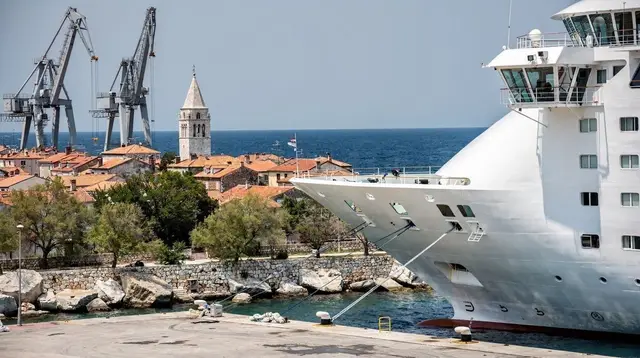
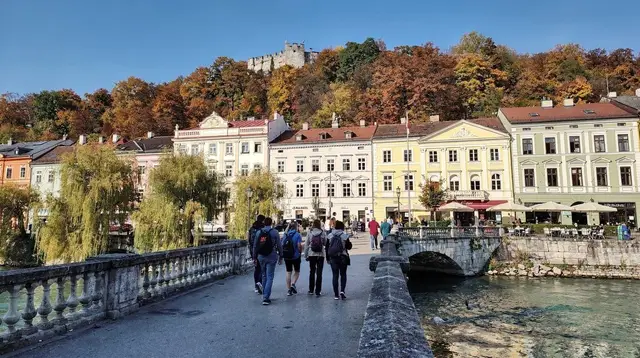
A Beach Resort Next to a Renaissance Town
Portorož is the place on the Slovenian coast built specifically for lying on a beach, booking a spa treatment, and not thinking about history at all. That is not a criticism — it is the point of it, and it is why the town exists in more or less its current form. Long before Slovenia had a name of its own, this stretch of the Slovenian coast was a modest cluster of salt pans and orchards in the shadow of nearby Piran, the walled Venetian town that had already been trading salt and fish for centuries.
Portorož only became a resort in the 19th century, when Austro-Hungarian and later Italian visitors started coming for sea air and thalassotherapy, and it has stayed a resort ever since: hotel terraces facing the water, a paved beachfront promenade, a marina full of day-trip boats, and a casino that is still the best known in the country.
It is worth being precise about what Portorož is not. It is not a miniature Piran, and confusing the two is the single most common mistake travelers make when planning this part of the coast. Piran has the Venetian bell tower, the narrow stone lanes, Tartini Square and the town walls; Portorož has none of that, because it was never a historic town in the same sense.
What Portorož has instead is exactly what Piran lacks: open beachfront, larger hotels with pools and spa floors, a wider promenade for an evening walk, and considerably more room to actually swim, sunbathe or book a massage without navigating medieval streets to do it. If your priority is culture and atmosphere, base yourself in Piran and visit Portorož for an afternoon. If your priority is the beach, do it the other way around.
Why Stay in Portorož Rather Than Piran
The practical case for choosing Portorož as a base is straightforward. Hotel stock here is larger and more varied, running from mid-range beach hotels to the wellness-focused properties the town is best known for, and rooms are generally easier to find in peak season than the handful of small hotels inside Piran’s old walls. The beachfront is also simply more usable: long paved and part-sandy stretches with sunbeds, showers, changing areas and beach bars, rather than the rocky access points that surround much of Piran’s compact peninsula. For a family managing beach bags, small children and an afternoon nap schedule, that difference matters more than it sounds.
The trade-off is atmosphere. Portorož’s architecture is 20th-century resort building — practical, sometimes striking, rarely picturesque — and its evenings are built around hotel bars, the casino and restaurant terraces rather than a historic square.
Travelers who want both experiences in one trip do what most people here actually do: sleep in one town, walk the promenade to the other, and treat the whole stretch — Portorož, Piran and Izola further along — as a single day’s territory rather than three separate destinations. For a closer look at how the two compare feature by feature, the dedicated Piran versus Portorož guide walks through beaches, hotels, dining and nightlife side by side.
Getting to Portorož from Ljubljana
Portorož sits at the far southwestern edge of Slovenia, close enough to the Italian border that Trieste is a shorter drive than Maribor. From Ljubljana, the most common route is the A1 motorway toward Koper and then the coastal road south, a trip of roughly 120 km that normally takes an hour and a half to an hour and three-quarters outside peak traffic, longer on a summer Saturday when half the country is heading to the same beaches.
Slovenian motorways run on an electronic vignette rather than a toll booth, and it needs to be purchased and linked to the car’s plate before joining the network — the vignette guide covers the categories and current rates, and it is worth sorting out before leaving Ljubljana rather than at a service station under time pressure. Travelers renting a car specifically for the coast should also check the car rental guide for what a rental agreement does and does not cover on toll roads and cross-border trips toward Trieste or Croatia.
Without a car, a direct intercity bus links Ljubljana to Portorož in a little over two hours, and it is a reasonable option for a day trip or a one-way journey — the intercity bus guide explains how to buy tickets and what to expect from the national network.
Rail is a weaker option here: Slovenia’s train guide is useful background, but there is no direct line into Portorož itself, so rail travelers typically get off in Koper and cover the last stretch by local bus or taxi. Cruise passengers arriving through the nearby port have their own logistics, covered separately in the Koper cruise port guide, since many shore excursions from Koper already include a stop in Portorož or Piran.
The Beaches and the Sea
Slovenia’s 46 km of coastline is short by any country’s standard, and Portorož holds the largest concentration of organized beach along it. Expect a mix of paved sunbathing platforms, concrete piers built for direct sea access, and shorter sandy or shingle patches rather than one long continuous sand beach — this is typical of the northern Adriatic generally, not a shortfall specific to Portorož. The main town beach runs along the promenade in front of the hotel strip, with sunbeds and umbrellas available to rent by the day, showers, and a line of beach bars; quieter and somewhat sandier options can be found toward Lucija and Bernardin at the edges of town, useful for anyone put off by the density of the central stretch in July and August.
The water itself is calm and shallow close to shore in most spots, which is part of why families gravitate here rather than to Piran’s rockier edges. It is also warm enough for comfortable swimming from roughly June through September, tapering off through the shoulder months — the seasonal breakdown in the Slovenia in summer guide gives a fuller month-by-month picture for anyone timing a trip specifically around beach weather.
For visitors who want the water without simply lying next to it, a stand-up paddleboard route runs from Portorož into the sheltered inlet locally known as Moon Bay, a quieter cove tucked away from the main beachfront that rewards a slower, self-propelled visit far more than a fixed umbrella does. It is one of the more distinctive short outings on this coast: a guided SUP paddle through Moon Bay that reaches corners of the shoreline a normal beach day never touches.
Spas, Wellness and the Salt-Pan Tradition
If Piran’s identity is Venetian trade, Portorož’s is thalassotherapy — treatment built around seawater, sea mud and salt, sourced historically from the Sečovlje salt pans just south of town, where salt has been harvested by hand using centuries-old methods. That tradition shaped the resort directly: several of Portorož’s largest hotels were built or expanded specifically around spa floors, thermal pools and treatment programs using local mineral mud and brine, and wellness remains as much a reason to visit as the beach itself. This is not an incidental amenity bolted onto a beach hotel; for a meaningful share of visitors, especially in the shoulder seasons when the sea is too cool to swim, the spa is the actual destination.
Anyone planning a trip around this side of Portorož rather than the beach side should read the dedicated thermal spas and wellness guide, which covers what a typical treatment day involves, how far in advance the busier hotel spas need to be booked, and how Portorož’s offer compares with wellness options elsewhere in Slovenia. Sea mud and brine treatments are booked at the hotels directly rather than through general tour platforms, so this is one part of a Portorož trip that is worth arranging ahead of arrival rather than deciding on the spot, particularly in peak summer when spa slots fill up alongside the sunbeds.
On and In the Water: Portorož’s Water Sports
Beyond swimming and paddleboarding, Portorož’s marina and beachfront support a fuller range of water activity than either Piran or Izola, simply because it has more room and more operators. Options along this stretch include short powerboat cruises, sunset paddleboarding sessions, and faster group activities for anyone traveling with older kids or a group looking for something more active than a swim.
A short cruise out of nearby Izola on one of the coast’s older working boats gives a different vantage point on the same shoreline, taking in the coast between Izola, Portorož and Piran from the water with drinks included — a relaxed boat cruise along the coast with drinks on board is a good half-day option for anyone who wants the scenery without the swimming.
For a wider view still, a panoramic route along the whole Slovenian coastline links Portorož with Piran and the countryside behind them in a single outing, which suits travelers based in Portorož who want Piran’s Old Town covered without driving or walking it themselves — a guided tour covering the coast between Piran and Portorož handles that combination directly.
Portorož After Dark: Casino and Nightlife
Portorož holds the best-known casino in Slovenia, part of a resort tradition going back decades and still central to how the town markets itself to a segment of its visitors, alongside hotel bars, beachfront restaurants and a promenade that stays lively well after sunset in high season. This is a genuine point of difference from Piran, whose evenings run instead to restaurant terraces around Tartini Square and a quieter, more historic mood after dark. Travelers deciding where to spend the evening rather than just the day should weigh this directly: Piran for atmosphere and views over the water from the town walls, Portorož for a livelier resort evening with more late-hour options.
Side Trips: Piran, Izola and the Rest of the Coast
Portorož works best as a base precisely because it sits at the center of Slovenia’s short coastline, within easy reach of everything else there is to see on it. Piran, 4 km away along the flat coastal promenade, holds the history and the views this guide deliberately does not cover in detail — its Venetian old town, Tartini Square and the walk up to the town walls are covered fully in the Piran old town guide, and a full day-trip framework for reaching it from further afield sits in the Piran day trip from Ljubljana guide.
In the other direction, Izola keeps a working fishing-port character that neither Portorož nor Piran has retained, with a smaller, less polished old town and a harbor still used by local boats; it is a shorter, quieter stop and is covered separately rather than folded into this page. Koper, the region’s port and cruise-ship gateway, lies further north again and is worth a look for its own old town as much as for its transport links — the Koper cruise port guide covers it from the perspective of visitors arriving by ship, while things to do in Koper rounds out the wider area’s activity options beyond Portorož itself.
Two further tours extend the reach of a Portorož base beyond the coast: a route linking Škočjan’s UNESCO-listed caves with Piran in a single day, useful for anyone splitting time between the karst interior and the sea, and a lighter, family-friendly outing pairing a stroll with local tastes in Koper. Between them, a Portorož stay covers everything from open water to underground caverns without changing hotels.
Portorož at a Glance
| What | Detail |
|---|---|
| Type of destination | Purpose-built beach and spa resort |
| Nearest historic town | Piran, about 4 km / 45-minute walk along the promenade |
| Best for | Beach days, spa and wellness stays, families |
| Not the place for | Historic old-town atmosphere (go to Piran instead) |
| Peak season | July-August (busiest, warmest sea, book ahead) |
| Quieter alternative months | June and September (still warm, fewer crowds) |
| Winter | Very quiet; some spa hotels stay open, beach infrastructure mostly closed |
When to Go
Portorož runs on the same Adriatic calendar as the rest of this coast: June through September for swimming weather, with July and August as the busiest and most expensive weeks, when beach sunbeds and hotel spa slots are worth booking ahead rather than assumed. May and the second half of September offer a reasonable middle ground — warm enough to enjoy the promenade and often the sea, noticeably quieter on the beach and easier on hotel rates.
Outside that window, Portorož becomes a genuinely quiet town; some of the larger wellness hotels stay open through winter specifically for spa guests rather than beachgoers, which is a legitimate off-season strategy for anyone more interested in treatments than swimming. For a country-wide view of how the seasons differ beyond the coast, the Slovenia in summer guide puts this stretch of the Adriatic in context alongside Ljubljana, the Julian Alps and the Karst.
Portorož FAQ: Beaches, Spas and Getting There
Is Portorož the same place as Piran?
No. They sit on the same short stretch of coast, about 4 km apart, but they are different towns with different purposes. Piran is the walled Venetian old town with Tartini Square and the harbor. Portorož is the modern resort strip of hotels, beaches, spas and a casino, built in the 19th and 20th centuries specifically for seaside holidays.
Can I walk from Portorož to Piran?
Yes. A paved promenade runs along the water the whole way, roughly 4 km and about 45 minutes on foot, flat and easy, with cafes along it. A local bus also connects the two in a few minutes, and it is one of the most straightforward short walks on the Slovenian coast.
Does Portorož have sandy beaches?
It has a mix. The main town beaches are largely paved or concrete platforms with sunbeds, which is typical of this part of the northern Adriatic, while a few stretches nearby (including toward Lucija and Bernardin) offer more sand and shingle. Beach access is generally fee-based at organized beaches, with public access points as well.
Is Portorož good for families?
Yes, more so than Piran in some ways: it has shallower entry points at several beaches, playgrounds, a wider choice of family-oriented hotels, and flatter walking distances between the beach, restaurants and the promenade to Piran.
What is Portorož known for besides the beach?
Wellness. The town built its reputation on thalassotherapy and spa treatments using local seawater and mud from the nearby Sečovlje salt pans, and several large hotels still center their offer on spa facilities. It also has Slovenia’s best-known casino and a marina used for boat trips along the coast.
How do I get to Portorož without a car?
A direct intercity bus connects Ljubljana to Portorož in a little over two hours; buy tickets through the national bus network rather than expecting to pay on board. There is no direct passenger rail line to Portorož itself, so travelers relying on trains typically combine rail to Koper with a short local bus or taxi.
Is one day in Portorož enough?
For the beach and a short spa visit, a single day works, especially if it is combined with a stroll to Piran. Travelers who specifically want a wellness stay, several days of water sports, or a slower pace generally plan two to three nights instead.
Do I need to book beach or spa access in advance?
In July and August, yes for hotel spas and for sunbeds at the more popular organized beaches — capacity is limited and demand is highest exactly then. Outside peak season, walk-ins are normally fine.