Piran vs Portorož: Which Slovenian Coast Town Should You Pick?
Should I stay in Piran or Portorož?
Stay in Piran for a compact, car-free medieval town with Venetian architecture, the Tartini square, and walkable charm. Stay in Portorož for beaches, larger resort hotels, spas, and easier parking, since it is a modern seaside resort rather than a historic town. The two are about 4 km apart, so many visitors see both regardless of where they sleep.
Two towns, four kilometers, two completely different holidays
Slovenia’s Adriatic coastline runs for just 46 km, and on it sit two neighboring towns that could hardly feel more different. Piran is a Venetian-era peninsula town of narrow stone lanes, a walled old core, and a central square named for the violinist Giuseppe Tartini. Portorož is its next-door neighbor by the water, a purpose-built seaside resort of hotel terraces, beach clubs, and spa complexes. They are close enough that many day-trippers see both in an afternoon, yet the choice of where to actually sleep changes the character of a whole trip.
This page is not a walking guide to Piran’s sights — for that, see the dedicated Piran old town guide — nor a rundown of the nearby cruise port, covered in the Koper cruise port guide. It exists to answer one practical question: given the two towns’ opposite profiles, where should you actually base yourself?
The core difference in one paragraph
Piran predates tourism by centuries. Its street plan was laid down when the town was a fortified Venetian outpost, and that history is still what you walk through today: stepped alleys too narrow for cars, a harbor lined with net-drying racks, and city walls you can climb for a view stretching to Italy and Croatia on a clear day. Portorož, by contrast, was built specifically as a resort, starting in the 19th century around its therapeutic seawater and mud, and expanded through the 20th century into the casinos, marinas, and large hotel blocks that define it now. Neither town is “better” in the abstract — they were built for different purposes, and the traveler’s job is to match the purpose to the trip.
Piran and Portorož side by side
| Piran | Portorož | |
|---|---|---|
| Character | Medieval Venetian old town | Modern seaside resort |
| Best for | Atmosphere, walking, photography | Beaches, spas, resort comfort |
| Beaches | Small rocky bathing spots | Purpose-built beach clubs |
| Parking | Limited, largely car-free center | Easier, hotel and street parking |
| Accommodation | Guesthouses, boutique rooms | Large hotels, resort complexes |
| Nightlife | Quiet, café and restaurant scene | Livelier, casinos and hotel bars |
| Families with young kids | Charming but stepped, less stroller-friendly | Flatter, more practical |
| Distance between them | About 4 km / 10 minutes by car or bus |
Choose Piran if you want atmosphere over amenities
Piran rewards travelers who came to Slovenia’s coast for its history, not its beaches. The town sits on a narrow peninsula, so almost everywhere is a short walk from Tartini square, the harbor, or the walls above town. There is very little that feels purpose-built for tourists here: the buildings are genuinely centuries old, and daily life — fishing boats coming in, laundry hung between buildings, the fish market by the water — continues alongside the visitors.
The trade-off is practicality. Piran’s old town is largely closed to cars, so anyone driving in should expect to park outside the peninsula (commonly at the Fornače lot) and either walk in or wait for a shuttle, especially in July and August when spaces fill early. Accommodation tends toward smaller guesthouses and apartments rather than large hotels, and swimming options are limited to a few rocky access points rather than sandy beaches. If your priority is soaking up a genuinely old Adriatic town — the kind of place worth exploring for its own sake, detailed further in the Piran old town guide — this is where to sleep.
Choose Portorož if you want beaches and resort comfort
Portorož exists for the opposite reason: it was built so that people could come to the coast and spend their days by the water without needing anything historic around them. The beaches are maintained and equipped with loungers and umbrellas, the promenade is flat and easy for strollers or wheelchairs, and the town has a concentration of spa and wellness facilities built around its salt-pan mud treatments — a niche it has occupied since the 19th century. For a deeper look at that side of the coast, see thermal spas and wellness.
Portorož also has Slovenia’s most visible casino scene and a marina full of pleasure boats, so evenings here have more going on than in Piran, if that matters to your trip. Parking is meaningfully easier — most hotels have their own facilities, and street parking exists along the bay — which makes Portorož a simpler base for anyone arriving with a rental car who does not want to deal with restricted access.
The trade-off is architectural: Portorož does not have a medieval core, city walls, or a square like Tartini’s, and travelers expecting that atmosphere here specifically will be disappointed. That gap is the single most common misstep in planning this stretch of coast — Portorož was never built to be a smaller Piran, and it does not try to be.
a small-group day tour from Koper that takes in Piran’s old town is a straightforward way to see the historic side of the coast even while staying in a Portorož resort.
What actually connects the two towns
Because Piran and Portorož sit only about 4 km apart, the choice of where to sleep matters less for what you can see than for what your mornings and evenings feel like. A city bus runs between them in around 15 minutes, a seasonal tourist train covers the same route along the water, and a coastal promenade makes the walk possible in under an hour for anyone who enjoys walking along the sea. Many visitors treat this as one combined destination in practice: sleep in whichever town matches their priorities, and simply walk or ride over for whatever the other offers.
This also means the decision is lower-stakes than it might first appear. A traveler who books a Portorož hotel for the beach and spa is not cutting themselves off from Piran’s old town for an afternoon, and a traveler based in a Piran guesthouse is not far from a beach club for a few hours in the sun. a sunset cruise along this stretch of coast is one of the more popular ways to see both towns from the water in a single evening, regardless of which one you are staying in.
A third option: Izola, and a fourth: Koper
If neither profile quite fits, Izola sits between Koper and Piran and offers a middle path: a working fishing port with real local character, far fewer visitors than either Piran or Portorož, and its own small old town without Piran’s crowds. It suits travelers who want some historic atmosphere without competing for space with tour groups in high season.
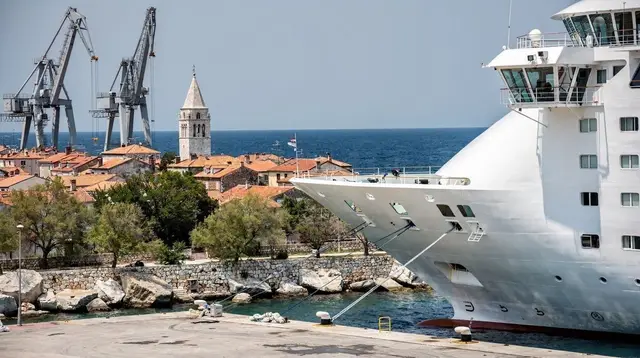
Koper itself is a different case again — it is Slovenia’s main port of commerce and cruise-ship calls, and most visitors who arrive that way head straight out to Piran, Postojna, or Ljubljana rather than staying. The practicalities of that route are covered separately in the Koper cruise port guide and the Koper cruise shore excursion itinerary; it is not, in itself, a lodging alternative to Piran or Portorož for a standard beach holiday.
For visitors coming specifically from Italy, a guided day trip to Piran departing from Ljubljana, or a Piran day tour with wine tasting departing from Trieste, are both ways to visit without committing to a coastal overnight stay at all — worth considering if the coast is a single day within a longer Slovenia itinerary rather than its own base.
Getting there and getting around
Neither town has a train station; both are reached by road. Drivers coming from Ljubljana, Postojna, or the Karst take about 70-90 minutes depending on the route and season, and should budget for Slovenia’s electronic highway vignette before setting out — see the vignette guide for current rates, since driving even a short stretch of Slovenian motorway without one carries a fine. Details on rental logistics are covered in renting a car in Slovenia.
Once on the coast, Piran’s center is pedestrian by design, so a car is only useful for reaching the peripheral parking lots, not for getting around the old town itself. Portorož is more forgiving of cars, with parking closer to most hotels, though central spots still fill in peak summer weeks. Both towns are connected to Koper and Izola by local bus, making it entirely possible to base yourself in one town and treat the rest of this stretch of coast as day trips.
Seasonal timing matters more here than almost anywhere else in Slovenia
This coast behaves differently by season more than most of the destinations covered on this site, because its Mediterranean climate is genuinely different from Ljubljana’s or the Alps’. July and August bring the warmest sea temperatures and the biggest crowds, especially around Portorož’s beaches and Piran’s Tartini square in the evening. Shoulder months — May, June, September, and into early October — offer warm enough weather for a beach afternoon with noticeably thinner crowds in Piran’s lanes.
Winter here is mild by Slovenian standards but genuinely quiet: many resort facilities in Portorož scale back, and Piran turns into a calm, largely local town. For a broader picture of how Slovenia’s seasons vary by region, see Slovenia weather by month and Slovenia in summer.
The bottom line
If the coast is the whole point of your visit and you want beaches, spa time, and easy parking, book Portorož and treat Piran as a half-day walk next door. If you came to Slovenia’s coast for the same reason people visit Venice’s smaller neighbors — old stone, a walkable core, a square with real history — book Piran and treat Portorož’s beaches as an easy add-on. Given the 4 km between them, this is one of the lower-risk lodging decisions on this entire coastline: whichever you choose, the other is never more than a short bus ride away.
Piran or Portorož: frequently asked questions
How far apart are Piran and Portorož?
About 4 km, roughly a 10-minute drive, a 15-minute bus ride, or an hour’s walk along the coastal promenade. A local bus and a seasonal tourist train also connect the two.
Which town has better beaches?
Portorož. Its shoreline is built for swimming and sunbathing, with maintained beach clubs, sun loungers, and gently sloping access to the water. Piran has small rocky bathing areas but was never designed around beach tourism.
Is Piran or Portorož better for families?
Portorož generally suits families better because of its beaches, resort facilities, and flatter terrain for strollers. Piran’s charm lies in narrow, stepped medieval lanes that are less practical with young children and luggage.
Can I park easily in Piran?
No. Piran’s old town is largely car-free, and parking is limited and often full in summer. Most visitors park at Fornače or another peripheral lot outside the peninsula and either walk in or take a shuttle.
Is Portorož just a beach resort, or does it have historic sights too?
Portorož is primarily a modern beach resort built in the 19th and 20th centuries around its bathing tradition, casinos, and spas. It does not have Piran’s medieval old town, city walls, or Tartini square, so travelers hoping for that historic atmosphere should base themselves in Piran instead.
Which town has more nightlife?
Portorož, largely because of its casinos, resort bars, and larger hotels. Piran has a quieter evening scene centered on restaurants and waterfront cafés around Tartini square.
Is one town significantly cheaper than the other?
Portorož’s large resort hotels and spa complexes can run higher at the top end, but both towns offer a range of guesthouses and apartments. Piran’s smaller guesthouses inside the old town are often comparable in price to mid-range Portorož hotels, so budget is not the main factor in choosing between them.
Should I visit Izola too while I’m on this stretch of coast?
If time allows, yes. Izola sits between Koper and Piran and offers a quieter fishing-port alternative to both, with fewer visitors and a more local feel.
Popular Ljubljana experiences on GetYourGuide
Verified deep-linked GetYourGuide tours. Book through these links and we earn a small commission at no cost to you.
GetYourGuide does not provide a product photo for this activity — the image shows the meeting point, photographed by us.