What to Wear in the Karst Caves
What should I wear to visit the Karst caves in summer?
Postojna Cave and the Škocjan Caves hold a steady 8-12°C all year, even during a 35°C heatwave outside. Bring a real jacket or fleece, closed-toe shoes, and long trousers whatever the season, and carry them with you rather than leaving them in the car or the hotel room.
Every summer, the same scene plays out at the entrance to Postojna Cave and the Škocjan Caves: a family arrives sweating in shorts and t-shirts, having driven from a Ljubljana afternoon pushing past 30°C, and twenty minutes later they are hugging their own arms and asking a guide how much further it is to the exit. It is the single most predictable mistake of a Karst region day trip, and it is entirely avoidable.
The 30-degree gap nobody warns you about
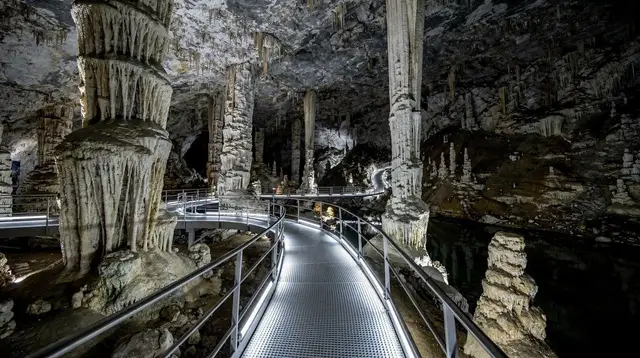
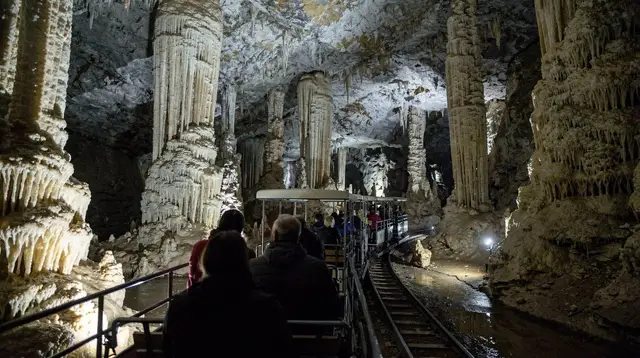
The Karst plateau in southwestern Slovenia sits above a network of limestone caves carved by underground rivers over millions of years, and those caves keep their own climate, completely disconnected from whatever is happening on the surface. Walk down the entrance stairs at Postojna on a blistering August afternoon and within a few minutes the air changes from summer to something closer to a walk-in fridge. The same is true underground at the Škocjan Caves, a little further southwest near the Italian border.
This isn’t a seasonal quirk that only catches out winter visitors who forgot how mild the coast can be. It runs the other way too, and more often, because summer is when people are least likely to be carrying a jacket in the first place. A cave doesn’t know what month it is.
How cold is it, exactly?
Both show caves hold a temperature of roughly 8 to 12°C all year, with humidity typically above 95 percent. That combination matters more than the number alone: damp cold penetrates clothing faster than dry cold at the same reading, which is why a temperature that sounds merely “cool” on paper feels genuinely cold after twenty or thirty minutes of standing and walking through it.
The reading barely shifts between a January visit and a July one. Deep rock is an extraordinarily good insulator, and once you are more than a short distance from the entrance, the temperature is set by the mass of stone above your head rather than by the sun outside. This is a feature the two caves have in common with underground sites everywhere, and it is worth knowing before you plan a visit as part of a wider look at show caves across Slovenia, since the same packing logic applies to any of them.
| Location | Typical air temperature | Typical humidity | Feels like |
|---|---|---|---|
| Postojna Cave | 8-10°C | Very high | A cold, damp cellar |
| Škocjan Caves | 10-12°C | Very high | A cold, damp cellar with a breeze from the underground river |
| Ljubljana, July afternoon | 28-34°C | Moderate | Summer |
| Ljubljana, January afternoon | 0-5°C | Moderate | Winter |
That last row is the point of the whole table. In winter, the cave can genuinely feel milder than the street outside. In summer, the gap runs in the opposite direction and is much larger - which is exactly why so many visitors get it backwards.
Why the cold surprises people specifically in summer
Three things line up against you on a hot day. First, you are dressed for the weather you can see, not the weather underground, so shorts, sandals, and a t-shirt feel entirely reasonable when you park the car. Second, a day that also includes Predjama Castle or a swim on the coast doesn’t leave much reason to pack a jacket - it looks like dead weight in a bag on a 32°C day. Third, the visit itself lasts long enough for the cold to work on you: the standard cave tour runs close to ninety minutes underground, plenty of time for damp cold air to get through a thin cotton t-shirt, and long enough that a purely psychological “I’ll be fine” plan tends to fail somewhere around the halfway point.
None of this is a reason to avoid a summer visit - the caves are just as spectacular in August as in April, and summer is in fact when most people go, as part of a Karst caves day trip from the capital. It’s simply a reason to pack differently than the weather forecast suggests.
The layering strategy that actually works
The fix is not complicated, and it does not require buying specialist gear. Think in three layers you can put on in the queue and take off again the moment you’re back outside in the sun:
- A base layer you’re already wearing - a t-shirt or light top is fine as the innermost layer, even on the hottest day.
- A packable mid layer - a fleece, a long-sleeved shirt, or a thin jumper that folds down small enough to live in a day bag without you noticing the weight.
- A windproof or water-resistant outer shell - a light rain jacket or windbreaker cuts the damp chill far more effectively than an extra jumper alone, particularly at Škocjan where an underground river keeps the air moving.
This layering approach solves the actual problem, which isn’t “the caves are cold” in isolation - it’s that you also need to be comfortable in a 30°C car park five minutes later. A jacket that rolls into a bag is worth far more on this trip than a heavier one that only makes sense worn.
What to wear, item by item
| Item | Why it matters underground |
|---|---|
| Packable jacket or fleece | The single most important item; cuts both the cold and the damp |
| Long trousers, not shorts | Bare legs lose heat fast in high humidity, even at 10°C |
| Closed, flat, non-slip shoes | Paths are paved but often wet or uneven, especially at Škocjan |
| A light long-sleeved layer | Doubles as sun protection outside and warmth inside |
| A small day bag | To actually carry the jacket rather than leave it in the car |
| A hat, for young children | Kids lose body heat faster and feel the cold sooner than adults |
What not to wear
A few items that look sensible for a hot Slovenian summer day work against you the moment you step underground: flip-flops or open sandals, which turn genuinely unsafe on damp stone; shorts or a skirt with nothing to layer over them; and a swimsuit worn as the only top layer if the cave visit is squeezed between a hotel pool and a drive to Piran or the coast. None of these are dangerous mistakes, exactly - just uncomfortable ones that are entirely avoidable with a folded jacket that takes up no more room than a rolled towel.
Packing for a day that includes a cave
Most visitors don’t drive out to the Karst region purely to see one cave in isolation. A typical day pairs Postojna Cave with Predjama Castle, or combines the Škocjan Caves with a coastal stop at Piran or Koper. That mix is exactly why the temperature swing catches people out: you might start the morning at a warm outdoor castle courtyard, spend ninety minutes at 9°C underground, then finish the afternoon on a sunny seaside promenade.
Packing for a day like that means dressing for the warmest part of it and carrying the cold-weather layer, rather than the other way around. If you’re weighing a guided tour over a self-drive day, our broader look at how to visit either cave covers ticketing and timing in more detail - see the Postojna Cave tickets and tips guide and the dedicated Škocjan Caves guide - while this page stays narrowly on the one detail both of those leave out: what to actually put in your bag.
One well-reviewed way to cover Postojna Cave together with Predjama Castle in a single outing, without worrying about driving or timing your own entry slot, is a guided option such as this combined half-day tour of Postojna Cave and Predjama Castle, which builds in enough time at each stop that you’re never rushing between the cold train ride and the sunny castle courtyard. For the Škocjan side, a trip like this day tour pairing the Škocjan Caves with Piran follows the same warm-to-cold-to-warm rhythm, which is precisely when a packable layer earns its place in your bag.
If you’d rather see both show caves without renting a car, our Slovenia without a car planning notes and the general what to book in advance in Slovenia checklist both flag timed-entry tickets as a priority - worth reading alongside this page, since the two logistics (booking a slot, dressing for the temperature once you’re in it) trip up different groups of visitors in almost equal numbers.
If you genuinely forgot a jacket
It happens, and there’s a practical difference between the two caves here. At Postojna Cave, the visitor centre at the entrance rents capes for a modest fee, which is usually enough to make the ninety-minute visit bearable even for someone who arrived in a t-shirt. At the Škocjan Caves, rental options are far more limited on site, so treat “bring your own layer” as closer to a requirement there than a suggestion. In either case, doubling up on whatever thin layers you do have - a second t-shirt under a shirt, for instance - is a reasonable stopgap, but it is no substitute for one proper windproof layer packed in advance.
Kids, seniors, and anyone who runs cold
Children and older visitors feel the cold sooner and more sharply than a fit adult walking at a brisk pace, so it’s worth packing one extra layer specifically for them even if the adults in the group feel they can manage without. A light hat for small children helps more than most parents expect, since a surprising amount of body heat is lost through an uncovered head in cold, damp air. If anyone in your group runs cold generally, thin gloves are a small, easy addition, particularly useful on the Škocjan walkways, where hands end up gripping cold metal handrails for a good stretch of the route.
If you’re planning the wider trip with a family in mind, our notes on visiting Slovenia with children and the general Slovenia in summer seasonal guide both cover related logistics worth reading before you go, alongside the printable packing list tool if you’d like a single checklist for the whole trip rather than just the cave portion of it.
A quick reality check from other travellers
This particular mismatch between outside heat and inside cold is common enough that it has become something of a running joke among people who’ve done both caves in August - worth a look if you want the unfiltered version of the mistake in our piece on why you need a jacket in the caves in August. It doesn’t ruin anyone’s day permanently, but it does turn what should be an awe-struck ninety minutes underground into a slightly miserable, arms-crossed shuffle toward the exit sign.
Booking a guided visit doesn’t remove the temperature question, but it does mean someone experienced is setting the pace and timing, which helps if you’re travelling with people who feel the cold quickly. A tour such as this full-day trip combining Lake Bled with Postojna Cave is a good example: a warm lakeside morning, a cold ninety minutes underground in the middle of the day, and a return drive in the evening sun - the exact temperature arc this guide is written for.
The one-line version
If there is a single habit worth adopting from everything above, it’s this: whatever else you leave in the hotel room or the car on a hot Slovenian summer day, keep one packable jacket in whatever bag comes into the cave with you. It weighs almost nothing, it takes up almost no room, and it is the difference between remembering Postojna Cave or the Škocjan Caves as a highlight of the trip rather than as the ninety minutes you spent cold and irritated because the forecast said 34 degrees.
Karst cave clothing and temperature: FAQ
How cold is it really inside Postojna Cave and the Škocjan Caves?
Both sit at roughly 8-12°C year-round, with high humidity that makes the air feel colder than the number suggests. The temperature barely moves between January and August, because it is set by the rock mass above, not by the weather outside.
Can I just wear a t-shirt if it’s 35 degrees outside in Ljubljana?
No. That temperature gap is exactly the trap: the heat outside has no bearing on the air underground. Visitors who show up in shorts and a t-shirt on a scorching July day are the ones shivering twenty minutes into the walk.
What shoes should I wear in the caves?
Closed, flat, non-slip shoes. Paths are paved but often damp, sometimes uneven, and sandals or flip-flops are genuinely unsafe on the wet stone at Škocjan in particular.
I forgot a jacket. Can I rent or buy one at the cave?
At Postojna Cave, yes: the visitor centre rents capes and jackets for a small fee at the entrance, which covers most emergencies. At the Škocjan Caves, options are far more limited, so it is safer to bring your own layer rather than count on finding one there.
Does it matter if I’m visiting in winter instead of summer?
Less than you’d think. The cave interior stays close to the same 8-12°C whether it’s snowing at Predjama Castle or 35°C in Ljubljana, so the packing list barely changes between seasons - only what you wear on the way there and back changes.
Are the Škocjan Caves colder than Postojna Cave?
They sit in the same range, but Škocjan involves more walking, more stairs, and a damp underground canyon with a river running through it, which tends to make the cold feel more penetrating even at a similar reading on a thermometer.
What about children and older visitors - do they need anything extra?
The cold affects them faster than it affects a fit adult walking briskly, so pack an extra layer specifically for them, plus a hat for small children, and expect to keep moving rather than lingering to stay comfortable.
Should I bring gloves or a hat?
Not essential for most adults on a standard one-to-two-hour visit, but a thin hat is worth packing for young children, and anyone who runs cold will be glad of light gloves, especially at Škocjan where hands touch cold handrails on the walkways.
tours.caves-underground
Verified deep-linked GetYourGuide tours. Book through these links and we earn a small commission at no cost to you.
GetYourGuide does not provide a product photo for this activity — the image shows the meeting point, photographed by us.