Lipizzaner Horses and Riding in Slovenia
Is visiting Lipica the same as going horseback riding in Slovenia?
No. Lipica, on the Karst near the Italian border, is the stud farm where the lipizzaner breed was founded in 1580, and a visit there centers on shows, tours and carriage rides. Actually riding a horse is a separate booking, typically a guided trail ride such as the horseback tour through Triglav National Park near Bled.
Two different things share the word “horse” in Slovenia
Type “horse riding Slovenia” into a search bar and you will get results for two unrelated experiences mixed together. One is a visit to a historic stud farm on the Karst plateau, where the main activities are guided tours, shows and carriage rides rather than climbing into a saddle yourself. The other is an actual guided trail ride on horseback, which in practice happens somewhere else entirely, in the foothills near Triglav National Park and Bled. Confusing the two is the single most common mistake people make when planning a “horse” day in Slovenia, and it is an easy one to make, because both experiences get marketed with the same handful of words.
This page exists to separate them clearly. If you want the history and the breed, the destination is Lipica, and the day-trip logistics for getting there live on a dedicated Lipica day trip guide. If you want to actually ride a horse, keep reading past the history section, because that is a different booking, in a different part of the country.
The lipizzaner: bred for a court, not for trail rides
The lipizzaner is one of the oldest documented horse breeds in Europe, developed from 1580 onward for the Habsburg court at the Lipica stud farm on Slovenia’s Karst plateau. The breed was built for classical dressage and ceremonial carriage work, the kind of controlled, elegant movement associated with imperial riding schools, and its bloodlines trace back more than four centuries to that founding herd. That history is also why the lipizzaner is closely tied to formal equestrian tradition rather than casual leisure riding: the breed’s purpose was performance and pageantry, not carrying weekend visitors along a forest trail.
The breed’s most recognisable trait is its colour transformation. Lipizzaner foals are typically born dark, often black or brown, and lighten gradually over several years into the grey coat that eventually looks almost white. A small proportion of horses skip this transformation and stay bay or black their whole lives, which is why a herd at Lipica includes a scatter of dark coats among the pale ones rather than a uniform white. If your image of a lipizzaner is uniformly snow-white, seeing a few dark horses at the farm is not a sign you are looking at the wrong breed.
Lipica: where the breed began, on the Karst, not in the Alps
The single fact worth fixing before anything else: Lipica is on the Karst plateau in southwestern Slovenia, a few kilometres from the Italian border, close to Stanjel and not far from Postojna and Predjama Castle. It is a limestone landscape of sinkholes and pine forest at a modest elevation, closer in feel to the caves region than to anything alpine. It shares no ground with the Julian Alps, Kranjska Gora or Triglav, and treating it as a mountain stop is a geographic mix-up that shows up surprisingly often in trip drafts.
The stud farm itself, founded in 1580, is still an active breeding operation as well as a visitor site. A visit there typically means walking the grounds with a guide, seeing the stables and the horses at pasture, and, depending on the day and season, watching a riding demonstration or taking a short carriage ride pulled by lipizzaners. It is a heritage and breeding site first, an equestrian show second, and a place to personally ride a horse a distant third. Full logistics, timing and how to combine it with the rest of the Karst are covered on the Lipica day trip guide rather than repeated here — this page’s job is to help you decide whether Lipica is even the experience you are looking for.
Visiting the stud farm vs a riding tour: how to choose
| Visiting Lipica stud farm | A guided horseback riding tour | |
|---|---|---|
| What you actually do | Walk the grounds, watch the horses, possibly a show or carriage ride | Sit in the saddle and ride, led by a guide |
| Location | Karst plateau, near the Italian border | Foothills near Triglav National Park / Bled |
| Best for | History, breed enthusiasts, families who want to see the horses | Anyone who wants the physical experience of riding |
| Pairs well with | Postojna Cave, Predjama Castle, Skocjan Caves | A Bled-based day, Lake Bled scenery |
| Riding experience needed | None — you are a spectator | Usually welcomes beginners, guide sets the pace |
If what you actually want is to sit on a horse rather than look at one, skip straight to the next section.
Where you can actually ride a horse in Slovenia
a horseback riding tour through Triglav National Park is the practical way to turn “horse riding in Slovenia” from a phrase into something you do rather than watch. It runs from the Bled area rather than from Lipica, taking riders onto trails inside Triglav National Park, the country’s only national park and the same protected landscape that holds Lake Bohinj and the Pokljuka plateau. The scenery is alpine foothill rather than Karst plateau: forest, pasture, and mountain backdrops instead of limestone sinkholes.
This is worth stating plainly because it is easy to assume that riding a horse in Slovenia means riding a lipizzaner at Lipica itself. In practice, the two are geographically separate: the breed’s home is on the Karst, near the Italian border, while the guided trail-riding option most visitors can actually book operates near Bled, roughly at the opposite end of this small country’s day-trip range. Neither is wrong to choose — they simply answer different questions, “where did this breed come from” versus “can I ride a horse today” — and this page’s whole point is to stop them getting merged into one imagined outing.
The Triglav National Park horseback tour, in practice
Guided trail rides of this kind are generally structured for a mixed group, with a guide leading the pace so that people without regular riding experience can still take part comfortably, alongside anyone who rides more often and wants the scenery. Expect a briefing before you mount, a helmet provided by the operator, and a route chosen for manageable terrain rather than technical horsemanship. As with any outdoor activity involving animals and slopes, confirm the specific tour’s age limits, weight limits and experience requirements when you book, since operators set their own thresholds.
Because the ride departs from the Bled area, it slots naturally into a Bled day trip from Ljubljana or a longer stay around the lake, rather than needing its own dedicated day. Riders who also want to see Lake Bled from the water or explore Bohinj the same trip will find the logistics line up more easily than trying to bolt a Karst detour onto a Bled-based itinerary.
Making the ride part of a bigger Bled day
Since the horseback tour departs from the Bled area, it rarely needs to stand alone on an itinerary. Riders who start or end their day at Lake Bled often combine the ride with a walk to the best photo spots around the lake, a quieter visit timed around avoiding the crowds at Bled, or a return to the water itself for stand-up paddling on Lake Bled once the saddle time is done. None of these compete for the same hours as the ride — they simply fill out a day that already has a horseback tour anchoring it.
Families weighing whether a riding tour suits children alongside the rest of a Slovenia trip can cross-check it against the broader roundup of Slovenia activities for families, which covers where horseback riding sits relative to other kid-friendly options around the country.
Check current availability for the Triglav National Park horseback tour before finalizing a Bled-based itinerary, since it is the one Bled-area activity in this guide that needs booking ahead rather than showing up on the day.
Other places connected to horses beyond Lipica
Lipica is the headline name, but it is not the only horse-related stop in the country. The Julian Alps and the wider Bled region host the bookable riding tour above; further afield, some farms and ranches around the country offer their own independent riding arrangements outside any structured tour, though those fall outside what this site catalogues directly.
If your interest runs toward heritage and tradition rather than a saddle, the lipizzaner and Lipica heritage story goes deeper into how the breed and the stud farm survived through changing borders and regimes over four centuries — a useful read for anyone who wants the “why does this place matter” behind the visit, separate from the logistics of getting there.
Visitors combining horses with other Karst wildlife and nature themes sometimes also plan around wildlife and nature watching in the same region, since the plateau’s mix of pasture, sinkhole forest and cave systems supports more than just the stud farm’s herds.
If you can only fit one horse-related stop into your trip
Given Slovenia’s size, cramming both a Lipica visit and a horseback ride into one day from Ljubljana means a long day of driving between the Karst and the Bled foothills, so most itineraries pick one. If your Slovenia trip already leans toward organized tours rather than self-driving, checking car vs. organized tour in Slovenia or looking into private guides and custom tours can help decide whether a combined day is realistic for your specific dates, or whether splitting the two across separate days of a longer Slovenia stay makes more sense.
Planning notes: timing, getting there, and what to combine it with
Lipica and the Karst caves sit close enough together that most itineraries treat them as one region: a common pattern pairs Lipica with Postojna Cave and Predjama Castle or with the Skocjan Caves, often as part of a broader Karst caves in one day itinerary out of Ljubljana.
If you are driving from Ljubljana, the region is close enough to the Italian border that it is easy to extend the trip toward Trieste; if you are relying on public transport, check getting around without a car or renting a car in Slovenia before settling on a plan, since the Karst sites are more spread out than central Ljubljana.
The Bled-based riding tour, by contrast, works well as an add-on to any Bled-centred stay, and needs no Karst detour at all. Because the two experiences pull in different directions on the map — Karst plateau near Italy on one side, Bled foothills near the Julian Alps on the other — trying to do both stud farm and saddle time in a single day from Ljubljana is possible only with a long, driving-heavy schedule; most visitors pick one or the other rather than combining them.
Because guided trail rides run in small groups with a guide setting the pace, availability is more limited than a walk-in stud farm visit. Booking the Triglav National Park horseback tour in advance is worth doing before other Bled plans are locked in, particularly if the ride is the one non-negotiable item on an itinerary that otherwise stays flexible.
Whichever you choose, browse the horse riding category for the current state of bookable options, and treat Lipica and an actual riding tour as two separate lines on your itinerary rather than one entry that tries to cover both.
FAQ about lipizzaner horses and riding in Slovenia
What exactly is a lipizzaner horse?
The lipizzaner is a horse breed developed for the Habsburg court starting in 1580 at the Lipica stud farm, bred for classical dressage and carriage work. Foals are usually born dark and lighten to the breed’s famous grey-white coat over several years.
Where is Lipica, and is it in the Alps?
Lipica sits on the Karst plateau in southwestern Slovenia, a few kilometres from the Italian border, not in the Julian Alps. It is a lowland limestone landscape near the Postojna and Skocjan caves, not a mountain destination.
Can I ride a horse during a visit to the Lipica stud farm?
A stud farm visit is mainly about tours, shows and carriage rides rather than a casual trail ride for visitors without their own arrangement. If riding a horse is the point of your trip, book a dedicated riding tour instead.
Where can I actually go horseback riding in Slovenia?
The bookable option covered on this site is a guided horseback riding tour through Triglav National Park near Bled, which puts beginners and experienced riders alike on a horse on mountain trails rather than at the Lipica stud farm itself.
Do I need riding experience for the Triglav National Park horseback tour?
Guided trail tours in this style are generally built to welcome beginners, with a guide setting the pace, but always check the specific tour’s requirements before booking, especially on rougher terrain.
Is Lipica a good day trip from Ljubljana?
Yes, Lipica pairs naturally with the rest of the Karst, and most visitors combine it with Postojna Cave or Predjama Castle on the same day rather than visiting it alone.
Are all lipizzaner horses white?
Most adult lipizzaners are grey, which reads as near-white, but foals are born dark and a small number of horses stay bay or black throughout their lives.
What should I wear for a horse riding tour in Slovenia?
Closed shoes with a small heel, long trousers, and a layer for wind are the usual advice for trail riding; a helmet is normally provided by the operator.
tours.horse-riding
Verified deep-linked GetYourGuide tours. Book through these links and we earn a small commission at no cost to you.
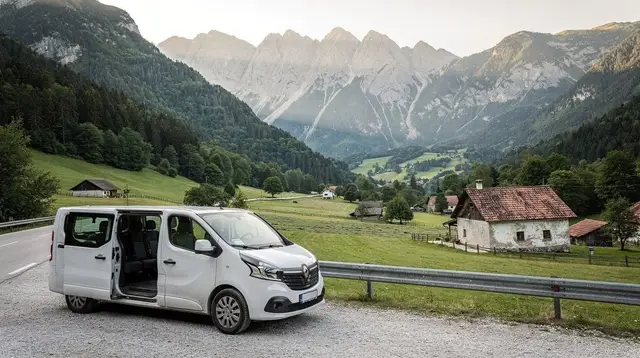
GetYourGuide does not provide a product photo for this activity — the image shows the meeting point, photographed by us.