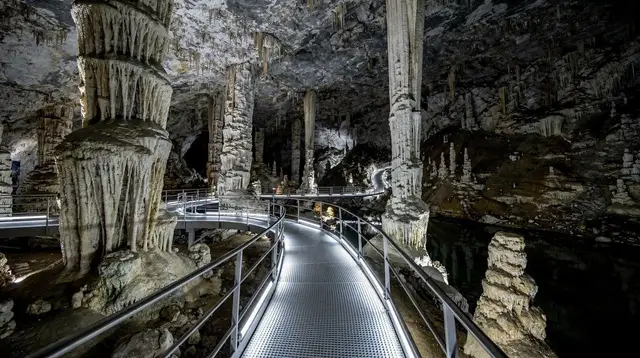
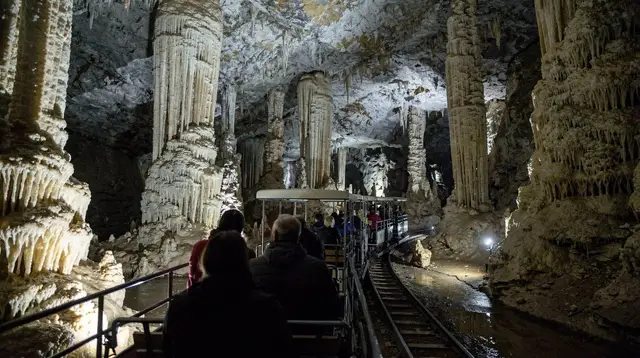
Most travelers who reach this far west into Slovenia’s Karst plateau are chasing caves — the train ride into Postojna Cave, the suspended walkway over Škocjan’s underground canyon. Lipica asks for something different. There’s no cave here, no queue for a helmet, nothing underground at all. What there is instead is a working stud farm founded in 1580, still breeding the horse that carries its name, sitting so close to Italy that on a clear day the border feels like an afterthought.
A stud farm older than most European kingdoms
Lipica was established in 1580 by Archduke Charles II of Austria, who wanted a reliable supply of horses for the Habsburg imperial court in Vienna. The limestone plateau around Sežana had the right mix of grass, water and open ground, and the farm has bred horses here, with only wartime interruptions, for close to four and a half centuries. That continuity is the whole point of a visit: this is not a museum reconstruction or a themed attraction built for tourists, it’s a working breeding operation that predates the countries on either side of its current border.
The horse it produced, the Lipizzaner, became one of Europe’s most recognizable breeds — later associated above all with the Spanish Riding School in Vienna, whose classical dressage performances made the breed famous well beyond Slovenia. A curious detail that surprises most first-time visitors: Lipizzaner foals are usually born dark, almost black or brown, and lighten gradually over several years into the breed’s signature grey-white coat. Wander the paddocks and you’ll often see a dark foal standing beside a pale adult mare, looking for all the world like two different breeds.
That’s not the whole story — the blog post on the horses that outlasted empires traces how the breeding program endured through centuries of political change in this part of Europe, and it’s worth a read for anyone who wants the fuller history behind the horses grazing calmly in the paddocks today. For visitors more interested in the breed itself than the history, the Lipizzaner horses and riding guide and the dedicated Lipizzaner tradition guide go deeper into bloodlines, training, and what an actual riding demonstration looks like.
Where Lipica sits, and why the border matters
Lipica occupies the far southwestern edge of Slovenia’s Karst region, a few kilometers from the town of Sežana and only a short drive from the Italian border. It sits closer to Trieste, in Italy, than to Slovenia’s own Adriatic coast at Piran or Koper. That position shapes how most people actually visit: rather than a standalone destination, Lipica tends to work best as a stop on a route that already runs west — toward the Vipava Valley and Goriška Brda wine country, toward Trieste itself, or south toward the coast.
From Ljubljana, plan on roughly 1h15 to 1h30 by car, about 100 km via the A1 motorway before a short stretch of local road near Sežana. If you’re driving a rental car anywhere in Slovenia, remember the motorway toll works through an electronic vignette rather than a paper sticker — worth sorting out before you set off; see the vignette guide if you haven’t dealt with it yet. There’s no direct train service and no regular public bus to the stud farm gates, which is the main reason independent travelers either rent a car or book an organized tour that already includes the transport.
What a visit actually looks like
A standard visit centers on a guided tour of the stud farm grounds: the stables, the riding arenas, the paddocks where mares and foals graze, and background on the breeding program and the horses’ training. The schedule varies with the season — spring and summer bring the fullest calendar, with riding demonstrations and carriage rides added to the basic tour, while winter runs a scaled-back program with fewer horses out and less on offer. If a show or a specific riding demonstration matters to your plans, it’s worth checking the current calendar before you commit a whole afternoon to the drive.
Photographers tend to linger longest here. Unlike a cave, where photography is often restricted or simply pointless in the dark, Lipica is entirely outdoors and entirely photogenic: white horses against green paddocks, foals testing their legs, the stable buildings with their centuries of use showing in the stonework. Families generally find it an easier stop than a cave too — there’s no walking single-file through narrow passages, no cold underground air to dress for, just open ground and animals that hold a child’s attention without much prompting.
Give the visit three to four hours if you’re coming specifically for the stud farm. Most people extend the day into something longer by combining it with one of the Karst’s other sights.
Beyond the paddocks and the show buildings, the grounds themselves reward a slower look — stretches of Karst forest and open pasture line the walking routes between the main buildings, a reminder that this is still working farmland and not a fenced attraction built purely for tourists. Group sizes on the guided tours also tend to be manageable rather than crowded, since Lipica draws a steadier, thinner stream of visitors than the queues that can build up at Postojna Cave in peak season — one more reason it suits travelers who’d rather avoid a crowd than chase one.
Pairing Lipica with the rest of the Karst
Lipica rarely stands entirely alone on an itinerary, and it doesn’t need to — the region around it is dense with sights that reward a full day rather than a rushed half-day. The two heavyweights sit within reasonable driving distance to the east: Postojna Cave, with its underground train ride through one of Europe’s largest show caves, and Predjama Castle, built directly into a cliff face nine kilometers away and almost always visited alongside it.
If your appetite runs to something wilder and more physical than a train-assisted cave tour, Škocjan Caves — a UNESCO World Heritage site since 1986 — cross a genuine underground canyon on a suspended walkway, with no train and considerably more walking.
For planning which of the two show caves suits you better, the comparison guide on Postojna versus Škocjan lays out the practical differences, and the show caves overview covers Slovenia’s cave options more broadly. Whichever cave you pick, remember they sit at a steady 8–12°C year-round — bring a layer even in August, a point covered in the cave temperature guide.
Closer to Lipica itself, the hilltop village of Stanjel makes an easy detour, with stone lanes and views out over the Karst plateau that give a sense of the terrain the whole region sits on.
If you’d rather have someone else handle the driving and the sequencing, day tours from Ljubljana already bundle these stops together — the Lipica Stud Farm and Škocjan Caves tour pairs the horses with the region’s most dramatic cave in a single day, and the Postojna–Predjama day trip guide and Škocjan Caves day trip guide are worth reading even if you end up planning the logistics yourself.
For a broader sense of how one day in the Karst can be structured, the Karst caves in one day itinerary is a useful starting point, and general ticket logistics for the caves are in the Postojna tickets and tips guide and the dedicated Škocjan Caves guide.
Continuing toward Italy or the coast
Lipica’s position near the border makes it a natural pivot point rather than a dead end. Continue west and you’re quickly into Italy, with Trieste close enough for a same-day visit — the tour operators who run trips into Slovenia from that direction often stop at Lipica along the way, and the getting to Ljubljana from Trieste guide covers that crossing in the other direction.
Head north instead and you land in Slovenia’s wine country, the Vipava Valley and Goriška Brda, both known for tastings and a gentler, more agricultural landscape than the bare Karst plateau around the stud farm itself — the Karst and Goriška Brda tour with lunch and tastings covers exactly that combination in one outing, and for a taste of the region’s other signature product, the guided visit to a Karst prosciutto ham house pairs well with either a wine stop or the stud farm itself.
Head south instead and the road runs down toward the Adriatic, where Piran waits with its Venetian old town and views across the water toward Italy on a clear day. The day tour combining Lipica and Piran is built for exactly this route, saving you the trouble of stitching together the horses and the coast on your own.
Planning your visit
Timing matters more at Lipica than at the caves nearby, since the caves keep a stable temperature year-round while the stud farm’s program follows the seasons closely. Spring and summer bring foals into the open paddocks and a full schedule of tours, demonstrations and carriage rides; by winter, fewer horses are out and the program thins considerably. If seeing the animals and the full range of activities matters to you, aim for April through October.
Because there’s no reliable public transport link, a car is the practical way to reach Lipica independently — see the renting a car in Slovenia guide if you haven’t arranged one yet, and don’t forget the electronic vignette covered above. If you’d rather not drive, or you’re short on time and want the logistics handled, an organized day tour from Ljubljana solves the problem in one booking and typically bundles Lipica with a cave visit or the coast, which suits the way most people actually plan a Karst itinerary anyway.
If you want the whole day mapped out before you leave Ljubljana, the Lipica stud farm day trip guide walks through timing, what to bring, and how to sequence the stop with the rest of the Karst so you’re not improvising the route on the fly.
Frequently Asked Questions About Visiting Lipica Stud Farm
Where exactly is Lipica, and how far is it from the Italian border?
Lipica sits in the far southwestern corner of Slovenia’s Karst plateau, close to the town of Sežana and only a few kilometers from the border with Italy. It is one of the westernmost stops in the whole country, closer to Trieste than to most of Slovenia’s own coastline.
How do I get to Lipica from Ljubljana?
By car it’s about 1h15 to 1h30, roughly 100 km on the A1 motorway toward the coast, then a short stretch of local road near Sežana. There is no direct train or regular public bus to the stud farm itself, which is why most visitors without a car join an organized tour or combine the trip with a rental car.
Is Lipica the same as Postojna Cave or Škočjan Caves?
No. Postojna Cave and Škocjan Caves are show caves carved by underground rivers; Lipica is an open-air stud farm with paddocks, stables and riding arenas, and has nothing to do underground. The three sites sit within a similar stretch of the Karst plateau and are often paired on the same day, but they cover completely different ground.
What is a Lipizzaner horse?
The Lipizzaner is a horse breed developed at Lipica starting in 1580, bred for the Habsburg imperial court and later famous through Vienna’s Spanish Riding School. Foals are typically born dark and lighten to the breed’s signature grey-white coat over several years, which is why young foals at Lipica often look nothing like the adult horses beside them.
Can I ride a horse or watch a show at Lipica?
The stud farm runs guided tours of the stables and grounds, and seasonally offers riding demonstrations and carriage rides; the exact program varies by month and is fuller in the warmer part of the year. Check the current schedule when booking, since winter visits run on a reduced calendar.
How much time should I set aside for Lipica?
A focused visit takes three to four hours including a guided tour of the stud farm. Many visitors extend the day by pairing it with Škocjan Caves to the east, or with a stop in the Vipava Valley or Goriška Brda wine country on the way back toward Ljubljana.
Can I visit Lipica without a car?
It’s possible but inconvenient, since public transport connections are sparse. Most independent travelers either rent a car for the day or join an organized tour from Ljubljana that already bundles Lipica with Škocjan Caves or the coast, which removes the logistics entirely.
Is Lipica suitable for children?
Yes. Watching horses and foals in open paddocks tends to hold a child’s attention far more easily than a dim cave passage, and the stud farm’s flat grounds are easy for families to walk at a relaxed pace.
Does Lipica get as crowded as Postojna Cave?
No. Lipica tends to see a noticeably lighter, steadier flow of visitors than Postojna’s peak-season queues, partly because it draws a different kind of traveler and isn’t built around a single fixed-capacity ride the way the cave train is. It’s one of the more relaxed stops in the Karst, even in July and August.
Should I rent a car or book a tour to see Lipica?
Either works, but the right choice depends on how much of the Karst you want to cover in one day. A rental car gives you the flexibility to linger at Lipica and add stops like Stanjel or the Vipava Valley on your own schedule, while an organized tour removes the driving entirely and typically bundles Lipica with Škocjan Caves or the coast into one planned day.