Is Tap Water Safe to Drink in Slovenia?
Can I drink tap water in Slovenia, including Ljubljana?
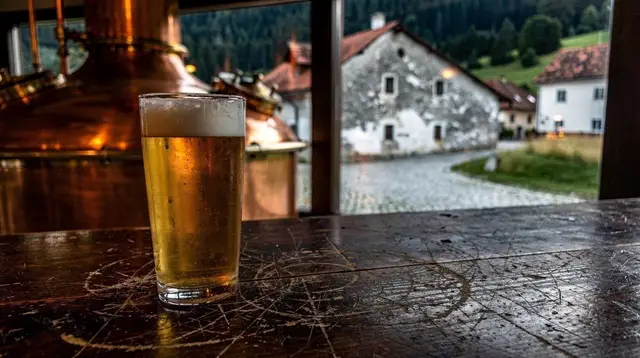
Yes. Tap water is safe to drink across Slovenia, in cities, towns, and most rural areas alike, and Ljubljana's supply is considered among the cleanest of any European capital. Restaurants routinely serve it free at the table without being asked, so a reusable bottle is genuinely useful gear here, not a leap of faith.
A Simple Fact Worth Trusting
If you are packing a reusable water bottle for a trip through Slovenia, you can stop wondering whether it will be useful here. It will. Tap water across the country is safe to drink, consistently tested, and in the case of Ljubljana, drawn from a supply so clean that it needs no routine chemical treatment before it reaches the tap — a status few European capitals can claim.
This page exists to answer exactly one question, cleanly and without hedging: can you fill your bottle at the sink, at a restaurant, or at a public fountain in Ljubljana and drink it without a second thought. The short version is yes. The rest of this guide covers where that confidence comes from, where it holds outside the capital, and the one habit — reflexively buying bottled water “just in case” — that is worth leaving behind before you land.
This is deliberately narrow. It does not attempt to cover Slovenian food and drink more broadly; for that, what to eat in Ljubljana is the better starting point. What follows is only about the water that comes out of the tap.
Where Ljubljana’s Water Actually Comes From
Ljubljana sits above two aquifers, the Ljubljansko polje plain to the north and the Ljubljansko barje marshland to the south, both of which feed the city’s municipal supply. The water table here is naturally filtered through gravel and karst limestone before it is drawn, tested, and piped to households and businesses.
What makes this genuinely unusual, and worth knowing as you decide whether to trust the tap, is that this natural filtration is clean enough that the city’s water utility does not need to add chlorine or other disinfectants as a matter of routine — most Slovenians will tell you their water “doesn’t taste like a swimming pool,” and that’s the reason why. The supply is monitored continuously against EU and national drinking-water standards, the same framework that governs bottled water sold on supermarket shelves.
Practically, this means a bottle filled from any tap in a Ljubljana apartment, hotel room, or café is exactly as safe as one bought at a shop, and considerably cheaper and lighter to carry. If you’re deciding where to stay in Ljubljana, water quality is one variable you can simply cross off the list — it doesn’t vary by neighborhood or price bracket.
Is It the Same Story Everywhere in Slovenia?
Largely, yes, though the source of the water changes by region even as the safety standard doesn’t. Slovenia is small enough — 20,271 km² — that a single guide can speak to nearly the whole country without much regional caveat, and tap water is one of the areas where that holds cleanly.
| Region | Typical water source | Notes |
|---|---|---|
| Ljubljana and surroundings | Karst aquifer (Ljubljansko polje / Ljubljansko barje) | No routine chemical treatment needed; served in restaurants by default |
| Bled, Bohinj, Julian Alps | Alpine springs and groundwater | Often noticeably soft and cold; safe from any household or hotel tap |
| Soča Valley (Bovec, Kobarid, Tolmin) | Alpine and glacial-fed groundwater | Tap water safe; untreated river or stream water is not the same thing |
| Karst region (Postojna, Škocjan, Lipica) | Karst limestone aquifer | Harder water, more mineral taste; fully safe |
| Slovenian coast (Piran, Koper, Portorož) | Regional pipeline drawing on karst sources | Same standards apply; taste can differ slightly from inland Slovenia |
| Maribor, Ptuj, wine regions east | Groundwater linked to the Drava river basin | Safe and standard; a different mineral profile again |
The practical takeaway is that you do not need to research water safety town by town as you move around. Whether you’re at Bled, tasting your way through Goriška Brda, or based in the Soča Valley for a few days of rafting and kayaking, the tap is a reliable refill point.
Why Restaurants Pour Tap Water Without Being Asked
One detail that surprises first-time visitors, especially anyone used to being asked “still or sparkling” the moment they sit down: in much of Ljubljana, a server will simply bring a jug or glass of tap water to the table, often before you’ve ordered anything else. This isn’t a cost-saving shortcut dressed up as hospitality — it reflects a straightforward, unremarkable local confidence that the water is good enough to serve without comment. Slovenians drink it at home, so they serve it the same way in a restaurant.
If you want to experience Slovenian hospitality and food culture more deliberately rather than just passing through it, a traditional Slovenian dinner with a folklore show in Ljubljana puts you at a table where this kind of unfussy generosity is part of the evening, alongside regional dishes and local wine. It’s a useful contrast to note: the water gets no special treatment or announcement, while the food and performance are the evening’s actual centerpiece.
For a more hands-on angle on the same everyday confidence in local ingredients, a hands-on strukelj cooking class in Ljubljana is a good way to see how simply Slovenian home cooking treats its basic ingredients, water included — nothing about the local kitchen habit assumes water needs pre-treatment or special sourcing before it’s used.
Public Fountains and Refill Points in the Old Town
Ljubljana’s pedestrian center — the stretch most visitors cover on a walk between the Triple Bridge, Prešeren Square, and the base of Ljubljana Castle — has several public drinking fountains and iron hand pumps built into its streets and squares, some dating to the Plečnik-era redesign of the city that is now recognized as UNESCO World Heritage.
These run on the same municipal supply as any tap in the city and are entirely safe to drink from and refill a bottle at. They’re not always obvious to a first-time visitor, so it’s worth keeping an eye out for a small spout or pump handle along the riverside promenades and around the market colonnade as you follow a walking route through the old town.
This matters more than it might seem for a practical reason: Ljubljana’s center is compact and largely car-free (see getting around Ljubljana), which means most visitors are on foot for hours at a stretch, often in summer heat that regularly pushes past 30°C. A free, safe refill every few streets is a real convenience, not a novelty.
Mountains, Lakes, and Karst: What Changes Away From the Tap
The safety of tap water does not automatically extend to untreated water in nature, and this is the one distinction worth being precise about. A tap at a mountain hut, a hotel near Bohinj, or a café in Kranjska Gora draws from a tested, treated supply and is safe.
A stream you cross while hiking toward Mount Triglav, the lake water at Bohinj itself, or the Soča river during a rafting trip is a different category entirely — beautiful, often startlingly clear, but not something to drink untreated regardless of how clean it looks. Slovenia’s rivers and lakes owe part of their reputation for clarity to the same karst geology that gives the tap water its quality, but “looks pure” and “safe to drink raw” are not the same claim, anywhere in the world.
Inside the show caves, the practical question is less about water and more about temperature: Postojna Cave and Škocjan Caves sit at a constant 8 to 12°C year-round, cave and season notwithstanding, so most visitors are reaching for a jacket rather than a bottle. Taps at the visitor centers themselves run on ordinary treated supply and are fine to use.
If you’re planning multiple days that mix towns, trails, and boat trips, it’s worth pairing this page with a broader look at getting around Slovenia without a car and general safety in Slovenia, since water is only one small piece of a low-friction country to travel through independently.
The Bottled-Water Habit You Can Leave at Home
The instinct to buy bottled water by default is understandable — it’s the safe default in a lot of the world, and travelers carry it from country to country out of habit rather than evidence. In Slovenia, that habit does real, if modest, harm to your trip: it adds unnecessary cost across a multi-day itinerary, it adds weight and plastic waste you don’t need to generate, and it solves a problem that doesn’t exist here. A daily budget for Slovenia that quietly includes a few euros a day for bottled water is padding a category that a reusable bottle and a tap eliminate almost entirely.
There is a legitimate middle ground worth naming rather than dismissing: sparkling water is genuinely popular in Slovenia, and ordering it at a restaurant is a matter of preference, not caution — it has nothing to do with tap safety. Likewise, a guided chocolate tasting experience in Radovljica or a guided city tour with a drink included in Kamnik will pour you something specific to the region, but that’s about flavor and local craft, not a workaround for water that needs treating.
A Quick Gear List for Bottle-Carrying Travelers
For anyone building out a packing list around this habit, a short, practical set of choices covers nearly every situation you’ll meet in Slovenia:
- A standard reusable bottle (steel or hard plastic) for towns, cities, hotels, and restaurants — no filter needed anywhere on the municipal supply.
- An insulated bottle if you’re spending long days outdoors in summer heat, particularly around Ljubljana and the coast, where daytime temperatures regularly climb well past 25°C.
- A light layer or jacket for cave visits, not for water reasons but because Škocjan Caves and Postojna sit at cave temperature regardless of the season outside.
- No filtration straw or purification tablets are necessary for tap use anywhere in the country; keep those only if your itinerary includes genuinely off-grid hiking where you’d draw from natural sources.
None of this is exotic advice, and that’s rather the point: Slovenia doesn’t ask travelers to plan around its water the way some destinations do, and a guide about it is short precisely because there isn’t much to work around.
Frequently Asked Questions About Slovenia’s Tap Water
Is tap water safe to drink in Ljubljana?
Yes. Ljubljana draws its water from the Ljubljansko polje and Ljubljansko barje aquifers, sources clean enough that the supply needs no routine chemical disinfection, a rarity among European capitals. It is tested continuously and served in restaurants as a matter of course.
Is tap water safe everywhere in Slovenia, or only in Ljubljana?
It is safe essentially everywhere, from Bled and Bohinj to the Soča Valley, the Karst, the coast, and the wine regions in the east. Water sources differ by region — karst springs, alpine groundwater, or river-basin aquifers — but all public supplies meet the same EU drinking-water standards.
Why do restaurants in Ljubljana serve tap water without being asked?
It reflects genuine local confidence in the supply rather than a cost-cutting habit. Slovenians drink tap water at home and expect the same at a table, so servers bring a jug or a glass as a matter of course, the same way bread might appear unbidden elsewhere.
Can I fill my bottle from public fountains in Ljubljana’s old town?
Yes. The historic center has several public drinking fountains and iron hand pumps, including some dating to the Plečnik era, that run on the same treated municipal supply as household taps. They are a convenient, free refill option while walking between the Triple Bridge and the castle.
Is the water safe to drink around Lake Bled and in the mountains?
Tap water in Bled, Bohinj, and mountain towns like Kranjska Gora is safe and comes from the same standard of testing as anywhere else in Slovenia. Untreated water straight from a stream or lake is a different matter and should not be assumed safe without filtering or boiling, even in scenery this clean.
Is water safe to drink at Postojna Cave or Škocjan Caves?
Yes, at the visitor centers and taps provided for guests, which run on standard municipal or treated supply. The caves themselves are naturally cold, at roughly 8 to 12°C year-round, so most visitors are focused on staying warm inside, not on where to refill a bottle.
Should I still buy bottled water in Slovenia to be safe?
There is no practical reason to. Buying bottled water by default in Slovenia is an unnecessary habit brought over from countries where tap water genuinely isn’t reliable; here it mostly adds cost and plastic waste for water that is, by most measures, as good as or better than what ships in a bottle.
Does Slovenian tap water taste different from region to region?
Slightly, yes. Karst-region water tends to be harder, with a more mineral edge, while alpine sources near Bled and the Soča Valley often taste noticeably soft and crisp. Both are equally safe; the difference is mineral content, not water quality.
Food and drink tours on GetYourGuide
Verified deep-linked GetYourGuide tours. Book through these links and we earn a small commission at no cost to you.
GetYourGuide does not provide a product photo for this activity — the image shows the meeting point, photographed by us.