Crossing an Open Border, No Checkpoint Required
Venice and Slovenia sit closer together than most travelers assume. From the Venetian mainland, the Slovenian coast is a two-to-three-hour drive, and the border in between is not really a border in the way that word usually works: Italy and Slovenia have both belonged to the Schengen area since December 2007, so the road simply crosses from one country into the other, with signage rather than a checkpoint.
There is no passport booth to queue at, no currency to change on arrival, since Slovenia adopted the euro back in 2007 as well, and no customs stop to plan around. For a Venice-based traveler weighing whether a Slovenia day trip is realistic, the honest answer is that the logistics are closer to a regional excursion than an international one.
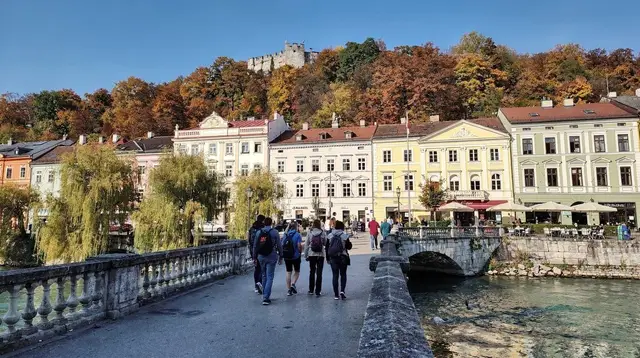
That ease is exactly why Slovenia’s coast — and specifically Piran — has become one of the standard add-ons sold to visitors staying in Venice. Piran was built by the same Republic of Venice that shaped the city its visitors just left, and it shows: a compact peninsula town, a central square named for a local composer, narrow stone streets that climb toward old defensive walls. It reads, at first glance, like a quieter cousin of Venice without the crowds or the vaporetti. That resemblance is real, but treating Piran as a miniature copy of Venice and stopping there misses what actually makes the town worth the drive.
Why Piran, Specifically, Is the Excursion Sold From Venice
Ask a Venice-based tour operator which Slovenian destination they push hardest, and the answer is almost always Piran, not Ljubljana. The reasons are practical. Piran is the closer of the two, roughly 150 km against Ljubljana’s 245 km, which keeps a day trip from Venice inside a comfortable window. It is also, stylistically, the gentlest transition a Venice itinerary can make: a walkable historic core, water on three sides, and an architectural language — arcaded buildings, a bell tower, tight lanes opening onto small squares — that a visitor coming straight from Venice recognizes without needing it explained.
Piran’s own center, though, is built around Tartini Square, named for the Baroque composer Giuseppe Tartini, who was born in the town — not a repeat of any square in Venice, and worth knowing by name before arrival rather than filing the whole town under “little Venice.” The square opens onto the harbor on one side and climbs toward the parish church on the other.
From the town walls above it, on a clear day, visitors can see across the Gulf of Trieste toward Italy in one direction and toward the Croatian coast in the other — a vantage point that has nothing to do with Venice at all, and one of the better reasons to make the climb. A full walking route through the old town, the walls, and the harbor is covered separately in the Piran old town guide; this page stays with the question of getting there from Venice and deciding whether it is the right stop.
The comparison with Slovenia’s other coastal towns matters too. Portorož, just next door, is the beach-and-casino resort version of the same stretch of coast, built for longer stays rather than a single afternoon. Izola is a working fishing port with less polish and fewer visitors. Piran keeps the historic density that makes a short visit worthwhile, which is the real reason it, rather than its neighbors, ends up on Venice day-trip itineraries. A side-by-side on Piran against Portorož specifically is worth reading before booking if a beach afternoon matters as much as the old town does.
Getting There: Car, Organized Tour, or Public Transport
By car. The drive from Venice runs east along the A4 motorway toward Trieste, then crosses into Slovenia and continues toward Koper or directly toward Piran on the coastal road. Total driving time runs close to two to two-and-a-half hours to Piran, a bit more to reach Ljubljana.
Two things to plan for before crossing: Slovenia’s motorways require an electronic vignette (e-vinjeta), bought online or at a service station before entering the network, and it is a separate charge from any Italian toll paid earlier in the drive — driving without one risks a real fine, not a warning. The Slovenia vignette guide covers current rates and how to buy one before crossing. Parking in Piran’s old town is limited and the center itself is closed to most traffic, so cars generally stop at a peripheral lot with a short walk or shuttle into town.
By organized day tour. This is what most Venice-based visitors actually book, and for good reason: it removes the vignette question, the parking question, and the driving itself, replacing them with a set pickup time and a guide who already knows the route. Tour operators running the Venice–Slovenia corridor work it from both directions — plenty are based in Ljubljana and run the trip toward Venice rather than away from it, which says something about how normalized this crossing has become on the regional tour market.
A Ljubljana-based operator, for instance, runs a full-day Venice excursion with a guided walking tour, confirming that the route between the two cities is treated as routine rather than exotic in either direction.
Via Trieste. For travelers routing through Trieste rather than driving straight from Venice, the crossing gets even shorter — Trieste sits right on the Slovenian border, and operators there run a short daily transfer into Slovenia that suits a traveler who has already moved partway along the coast from Venice. The dedicated guide to getting to Ljubljana from Trieste lays out that shorter leg in full, and the from Trieste destination page covers the wider gateway.
By train or bus. Public transport between Venice and the Slovenian coast is thinner than the road options: there is no direct train to Piran, and reaching it independently usually means a train to Trieste followed by a bus or taxi across the border. For a single day trip, this option rarely beats an organized tour on time or cost, and it is the main reason the tour market between Venice and Slovenia is as developed as it is. Travelers set on doing it without a rental car have more detail in Slovenia without a car.
| Destination | Distance from Venice | Typical travel time | Best way there |
|---|---|---|---|
| Piran | ~150 km | ~2 to 2.5 hours | Organized day tour, car, or car via Trieste |
| Koper | ~140 km | ~2 hours | Cruise shuttle, organized tour, or car |
| Trieste | ~155 km | ~1.5 hours | Train or car, a shorter hop into Slovenia from there |
| Ljubljana | ~245 km | ~3 hours | Organized day tour, car, or bus via Trieste |
Koper: The Working Port Next Door
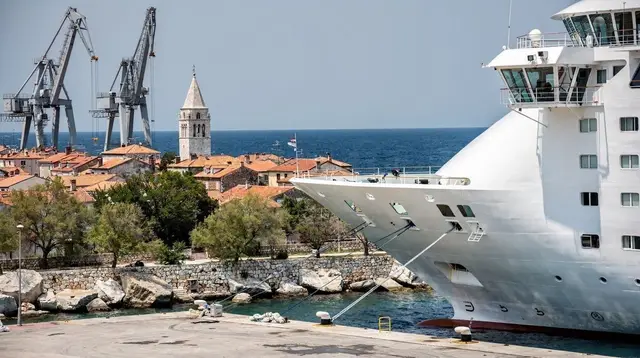
Most cruise ships that call anywhere near this stretch of coast dock at Koper rather than Piran itself, since Koper is Slovenia’s main commercial and cruise port. For a Venice-based traveler arriving by land rather than by ship, Koper is worth knowing about mainly as the transport hub sitting between the Italian border and Piran, and as an alternative stop with its own old town and a different, more workaday character than Piran’s.
Cruise passengers specifically should start with the Koper cruise port guide, which covers shore excursion logistics this page does not repeat, and the Koper shore excursion itinerary for a full day plan built around a ship’s schedule rather than a Venice hotel stay.
Should the Trip Go Further Than the Coast?
Piran and the immediate coast are the natural stopping point for a single day out of Venice, but Slovenia’s interior sits within reach for travelers with more time. Ljubljana itself, at roughly three hours from Venice, is really a separate trip rather than an extension of a coastal day — the Ljubljana day trip from Trieste itinerary is built for exactly that longer version, departing from a point closer to the border than Venice is.
Travelers curious whether the capital or the coast makes the better single day should read Piran versus Portorož and the broader how many days in Slovenia guide before committing a whole trip itinerary to one or the other.
Slovenia’s karst region — Postojna Cave and Predjama Castle — sits roughly between Ljubljana and the coast, and it shows up on multi-stop tours that also touch nearby Croatia.
A tour running a combined visit to Postojna Cave and Predjama Castle illustrates how these inland sites get folded into wider northern Adriatic itineraries that also brush past the Venice–Slovenia corridor, even when Venice is not the tour’s own starting point. For a Venice-based day trip specifically, though, adding the caves on top of Piran in the same day is not realistic — the driving alone would eat most of the afternoon meant for the coast.
Practical Notes Before Crossing
A few details are worth settling before setting out, regardless of which side of the border the trip starts on. Slovenia drives on the right, the same side as Italy, so a rental car crossing over needs no adjustment there. Power sockets in Slovenia are the same two-pin European standard used across most of the continent. The currency is the euro on both sides of the border, so there is nothing to convert and no cash to plan around beyond what a normal day out requires. Emergency services across Slovenia answer on 112, the same number used across the EU.
Weather is the one variable worth checking closer to the date. The coast around Piran runs a mild, near-Mediterranean climate, warm through summer and mild outside it, which is part of why May to October is the window most day-trip operators recommend; a winter crossing is possible but the town is considerably quieter and some seasonal boat and beach activity shuts down. Travelers timing a trip around shoulder-season weather more broadly can check the Slovenia weather by month breakdown before locking in a date.
For anyone extending a Venice stay into a broader look at northern Adriatic sightseeing, tours that also cross into Croatia are common on the same booking platforms — a combined Rovinj, Postojna Cave, and Predjama Castle route shows how tightly Slovenia’s coast, its karst interior, and Croatia’s Istrian coast get packaged together on the regional tour market, even though this particular page’s focus stays with the direct Venice-to-Slovenia crossing.
Frequently Asked Questions About Visiting Slovenia From Venice
Do I need to cross a border checkpoint between Venice and Slovenia?
No. Italy and Slovenia have both belonged to the Schengen area since December 2007, so the drive or bus ride crosses an open internal border with no passport check. Keep an ID or passport on you anyway, since spot checks can still happen.
How far is Piran from Venice?
Piran is roughly 150 km from Venice, about 2 to 2.5 hours by car or organized tour, depending on the route and on traffic around Trieste.
Is Piran just a smaller version of Venice?
No. Piran shares a Venetian architectural past, but it has its own center, Tartini Square, its own defensive walls with views toward Italy and Croatia on a clear day, and a much smaller, quieter town built for a fishing and salt-trading economy rather than a lagoon empire.
Can I visit Ljubljana and Piran in the same day from Venice?
It is possible but tight: Ljubljana is close to 3 hours from Venice by road, and Piran is a further 1.5 hours beyond Ljubljana in the opposite direction from Venice, so combining both properly needs an overnight rather than a single day.
Do I need a car to visit Slovenia from Venice?
No. Most visitors book an organized day tour that includes transport, a guide, and set stops, which removes the need to drive, park, or figure out a Slovenian vignette for a single trip.
Is there a toll or vignette needed for driving from Venice to Slovenia?
Yes, if you are driving your own or a rental car. Slovenia charges an electronic vignette (e-vinjeta) for its motorways, bought online or at a service station before you enter the network, separate from any Italian toll paid on the way to the border.
Which is easier to reach from Venice: Piran or Ljubljana?
Piran is the shorter and more popular add-on for a Venice-based traveler, since it matches the coastal, walkable, Venetian-flavored day many are already having. Ljubljana is a further, more inland trip, better suited to travelers with more time or arriving via Trieste.
What is the nearest Slovenian port to Venice for cruise passengers?
Koper is the working port and the one most cruise itineraries touch, sitting close to both Piran and the Italian border, and it is the usual starting point for shore excursions into Slovenia.