Accessibility in Slovenia: What Travelers With Mobility Needs Should Know
Is Slovenia easy to visit with limited mobility or a wheelchair?
It depends entirely on the site. The Ljubljana Castle funicular, the Ljubljana Card sights and much of the flat old town are manageable, while Bled Castle's hilltop position, cobbled coastal towns, and the uneven floors of Postojna and Skocjan caves are not step-free. Confirm current access details directly with each venue before booking.
Why accessibility here means “ask before you book,” not a simple yes or no
Slovenia does not publish a single national accessibility rating for its attractions, and this guide will not pretend one exists. What it can do is describe, site by site, what a visitor with a mobility limitation is actually dealing with — a hill, a staircase, a gravel path, a small rowing boat — so that the right question gets asked before money changes hands, not after.
For the two places that draw the most concern, Ljubljana Castle and Postojna Cave, the detailed ticketing and logistics live in their own guides (Ljubljana Castle and Postojna Cave Tickets); this page focuses specifically on the access question and stays deliberately cautious about exact specifications, because they can change with renovation work, weather, or season.
The biggest misconception to clear up first: many visitors assume the only way up to Ljubljana Castle is a steep uphill walk on cobbled paths. That climb does exist, and plenty of visitors choose it. But a funicular also runs from the old town directly to the castle grounds, priced at 6 EUR for a return ride alone, or bundled with castle admission for 19 EUR. That single fact changes the calculation for a lot of travelers who assumed the castle was simply off the table.
The general shape of the country, in accessibility terms
Slovenia is a small, hilly country, and its historic centers were built centuries before step-free access was a design consideration. Ljubljana’s old town is flat by the standards of the surrounding hills, but its historic paving is often cobblestone rather than smooth asphalt. Bled sits in a glacial valley with a mostly level lakeshore path, but its castle perches on a cliff above the water with no cable car or funicular equivalent. The Karst region’s show caves — Postojna, Skocjan, and the cliffside fortress at Predjama — sit inside natural or centuries-old structures that were never built with modern accessibility in mind, whatever technology has since been added.
None of this means Slovenia is unusually difficult compared with other historic European destinations. It means the country rewards specific planning rather than general assumptions, and that a guided coach tour, where someone else handles the driving, the walking, the tickets, and the pacing between stops, is often a genuinely practical way to see multiple sites in a single day without relying on public transport connections or long stretches on foot. A day tour such as the full-day Slovenia in One Day tour covers several major stops with transport included between them, which can remove a lot of the physical logistics a self-driven itinerary would otherwise require.
Ljubljana: mostly manageable, with real caveats
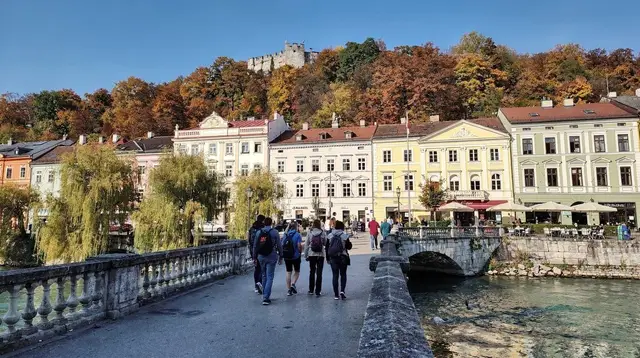
The old town between the Triple Bridge and Preseren Square is pedestrianized and largely flat, which helps enormously — there is no traffic to navigate and no steep street grid to climb. The catch is the paving itself: much of it is historic cobblestone, which can be genuinely difficult for a wheelchair, a walker, or anyone with an unsteady gait, particularly after rain. The riverside quays designed by Joze Plecnik are attractive to look at but were not built flat and even throughout their length.
For getting around without walking every stretch, the city runs the Kavalir, a small free electric shuttle that seats up to five passengers, operates without fixed stops (you flag it down or call for it), and runs from 6:00 to 22:00. It will not solve every access problem, but it is a genuinely useful, no-cost option for covering short distances in the center, including some of the ground around Ljubljana Castle hill.
City buses, run by LPP, no longer accept cash — a Urbana card or a bank card is required — and the fleet has been progressively updated with low-floor vehicles, though we would not promise every route or every bus is equipped this way; check with How to Get Around Ljubljana Once You’re There or ask locally before relying on a specific line.
The Ljubljana Card (41 EUR for 24 hours, 49 EUR for 48 hours, 54 EUR for 72 hours) bundles unlimited city buses with entry to more than twenty museums and galleries, the funicular and castle entry, and a river cruise — worth comparing against Is the Ljubljana Card Worth It? since several of its included sights are step-free or close to it. A city pass covering public transport plus attractions, like the Ljubljana City Card with public transport included, is worth weighing the same way: it only pays off if enough of the included sights are ones you can comfortably reach.
Arriving from the airport, the public bus route 28 connects Ljubljana’s Brnik airport to the bus station in roughly 45 to 55 minutes; details on boarding and any assistance available are best confirmed through Ljubljana Airport to City Center rather than assumed in advance.
Ljubljana also receives a significant share of its visitors overland, from Trieste, Venice, and Zagreb; coach and shared transfer options on these routes vary in how they handle luggage assistance and boarding, so the same rule applies as everywhere else in this guide — ask the specific operator rather than assuming a standard.
Lake Bled: a flat lakeshore, a hilltop castle, and a boat that is not step-free
The path around Lake Bled is one of the more approachable walks in this guide — roughly 6 km, mostly gentle, and partly paved, though stretches are gravel and can turn uneven after rain. That flatness is what makes Bled feel accessible at first glance. Two things complicate the picture. First, Bled Castle sits on a cliff above the lake with no funicular or cable car; reaching it requires climbing the hill, on foot or by an arranged vehicle, and there is no built-in mechanical assistance the way there is in Ljubljana.
Second, reaching the island in the middle of the lake means boarding a pletna, the traditional wooden rowing boat poled by a boatman standing at the stern — a boarding process that is not step-free and that we would not describe as suitable for every mobility situation. If the island and its church are a priority, it is worth calling ahead or asking your accommodation to help arrange assistance rather than discovering the boarding conditions at the dock.
Parking near the lake is a separate practical question covered in Parking in Bled; there is no vehicle access charge or toll at Bled itself, only paid parking zones, which matters if a shorter walk from car to lakeshore is the priority.
Bohinj and the Julian Alps: quieter, but rougher underfoot
West of Bled, Lake Bohinj sits inside Triglav National Park and draws far fewer visitors than its more famous neighbor, which some travelers find appealing precisely because the shoreline and surrounding trails are quieter, not because they are gentler. Bohinj’s own lakeside path has flatter stretches than the mountains around it, but the hiking routes around the lake climb quickly once they leave the water, and Vintgar Gorge, reached via a network of walkways along the canyon wall, involves stairs and narrow sections that are not step-free.
Further north, the hairpin bends of the Vrsic Pass and the alpine resorts around Kranjska Gora are built around driving and hiking rather than level sightseeing, and neither should be assumed accessible without checking specific trailheads or viewpoints in advance.
Kamnik, Velika Planina, and the wine regions to the east
The countryside closer to the capital has its own mix. Kamnik’s old town is small and largely flat, but the cable car up to Velika Planina and its cluster of shepherd’s huts sits well above the valley floor, and the plateau itself is walked rather than paved.
Further east, the vineyard landscapes of the Vipava Valley and around Maribor are rural rather than urban, so distances between wineries and the terrain of the vine-covered hills matter more than any single building’s layout; a wine estate with a tasting room close to the parking area is a different proposition from one that expects visitors to walk between rows on a slope. If a specific winery or hut is the goal, a direct question about parking distance and surface underfoot will tell you more than a general regional description ever could.
Postojna Cave, Skocjan Caves, and Predjama Castle: the honest comparison
These three sites get lumped together by visitors planning a “Karst day,” but they are not equivalent from an access standpoint, and treating them as interchangeable is a mistake.
| Site | What helps | What doesn’t | Our read |
|---|---|---|---|
| Postojna Cave | Underground train covers a large part of the route | Walking sections have uneven, sometimes damp stone; steps at points | Partially manageable for some visitors; contact Postojna directly with specifics before booking |
| Skocjan Caves | Well-maintained trail, UNESCO-managed site | Suspended walkway, staircases, no train assistance | More physically demanding than Postojna; not generally step-free |
| Predjama Castle | Built into the cliff at ground level at its base | Narrow stairways between the castle’s upper levels | Ground floor may be reachable; upper floors involve stairs |
We are being deliberately cautious with this table rather than assigning hard ratings, because path conditions, temporary closures for maintenance, and each site’s own accessibility accommodations can change. The one detail worth planning around regardless of mobility level: all three of these underground and cliffside sites sit at a steady 8 to 12 degrees Celsius year-round, so a jacket is necessary even in August — see What to Wear in the Karst Caves for what that means for footwear and layers, since uneven, cool, sometimes damp surfaces are a different proposition for anyone with balance or mobility concerns than for an able-bodied visitor in shorts.
If the priority is seeing this region without managing a rental car and its own set of logistics, a guided option such as the full-day best of Slovenia tour from Zagreb handles the driving and typically paces the day around fixed stops, which some travelers with mobility limitations find easier to manage than self-driving between sites and finding parking at each one — though the walking required at each stop itself does not change simply because the transport between them is arranged.
The coast, and where a coach tour genuinely helps
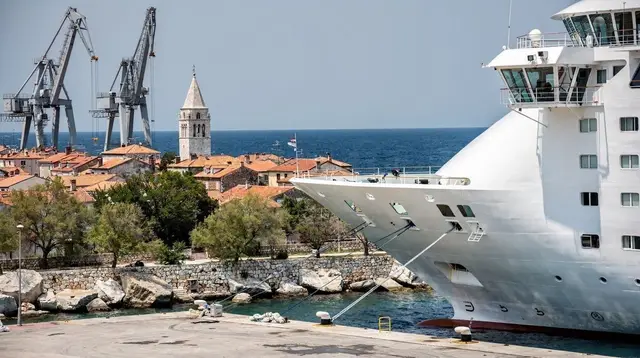
Piran’s old town is charming for exactly the reason it can be difficult: narrow medieval streets, some stepped, built on a small peninsula with limited flat ground near Tartini Square itself. Portoroz next door is flatter and more built for modern tourism, with a longer beachfront promenade. If the coast is on the itinerary primarily to see it rather than to walk every street, a seated coach tour such as the panoramic tour of the Slovenian coast covers the distance and the views without requiring the visitor to manage transfers, parking, or long walks between towns.
Adventure activities: a different category entirely
Rafting, canyoning, and via ferrata routes in the Soca Valley and around Lake Bled are a separate consideration from sightseeing accessibility, since they involve active physical participation rather than site access. These are worth a direct conversation with the operator about what a specific mobility limitation means for participation, rather than an assumption in either direction — some adventure operators do accommodate a wider range of physical abilities than the marketing photos suggest, and some genuinely cannot. That conversation belongs with the operator directly, not with a general travel guide.
Practical questions worth asking before you book anything
A short, direct email or phone call to a venue, hotel, or tour operator solves more accessibility uncertainty than any guide can. Useful questions to ask:
- Is there a step-free or assisted route to the main entrance, and how long is it?
- Are the surfaces along that route paved, gravel, cobblestone, or natural stone?
- Are there stairs inside, and if so, is there any alternative (lift, ramp, staff assistance)?
- Is there an accessible restroom on site, and how far is it from the main visitor route?
- Is accessible parking available near the entrance, and does it require a reservation?
- For boat, train, or cable transport (the Bled pletna, the Postojna cave train, the Ljubljana Card’s Velika Planina cable car), what does boarding actually involve?
If you are also weighing whether to rent a car for flexibility versus relying on organized transport, Renting a Car in Slovenia and Slovenia Without a Car lay out both approaches, and What to Book in Advance for Your Slovenia Trip is worth checking regardless of mobility needs, since several of Slovenia’s most visited sites now require timed-entry booking that leaves little room for last-minute accessibility questions once you’re already on site.
Budgeting for a trip that may need private transport or assisted arrangements is also worth planning against Slovenia Daily Budget rather than assuming costs identical to a fully independent itinerary.
Where you stay affects how much of this walking is unavoidable each day. Where to Stay in Ljubljana is worth reading with proximity to the old town’s flatter streets in mind, since a hotel near the station or on a hillside adds walking distance that a central, ground-level option would not.
The bottom line
Slovenia rewards specific, site-by-site planning far more than a general accessibility label ever could. Ljubljana’s funicular removes the biggest assumed obstacle in the entire country in a single, inexpensive ride. Bled’s lakeshore is genuinely walkable while its castle and island boat are not step-free. Postojna sits in the middle of the spectrum thanks to its train, while Skocjan and Predjama ask more of a visitor physically. None of that should be taken as the final word — it is a starting point for the calls and emails that will actually answer the question for your specific trip, your specific mobility needs, and the specific week you are traveling.
Trip-planning essentials on GetYourGuide
Verified deep-linked GetYourGuide tours. Book through these links and we earn a small commission at no cost to you.
GetYourGuide does not provide a product photo for this activity — the image shows the meeting point, photographed by us.